
XScale
ARM-based microarchitecture for mobile and embedded systems
XScale is a family of ARM-compatible processors originally designed by Intel and later owned by Marvell Technology. It powered many early smartphones, PDAs, and network devices in the 2000s using efficient 32-bit cores.
- Based on ARMv5TE instruction set without floating point
- Sold by Intel to Marvell in 2006 for $600 million
- Powered early BlackBerry and Palm devices
- Features Wireless MMX for multimedia acceleration
- Manufactured on 0.18 μm to 45 nm processes
What it is
XScale is a microarchitecture for central processing units that implements the ARM instruction set. Intel initially designed it to replace its older RISC lines, such as the i860 and i960. The family includes application processors, network chips, and input-output controllers. Many models function as systems on a chip, integrating memory and other components. Marvell Technology later acquired the mobile processor line and continued development under the same brand name.
How it came about
Intel created XScale after acquiring the StrongARM division from Digital Equipment Corporation in 1998. This move allowed Intel to enter the low-power market with ARM-based designs. The first generation launched in February 2002 with the PXA250. In 2006, Intel sold the PXA business to Marvell Technology Group to focus on x86 servers. Marvell completed the acquisition in November 2006 and expanded the brand to include newer ARM cores.
Inside the chip
The architecture uses a seven-stage integer pipeline and an eight-stage memory pipeline. It supports the ARMv5TE instruction set but lacks hardware floating-point units. Early chips featured 32 KB data and instruction caches. Later generations added Wireless MMX technology for multimedia tasks and SpeedStep for power management. Some variants included stacked flash memory or separate graphics co-processors to handle video and gaming workloads efficiently.
How it was made
Initial generations were manufactured using 0.18 μm or 0.13 μm processes. Later Marvell-designed chips moved to 65 nm and 45 nm nodes. The PXA26x family introduced a smaller TPBGA package. Intel fabricated the early parts, while Marvell eventually shifted production to other facilities after the sale.
Where it went
These processors powered many personal digital assistants and early smartphones running Windows Mobile, Symbian, or Palm OS. Devices included the Dell Axim, Palm Treo, and BlackBerry Bold. Network equipment used IXP variants for routing and data handling. Consumer electronics like the Amazon Kindle and Creative Zen players also relied on XScale chips. Industrial systems and some server storage controllers utilized the IOP line for input-output offloading.
Versions and family
The PXA series served mobile applications, with code names like Cotulla and Bulverde. IXP chips handled networking tasks, while IOP processors managed storage input-output. The IXC line targeted control plane functions. Marvell later introduced the PXA930 and PXA940, which used different core designs like Sheeva and Cortex-A8. The PXA98x series adopted dual-core Cortex-A9 architectures for tablets.
Why it matters
XScale established Intel as a significant player in the ARM market before its exit. It enabled long battery life for handheld devices during the rise of mobile computing. The sale to Marvell allowed the technology to persist in embedded systems and networking gear. Its legacy continues in devices that require efficient, low-power processing without the complexity of modern high-performance cores.


Questions people ask about XScale
Who originally designed the XScale processor?
Intel designed the XScale microarchitecture after acquiring StrongARM from Digital Equipment Corporation. It was intended to replace Intel's older RISC processors in low-power applications.
What devices commonly used XScale chips?
XScale processors were widely used in personal digital assistants, early smartphones like the BlackBerry Bold, and portable media players such as the Amazon Kindle. They also powered network routers and industrial embedded systems.
Did Intel keep the XScale business?
No, Intel sold the PXA mobile processor assets to Marvell Technology Group in 2006. This allowed Intel to focus on its core x86 and server businesses while Marvell continued the ARM-based product line.
Good reading and sources
- Intel System-On-A-Chip Media Processor Powers New Generation Of Consumer Electronics DevicesIntel, Article
- O2 XM music phoneThe Register, Article
- Intel Tries, Tries AgainIEEE Spectrum, Article
The facts on this page come from the Wikipedia article "XScale", written by its contributors and used under the CC BY-SA 4.0 licence, and from its Wikidata record (CC0). EveryChip rewrote the text in its own words, with AI assistance, and compares every page with the article to make sure no passage is copied. It may be reused under the same CC BY-SA 4.0 licence with a link back.
It may contain mistakes, and figures change over time. Nothing here is investment or buying advice. If something is wrong, tell us. Last refreshed 2026-11-14.
Like XScale
All CPUs and microprocessors 🇺🇸 United StatesXScale
ARM-based microarchitecture for mobile and embedded processors designed by Intel and later Marvell.CPU · Arm · 2002
🇺🇸 United StatesStrongARM
High-performance ARM microprocessor family for portable devicesCPU · Arm · 1996
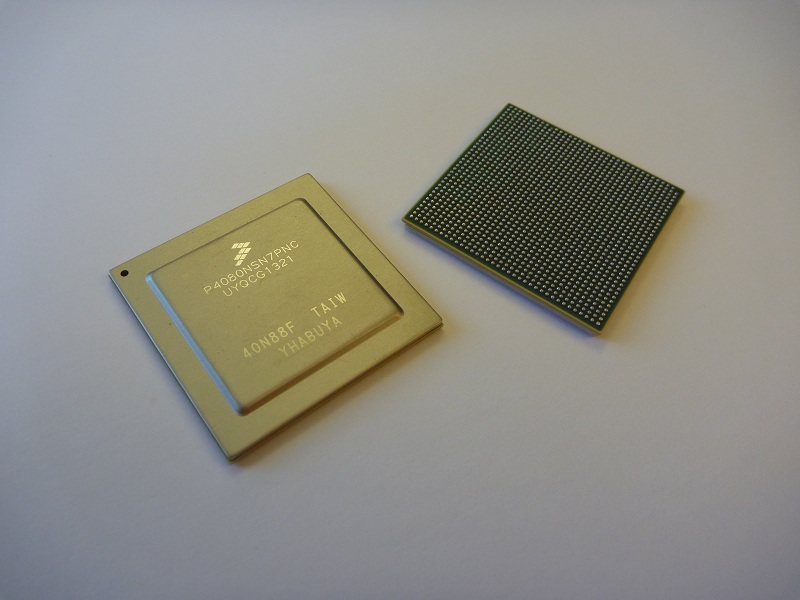 🇳🇱 NetherlandsQorIQ
NXP communications microprocessor brand for networking infrastructureCPU · Arm · 2008
🇺🇸 United StatesKrait
Qualcomm in-house ARM CPU core for mobile SoCsCPU · Arm · 2012
More from Intel
All of them 🇺🇸 United States and 1 morePentium M
Intel's power-saving laptop CPU line, launched in 2003 on the P6 designCPU · x86 · 2003
 🇺🇸 United StatesItanium
64-bit EPIC server microprocessor family from Intel and HPCPU · VLIW · 2001
 🇺🇸 United StatesNetBurst
Intel's Pentium 4-era x86 CPU design, built for very high clock speedsCPU · x86 · 2000
🇺🇸 United StatesIXP1200
Network processor for mid-range and high-end routersNetwork chip · Arm · 2000