Other foundries
Tower, VIS, Hua Hong, X-FAB, SkyWater and others. 305 chips on EveryChip so far.
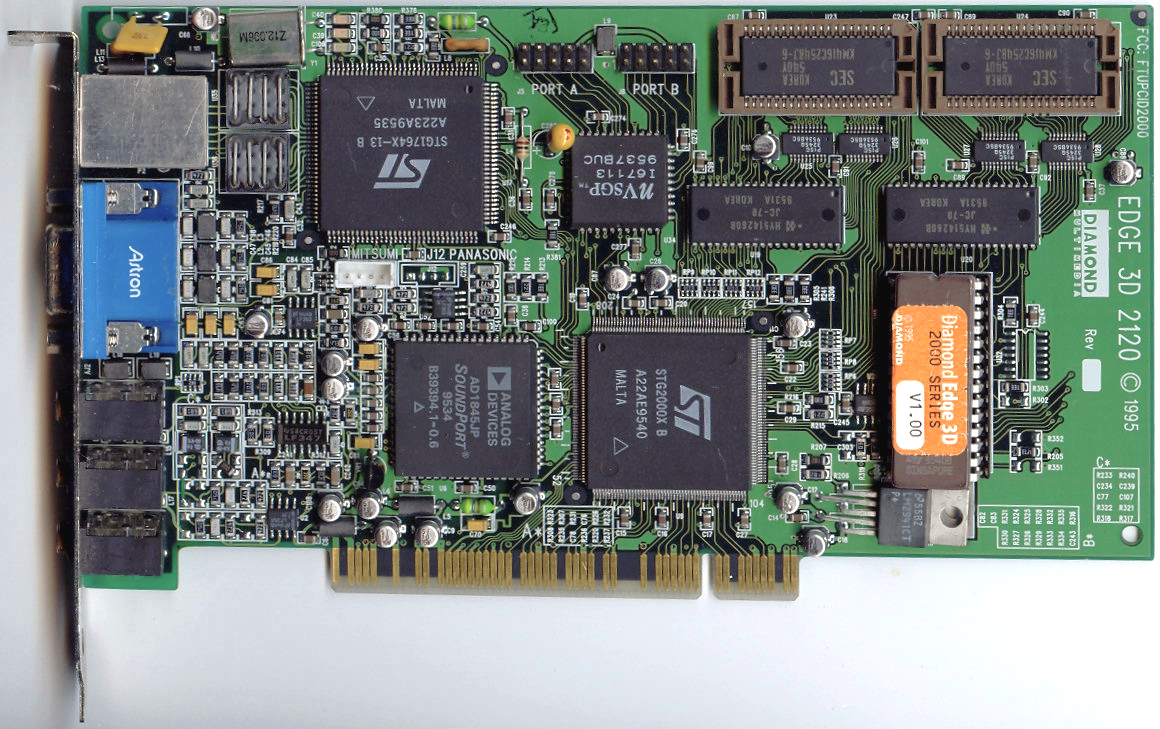
Beyond the giants, many foundries make specialised or mature-node chips: Tower Semiconductor in Israel, Vanguard International (VIS) and PSMC in Taiwan, Hua Hong in China, X-FAB in Germany and SkyWater in the United States, among others. In earlier years Chartered of Singapore and the European firm SGS-Thomson made chips for designers without fabs, including early Nvidia graphics chips.
Specialty foundries
These foundries focus on analog, power, image sensors, radio, MEMS and embedded memory, often on 200 mm wafers and older nodes. Tower, founded in 1993, was to be bought by Intel, but the deal was dropped in August 2023 after it did not receive Chinese regulatory approval in time. SkyWater, in Minnesota, released an open-source 130 nm process design kit with Google in 2020.
Early foundry partners
Before TSMC dominated, chip start-ups often used spare capacity in established firms' fabs. Nvidia's first chips, the NV1 and the RIVA 128, were made by SGS-Thomson. Chartered made some of AMD's Athlon 64 processors and helped make the Xbox 360's processor. PSMC is the technology partner for India's first commercial fab, at Dholera.
Famous other foundries chips


Further reading
 🇺🇸 United States4000 series
Versatile CMOS logic chips for low-power digital circuitsAnalog · Other · 1968
🇺🇸 United StatesFour-Phase Systems AL1
An early 8-bit slice CPU built for Four-Phase's System IV/70 minicomputer.CPU · Other · 1970
 WorldIntersil 6100
A 12-bit CMOS microprocessor that runs the PDP-8 instruction set on one chipCPU · Other · 1975
 WorldGAL22V10
Programmable logic device with configurable inputs and outputsFPGA · Other
 🇺🇸 United States and 1 moreDEC T-11
DEC's first single-chip PDP-11 microprocessor, built for embedded control workCPU · Other · 1982
 🇺🇸 United States and 1 moreDEC J-11
Two-chip CMOS implementation of the PDP-11 ISA for high-end DEC machinesCPU · Other
WorldIMP-16
A 1973 bit-slice microprocessor built from five PMOS chipsCPU · Other · 1973
🇺🇸 United StatesHP Saturn
HP's 4-bit calculator microprocessor family, introduced in 1984CPU · Other · 1984
🇺🇸 United StatesEssex SX 200
4-bit single-chip microcontroller with on-board ROM, RAM and display driversMicrocontroller · Other · 1976
🇯🇵 JapanRL78
16-bit embedded microcontroller family by Renesas ElectronicsMicrocontroller · Other · 2010
🇺🇸 United StatesMOS Technology 6532
Integrated circuit combining RAM, I/O ports and a timer for 1970s systems.Microcontroller · Other
🇺🇸 United StatesMOS 6530
Integrated circuit with ROM, RAM, I/O and timerMicrocontroller · Other
🇫🇷 FranceEF9345
Semigraphic video processor for 1980s microcomputers and terminalsAnalog · Other
 🇺🇸 United StatesICL8038
Voltage-controlled waveform generator chip by IntersilAnalog · Other
 🇩🇪 GermanyU80701
East German 32-bit microprocessor clone of the DEC MicroVAXCPU · Other · 1990
🇷🇺 RussiaK1839
Soviet 32-bit microprocessor chipset compatible with VAX-11CPU · Other · 1989
 🇷🇺 Russia and 1 more1801 series
Soviet 16-bit microprocessors compatible with DEC PDP-11CPU · Other · 1978
 🇯🇵 JapanNEC V60
32-bit CISC microprocessor family from NEC for embedded and arcade useCPU · Other · 1986
WorldNCR/32
A 32-bit microprocessor set from NCR with custom microcode support.CPU · Other · 1982
 🇺🇸 United StatesTMS320
Texas Instruments' long-running family of digital signal processorsDSP · Other · 1983
🇺🇸 United StatesCOP8
8-bit microcontroller with low EMI and integrated peripheralsMicrocontroller · Other · 1988
 🇺🇸 United StatesProgrammable Array Logic
Early programmable logic chips for digital circuitsFPGA · Other · 1978
🇬🇧 United KingdomRekursiv
A four-chip object-oriented CPU with a writable microcode instruction setCPU · Other · 1988
🇯🇵 JapanExmor
Sony's CMOS image sensor series with on-chip conversion and noise reductionSensor · Other · 2008
 🇺🇸 United States and 1 moreAMD Am2900
AMD's 1975 bipolar bit-slice IC family for building custom control unitsCPU · Other · 1975
 🇺🇸 United StatesPIC microcontroller
Microchip's long-running family of 8-bit to 32-bit microcontrollersMicrocontroller · MIPS · 1976
🇺🇸 United StatesWDC 65C816
16-bit microprocessor from the 6502 family with 24-bit addressingCPU · Other · 1985
 🇺🇸 United StatesGeneral Instrument CP1600
A 16-bit microprocessor from 1975, best known inside the Intellivision consoleCPU · Other · 1975
 🇺🇸 United States and 1 moreNS32000
National Semiconductor's 32-bit CISC microprocessor family from the 1980sCPU · Other · 1982
 🇺🇸 United States and 1 moreSignetics 8X300
A 1976 bipolar microcontroller and signal processor from SigneticsCPU · Other · 1976
 🇺🇸 United StatesZilog Z8000
16-bit microprocessor family from Zilog, launched in 1979CPU · Other · 1979
🇬🇧 United KingdomVIPER
A formally proven 32-bit microprocessor for safety-critical avionics systemsCPU · Other · 1987
🇺🇸 United StatesS2000
4-bit microcontroller for displays and controlMicrocontroller · Other · 1977
 🇺🇸 United StatesIntel MCS-51
An 8-bit microcontroller series for embedded systems.Microcontroller · Other · 1980
 🇺🇸 United States and 1 moreMCS-96
A 16-bit microcontroller family for embedded control systems.Microcontroller · Other
 🇺🇸 United States and 1 moreCOP400
4-bit microcontroller family for embedded control tasksMicrocontroller · Other · 1977
 🇯🇵 Japan78K
NEC and Renesas 8- and 16-bit microcontroller family for embedded control.Microcontroller · Other · 1986
 🇯🇵 JapanToshiba TLCS
Toshiba microcontroller families with CISC and RISC designsMicrocontroller · RISC · 1973
 🇺🇸 United StatesVirtex
High-performance FPGA family by AMD and XilinxFPGA · Other · 1999
🇯🇵 JapanGreenPAK
Configurable mixed-signal integrated circuits by RenesasAnalog · Other · 2010
 🇺🇸 United StatesMotorola 56000
A 24-bit digital signal processor for audio and communications.DSP · Other · 1986
 🇺🇸 United StatesAm7990
Ethernet media access controller introduced in 1985Network chip · Other · 1985
🇺🇸 United StatesIntel 8237
Four-channel DMA controller for early IBM PCsAnalog · Other · 1980
 🇺🇸 United StatesIntel 8282
8-bit latch for Intel 8086 and 8080 systemsAnalog · Other
🇺🇸 United StatesNorthPole
Brain-inspired AI inference chip by IBM ResearchAI accelerator · Other
 🇳🇱 NetherlandsNexperia
Brand for NXP media and mobile system-on-chipsSoC · Arm · 1999
 🇺🇸 United States and 1 moreMC10800
4-bit bit-sliced processor in ECL logic from 1979CPU · Other · 1979
 🇯🇵 JapanΜCOM-4
NEC original 4-bit single-chip microprocessor from 1973Microcontroller · Other · 1973
Photo credits on this page
The small pictures above come from Wikimedia Commons under free licences. Some are cropped to fit.
- 4000 series: Teravolt ( talk ), CC BY 3.0, source
- Microsoft XCPU (Xenon): Konstantin Lanzet, CC BY 3.0, source
- Intersil 6100: Christian Bassow, CC BY-SA 4.0, source
- GAL22V10: Raimond Spekking, CC BY-SA 4.0, source
- DEC T-11: Pauli Rautakorpi, CC BY 3.0, source
- DEC J-11: Konstantin Lanzet, CC BY-SA 3.0, source
- AMD Am2900: Konstantin Lanzet (with permission), CC BY-SA 3.0, source
- PIC microcontroller: Raimond Spekking, CC BY-SA 4.0, source
- General Instrument CP1600: Evan-Amos, CC BY-SA 3.0, source
- NS32000: Konstantin Lanzet, CC BY-SA 3.0, source
- Signetics 8X300: Konstantin Lanzet, GFDL, source
- Zilog Z8000: Myself User:ZyMOS, CC BY-SA 4.0, source
- NV1: Swaaye at English Wikipedia, CC BY-SA 3.0, source
- RIVA 128: Raimond Spekking, CC BY-SA 4.0, source
- Intel MCS-51: Konstantin Lanzet (with permission), CC BY-SA 3.0, source
- MCS-96: Konstantin Lanzet, CC BY-SA 3.0, source
- COP400: Seanriddle, CC BY-SA 4.0, source
- 78K: NobbiP, CC BY-SA 3.0, source
- Toshiba TLCS: NobbiP, CC BY-SA 3.0, source
- NEC μCOM series: Konstantin Lanzet, CC BY-SA 3.0, source
- Virtex: Антракт, CC BY-SA 4.0, source
- Motorola 56000: Konstantin Lanzet, CC BY-SA 3.0, source
- Am7990: Phiarc, CC BY-SA 4.0, source
- Intel 8282: JWBE, CC BY-SA 3.0, source
- ICL8038: Medvedev, CC BY-SA 4.0, source
- U80701: Konstantin Lanzet, CC BY 3.0, source
- 1801 series: Konstantin Lanzet, CC BY-SA 4.0, source
- NEC V60: Pauli Rautakorpi, CC BY 3.0, source
- MC10800: Konstantin Lanzet, CC BY-SA 3.0, source
- Nexperia: Ikknmnmnm, CC BY-SA 4.0, source
- Athlon 64: Astraera, CC BY-SA 4.0, source
- TMS320: Raimond Spekking, CC BY-SA 4.0, source
- Programmable Array Logic: Mister rf, CC BY-SA 4.0, source