Other foundries
Tower, VIS, Hua Hong, X-FAB, SkyWater and others. 305 chips on EveryChip so far.
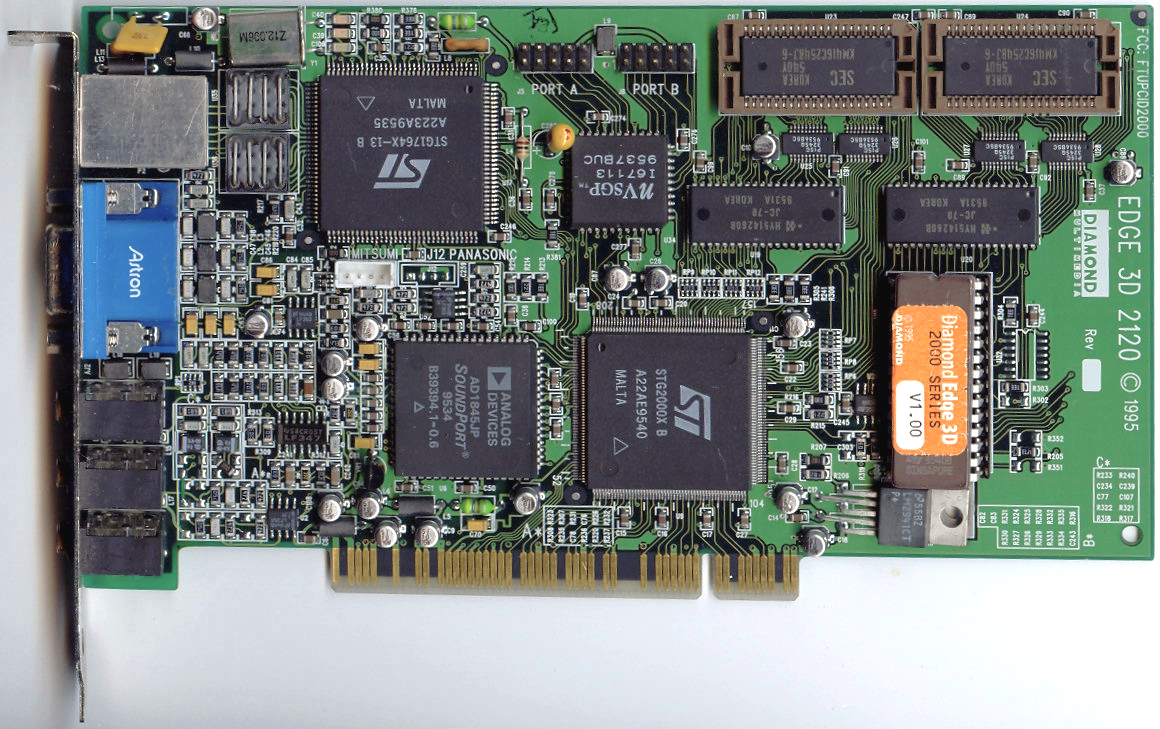
Beyond the giants, many foundries make specialised or mature-node chips: Tower Semiconductor in Israel, Vanguard International (VIS) and PSMC in Taiwan, Hua Hong in China, X-FAB in Germany and SkyWater in the United States, among others. In earlier years Chartered of Singapore and the European firm SGS-Thomson made chips for designers without fabs, including early Nvidia graphics chips.
Specialty foundries
These foundries focus on analog, power, image sensors, radio, MEMS and embedded memory, often on 200 mm wafers and older nodes. Tower, founded in 1993, was to be bought by Intel, but the deal was dropped in August 2023 after it did not receive Chinese regulatory approval in time. SkyWater, in Minnesota, released an open-source 130 nm process design kit with Google in 2020.
Early foundry partners
Before TSMC dominated, chip start-ups often used spare capacity in established firms' fabs. Nvidia's first chips, the NV1 and the RIVA 128, were made by SGS-Thomson. Chartered made some of AMD's Athlon 64 processors and helped make the Xbox 360's processor. PSMC is the technology partner for India's first commercial fab, at Dholera.
Famous other foundries chips


Further reading
 🇯🇵 JapanHuC6270
Video display controller for the PC Engine consoleConsole chip · Other
 🇺🇸 United States and 1 moreDEC T-11
DEC's first single-chip PDP-11 microprocessor, built for embedded control workCPU · Other · 1982
🇺🇸 United StatesMOS Technology 6532
Integrated circuit combining RAM, I/O ports and a timer for 1970s systems.Microcontroller · Other
 🇺🇸 United StatesANTIC
Video display controller for Atari 8-bit computers and the 5200 consoleSoC · Other · 1978
 🇯🇵 JapanYM2413
Cost-reduced FM synthesis sound chip by YamahaAnalog · Other · 1986
 🇺🇸 United StatesCTIA and GTIA
Video display controllers for Atari 8-bit computers and the 5200 console.SoC · Other · 1979
 🇺🇸 United StatesSP0256
Voice synthesis chip by General Instrument from the early 1980sAnalog · Other · 1981
 🇺🇸 United StatesAY-3-8500
First dedicated video game chip for home consolesSoC · Other · 1976
 🇩🇪 Germany and 3 moreU880
East German clone of the Zilog Z80 microprocessorCPU · Other · 1980
 🇯🇵 JapanNEC V60
32-bit CISC microprocessor family from NEC for embedded and arcade useCPU · Other · 1986
 🇺🇸 United StatesPOKEY
Atari I/O chip for sound, keyboard and paddlesAnalog · Other · 1979
🇺🇸 United StatesWDC 65C816
16-bit microprocessor from the 6502 family with 24-bit addressingCPU · Other · 1985
 🇺🇸 United StatesGeneral Instrument CP1600
A 16-bit microprocessor from 1975, best known inside the Intellivision consoleCPU · Other · 1975
 🇺🇸 United States and 1 moreCOP400
4-bit microcontroller family for embedded control tasksMicrocontroller · Other · 1977
 🇯🇵 JapanToshiba TLCS
Toshiba microcontroller families with CISC and RISC designsMicrocontroller · RISC · 1973
 🇺🇸 United StatesMOS Technology 6522
I/O controller chip for 6502 microprocessorsMicrocontroller · Other
 🇺🇸 United StatesMOS Technology VIC
Video and sound chip for the Commodore VIC-20 computerGPU · Other · 1979
 🇺🇸 United StatesVIC-II
Video and graphics chip for the Commodore 64 home computer.GPU · Other · 1982
 🇺🇸 United StatesTelevision Interface Adaptor
Custom video and audio chip for the Atari 2600 consoleConsole chip · Other · 1977
 🇯🇵 JapanNEC µPD780C
Zilog Z80 compatible 8-bit microprocessor by NECCPU · Other
 🇺🇸 United StatesZilog Z80
An 8-bit microprocessor that powered early personal computers and game consoles.CPU · Other · 1976
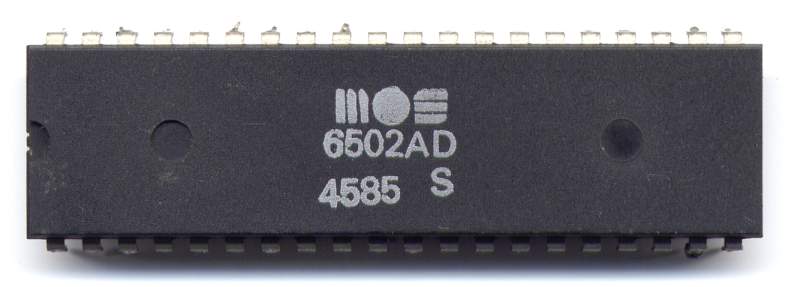 🇺🇸 United StatesMOS Technology 6502
Low-cost 8-bit microprocessor that powered the home computer revolutionCPU · Other · 1975
 🇯🇵 JapanMemory Management Controller
Special chips in NES cartridges that expand console memory limitsMicrocontroller · Other · 1985
 🇺🇸 United StatesZilog Z80
An 8-bit microprocessor that powered early personal computers and game consoles.CPU · Other · 1976
WorldAnalogue Nt Mini
FPGA-based console for NES and Famicom gamesConsole chip · Other · 2017
Photo credits on this page
The small pictures above come from Wikimedia Commons under free licences. Some are cropped to fit.
- Microsoft XCPU (Xenon): Konstantin Lanzet, CC BY 3.0, source
- MOS Technology 6502: Dirk Oppelt, CC BY-SA 3.0, source
- POKEY: RodCastler, CC BY-SA 3.0, source
- DEC T-11: Pauli Rautakorpi, CC BY 3.0, source
- ANTIC: Rod Castler, CC BY-SA 3.0, source
- YM2413: Baz1521, CC BY-SA 3.0, source
- General Instrument CP1600: Evan-Amos, CC BY-SA 3.0, source
- Zilog Z80: Zilog Inc., Public domain, source
- NV1: Swaaye at English Wikipedia, CC BY-SA 3.0, source
- RIVA 128: Raimond Spekking, CC BY-SA 4.0, source
- COP400: Seanriddle, CC BY-SA 4.0, source
- Toshiba TLCS: NobbiP, CC BY-SA 3.0, source
- MOS Technology 6522: Raimond Spekking, CC BY-SA 4.0, source
- MOS Technology VIC: user:idrougge / sv:Användare:Jonas_H, Public domain, source
- VIC-II: Christian Taube, CC BY-SA 2.5, source
- Television Interface Adaptor: Evan-Amos, Public domain, source
- CTIA and GTIA: Rodrigo Castro, CC BY-SA 3.0, source
- SP0256: Myself User:ZyMOS, CC BY-SA 4.0, source
- AY-3-8500: Raimond Spekking, CC BY-SA 4.0, source
- U880: Konstantin Lanzet (with permission), CC BY-SA 3.0, source
- NEC V60: Pauli Rautakorpi, CC BY 3.0, source
- NEC µPD780C: Konstantin Lanzet, CC BY-SA 4.0, source
- Athlon 64: Astraera, CC BY-SA 4.0, source
- Memory Management Controller: Evan-Amos, Public domain, source
- Zilog Z80: User Baz1521 on ja.wikipedia, CC BY-SA 3.0, source
- HuC6270: The original uploader was Baz1521 at Japanese Wikipedia ., CC BY-SA 3.0, source