MOS 6530
Integrated circuit with ROM, RAM, I/O and timer
The MOS 6530 is an integrated circuit by MOS Technology that combines read-only memory, random-access memory, input-output ports and a timer. It enabled compact computer designs in kits like the KIM-1 and controlled peripherals such as Commodore disk drives.
- Combines 1 KB ROM, 64 bytes RAM, I/O and timer
- Used in MOS KIM-1 and TIM-1 computer kits
- Controlled Commodore 2040, 8050 and 8250 disk drives
- Found in Gottlieb and Allied Leisure pinball machines
- Available in ceramic or plastic 40-pin DIP packages
What it is
The MOS 6530, also known as RRIOT, is a highly integrated chip produced by MOS Technology and second sources like Rockwell. It merges one kilobyte of mask-programmed read-only memory with sixty-four bytes of static random-access memory. The device also includes input-output lines and a timer function. This combination allowed engineers to build complete working computers when paired with a central processor. It served as a versatile component in early microcomputer kits and various consumer electronics.
How it came about
MOS Technology developed the 6530 as a variant of the earlier 6532 RIOT chip. The primary difference was the addition of internal read-only memory, which required reducing the available random-access memory from one hundred and twenty-eight bytes to sixty-four. Because the read-only memory was mask programmed during manufacture, many specific versions were created for different applications. These variants carried distinct suffix numbers, such as 6530-001 or 6530-002, to identify their specific software contents.
Inside the chip
The chip architecture integrates four main functions into a single package. It contains a timer for counting events, parallel input-output ports for connecting switches or displays, and two types of memory. The read-only memory stores permanent code, while the small static random-access memory holds temporary data. This high level of integration meant that a system designer needed fewer external components. The device communicates with a main microcontroller to form a functional computing system.
How it was made
Manufacturers produced the 6530 in a forty-pin dual in-line package. Early units used white ceramic materials, while later production runs utilized purple ceramic or plastic casings. MOS Technology was the primary maker, but Rockwell and Synertek also manufactured the chip as second sources. The specific content of the read-only memory was fixed during the fabrication process, leading to numerous distinct part numbers for different customer requirements.
Where it went
This integrated circuit appeared in several notable early computers. Two versions powered the MOS KIM-1 kit, and another supported the TIM-1 computer. It was extensively used in Commodore disk drives, including the 2040, 3040, 4040, 8050 and 8250 models, where it managed disk operating system code. The chip also controlled sound boards in Gottlieb pinball machines and drove logic in Allied Leisure pinball cabinets. A specialized version powered the Commodore CHESSmate electronic chess computer.
Versions and family
Numerous variants exist due to the mask-programmed nature of the read-only memory. Common identifiers include 6530-001 through 6530-050, as well as 6530-241 and 6530-243. Some later versions used in Commodore drives carried alternative markings like 901483-01 or 901885-04 instead of the standard 6530 label. An unprogrammed version, the 6530-005, effectively functioned as a 6532 RIOT with empty memory. Specific variants were tailored for pinball machines or specific disk drive firmware revisions.
Why it matters
The 6530 simplified the design of early microcomputer systems by reducing the component count. Its presence in the KIM-1 helped popularize hobbyist computing. In the commercial sector, it became a standard component in Commodore peripheral devices, ensuring reliable operation for disk storage systems. The chip also found a niche in the amusement industry, providing control logic for pinball machine sounds and gameplay mechanics.
Questions people ask about MOS 6530
What does RRIOT stand for?
RRIOT stands for ROM-RAM-I/O-Timer. It describes the four main functions integrated into the MOS 6530 chip: read-only memory, random-access memory, input-output ports, and a timer.
How much memory does the MOS 6530 have?
The chip contains one kilobyte of mask-programmed read-only memory and sixty-four bytes of static random-access memory. This is less RAM than the similar 6532 RIOT chip, which had one hundred and twenty-eight bytes.
Which computers used the MOS 6530?
It was used in the MOS KIM-1 and TIM-1 microcomputer kits. It also appeared in the Commodore CHESSmate electronic chess game and various Commodore disk drives like the 2040 and 8050.
Why are there so many different 6530 part numbers?
The read-only memory is mask programmed during manufacturing. Each unique software program requires a different mask, resulting in distinct part numbers like 6530-001 or 6530-013 for different applications.
Good reading and sources
The facts on this page come from the Wikipedia article "MOS Technology RRIOT", written by its contributors and used under the CC BY-SA 4.0 licence, and from its Wikidata record (CC0). EveryChip rewrote the text in its own words, with AI assistance, and compares every page with the article to make sure no passage is copied. It may be reused under the same CC BY-SA 4.0 licence with a link back.
It may contain mistakes, and figures change over time. Nothing here is investment or buying advice. If something is wrong, tell us. Last refreshed 2026-11-14.
Like MOS 6530
All microcontrollers 🇺🇸 United States and 1 moreMCS-96
A 16-bit microcontroller family for embedded control systems.Microcontroller · Other
🇺🇸 United StatesMOS Technology 6532
Integrated circuit combining RAM, I/O ports and a timer for 1970s systems.Microcontroller · Other
 🇯🇵 JapanΜCOM-4
NEC original 4-bit single-chip microprocessor from 1973Microcontroller · Other · 1973
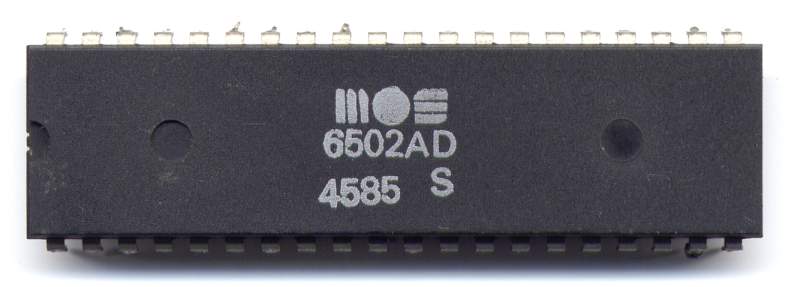 🇺🇸 United StatesMOS Technology 6502
Low-cost 8-bit microprocessor that powered the home computer revolutionCPU · Other · 1975
More from MOS Technology
All of them 🇺🇸 United StatesMOS Technology 6522
I/O controller chip for 6502 microprocessorsMicrocontroller · Other
🇺🇸 United StatesMOS Technology 6551
UART companion chip for the 6502 microprocessorAnalog
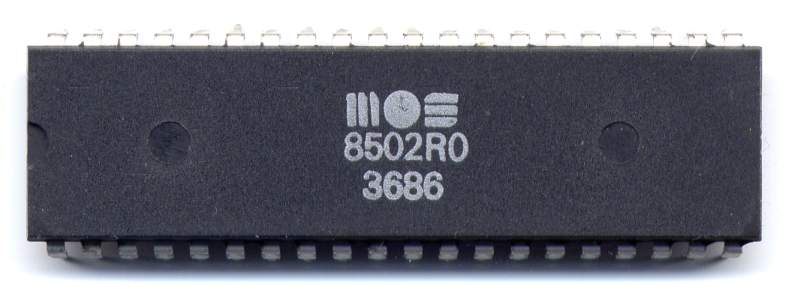 WorldMOS Technology 8502
An 8-bit CPU from MOS Technology that powered the Commodore 128CPU · 8-bit
🇺🇸 United StatesMOS Technology TED
Video and sound chip for Commodore 16 and Plus/4 computersAnalog