MOS Technology TED
Video and sound chip for Commodore 16 and Plus/4 computers
The MOS Technology TED is an integrated circuit that combines video display, sound generation, and system control functions. Made by MOS Technology for the Commodore 16 and Plus/4 home computers, it integrates DRAM refresh and keyboard handling. The chip is notable for its unique colour palette and tendency to overheat.
- Combines video, sound, and DRAM refresh in one chip
- Supports a palette of 121 YPbPr colours
- Known for overheating and self-destruction
- Used in Commodore 16 and Plus/4 computers
- Replicated via open-source FPGATED project
What it is
It served as the primary video and audio controller for the Commodore 16 and Plus/4 personal computers. Unlike separate chips for graphics and sound, the TED combines these functions with DRAM refresh logic, interval timers, and keyboard input handling. This integration reduced component count but limited performance compared to earlier designs. The chip exists in two model numbers, 7360 and 8360, which differ only in manufacturing technology. It is housed in a standard 48-pin dual inline package.
How it came about
MOS Technology designed the TED specifically for the Commodore 16 and Plus/4 systems. The goal was to create a cost-effective solution by merging multiple system functions into a single die. While it shared some video mode concepts with the earlier VIC-II chip, the TED removed hardware sprites to save space and complexity. This design choice reflected a shift towards business-oriented applications rather than pure gaming. The chip has since been studied by hobbyists, leading to open-source replication projects such as FPGATED by Istvan Hegedus.
Inside the chip
The TED supports five video modes, including text and high-resolution graphics up to 320 by 200 pixels. It lacks hardware sprites, forcing developers to use custom character sets for animation. A key feature is its colour generation, which uses luminance and chroma signals to produce 121 colours. This palette is wider than that of the VIC-II. Sound is handled by a simple tone generator with two channels, one for square waves and another for square waves or noise. The chip also manages three 16-bit interval timers and controls the IEC bus for peripherals.
How it was made
The TED was manufactured using processes that resulted in two variants, the 7360 and the more common 8360. It contains 75 bytes of static RAM on-chip to cache colour attributes, eliminating the need for external colour RAM. The physical package is a JEDEC-standard 48-pin DIP. A significant manufacturing flaw causes the chip to generate excessive heat, often leading to self-destruction. This thermal issue requires improved cooling in surviving units. Modern replicas have been created using field-programmable gate arrays to replace failed original silicon.
Where it went
This chip was used exclusively in the Commodore 16 and Plus/4 home computers. Its video capabilities supported basic business applications and simple games, though the lack of sprites limited graphical complexity compared to the Commodore 64. The sound hardware was sufficient for basic tones but lacked the sophistication of the SID chip found in other Commodore machines. The integrated timer and I/O ports managed connections to floppy drives and tape recorders.
Versions and family
There are two main models: the 7360 and the 8360. The only difference between them is the manufacturing technology employed. The 8360 version is more commonly found in existing hardware. No direct successor chip was produced by MOS Technology for this specific architecture. Recent efforts include the FPGATED project, which replicates the internal architecture using Verilog HDL, and the ThED project, which aimed to create a drop-in replacement but faced supply issues.
Why it matters
The TED represented a cost-saving integration strategy for Commodore, though it compromised on graphical features like sprites. Its unique colour palette offered more visual variety than its predecessor, the VIC-II. However, its reputation is marred by reliability issues due to overheating. The chip has gained a niche following among retro computing enthusiasts who have developed open-source hardware replacements to preserve the functionality of the Commodore 16 and Plus/4 systems.
Problems and reception
Users and developers noted the chip's tendency to overheat and destroy itself, making cooling a critical maintenance task. The absence of hardware sprites was viewed as a limitation for game development compared to the Commodore 64. Despite these drawbacks, the integrated design simplified the motherboard layout. Modern preservation efforts have focused on replicating the chip to address the high failure rate of original units.
Questions people ask about MOS Technology TED
What computers used the MOS TED chip?
The TED chip was designed specifically for the Commodore 16 and the Commodore Plus/4 home computers. It handled video display, sound generation, and other system tasks for these machines.
Why does the TED chip overheat?
The chip has a well-known design flaw that causes it to generate excessive heat during operation. This often leads to the chip destroying itself, so improved cooling is recommended for preserved units.
Does the TED support hardware sprites?
No, the TED lacks hardware sprite capabilities. Game animation must be achieved using custom character sets, which restricts graphical performance compared to the VIC-II chip in the Commodore 64.
What is the difference between TED 7360 and 8360?
The only difference between the 7360 and 8360 models is the manufacturing technology used. The 8360 model is more common in existing hardware, but their functional capabilities are identical.
Good reading and sources
The facts on this page come from the Wikipedia article "MOS Technology TED", written by its contributors and used under the CC BY-SA 4.0 licence, and from its Wikidata record (CC0). EveryChip rewrote the text in its own words, with AI assistance, and compares every page with the article to make sure no passage is copied. It may be reused under the same CC BY-SA 4.0 licence with a link back.
It may contain mistakes, and figures change over time. Nothing here is investment or buying advice. If something is wrong, tell us. Last refreshed 2026-11-14.
Like MOS Technology TED
All analog, power and mixed-signal 🇺🇸 United StatesULN2003A
Seven-channel high-voltage Darlington transistor array driverAnalog
 🇺🇸 United StatesLM3914
Analog display driver for LED bar graphs and dot metersAnalog
 🇺🇸 United StatesLM358
Low-power dual operational amplifier for single-supply circuitsAnalog
🇫🇷 FranceEF9345
Semigraphic video processor for 1980s microcomputers and terminalsAnalog · Other
More from MOS Technology
All of them 🇺🇸 United StatesMOS Technology 6522
I/O controller chip for 6502 microprocessorsMicrocontroller · Other
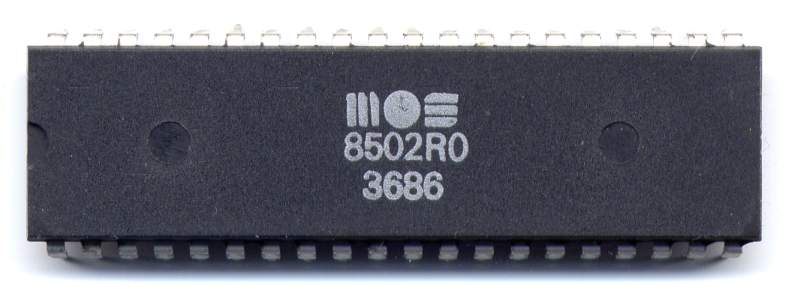 WorldMOS Technology 8502
An 8-bit CPU from MOS Technology that powered the Commodore 128CPU · 8-bit
🇺🇸 United StatesMOS Technology 6551
UART companion chip for the 6502 microprocessorAnalog