C166 family
16-bit RISC microcontroller architecture for control tasks
The C166 is a 16-bit microcontroller architecture launched in 1990 by Infineon and STMicroelectronics. It uses a RISC design with specific extensions for low-latency interrupts and bit-addressable memory, aiming to replace older 8051 controllers in measurement and industrial applications.
- Launched in 1990 by Infineon and STMicroelectronics
- Uses RISC architecture with low-latency interrupts
- Widely used in German and European automotive brands
- Still manufactured in Russia as radiation-hardened chips
What it is
The C166 family is a 16-bit microcontroller architecture designed for measurement and control tasks. Developed by Infineon, formerly the semiconductor division of Siemens, in cooperation with STMicroelectronics, it first appeared in 1990. The architecture employs a Reduced Instruction Set Computer (RISC) approach but includes extensions tailored for microcontrollers. These features include bit-addressable memory and an interrupt system optimized for low latency. Its primary goal at launch was to replace the widely used Intel 8051 controllers in various embedded applications.
How it came about
Siemens and STMicroelectronics introduced the C166 in 1990 to provide a more efficient alternative to the 8051 standard. The design focused on improving performance for real-time control systems. As technology advanced, the architecture evolved into the C167 and ST10 families. These successors added improved addressing modes and support for atomic instructions, which allow operations to complete without interruption. The lineage continued with the XC167, XE2000, and XE166 families, maintaining opcode compatibility while enhancing capabilities for modern embedded needs.
Inside the chip
This architecture uses a RISC core, which simplifies instruction execution for faster processing. It features specific hardware extensions for control tasks. Bit-addressable memory allows the processor to manipulate individual bits directly, saving code space and time. The interrupt system is designed for low latency, ensuring quick responses to external events. Later variants in the C167 and ST10 families introduced atomic instructions and better addressing modes. Some versions include dedicated units for Controller Area Network (CAN bus) communication, facilitating data exchange in complex systems.
How it was made
Infineon and STMicroelectronics originally developed the design. As of 2017, production continues under different entities. NIIET in Voronezh, Russia, manufactures microcontrollers based on this architecture as part of their 1887 series of integrated circuits. This production line includes specialized devices such as the 1887VE6T, which is radiation-hardened for use in harsh environments.
Where it went
The C166 and its successors are widely used in automotive and industrial embedded systems. The C167 and ST10 variants are predominant in German and German-owned automobile brands. They also appear in models from Renault, Dacia, Peugeot, Citroen, Hyundai, and Kia. These chips handle critical control tasks within vehicles. Beyond automotive, the architecture serves general measurement and control applications where reliable, low-latency response is required. The radiation-hardened versions are suitable for space or high-radiation industrial settings.
Versions and family
The family includes several opcode-compatible successors. The C167 family and the STMicroelectronics ST10 family represent the next generation, offering improved addressing and atomic instructions. Further developments include the XC167, XE2000, and XE166 families. In Russia, the 1887 series implements the architecture, with the 1887VE6T being a notable radiation-hardened variant. These variants maintain software compatibility while adding hardware features like CAN bus support for broader connectivity options.
Why it matters
The C166 architecture successfully displaced many 8051-based designs in European automotive and industrial sectors. Its focus on low-latency interrupts made it suitable for real-time control. The continued manufacture in Russia demonstrates its longevity and adaptability to specialized requirements like radiation hardening. The widespread adoption in major car manufacturers underscores its reliability and performance in safety-critical automotive applications.
Questions people ask about C166 family
What is the C166 family?
It is a 16-bit microcontroller architecture released in 1990 by Infineon and STMicroelectronics. It uses a RISC design optimized for measurement and control tasks, featuring bit-addressable memory and low-latency interrupts.
Which cars use C166 chips?
The C167 and ST10 variants are used predominantly in German and German-owned automobile marques. They are also found in models from Renault, Dacia, Peugeot, Citroen, Hyundai, and Kia.
Is the C166 still in production?
Yes, as of 2017, NIIET in Voronezh, Russia, manufactures microcontrollers using this architecture. These are part of the 1887 series and include radiation-hardened devices like the 1887VE6T.
Good reading and sources
The facts on this page come from the Wikipedia article "C166 family", written by its contributors and used under the CC BY-SA 4.0 licence, and from its Wikidata record (CC0). EveryChip rewrote the text in its own words, with AI assistance, and compares every page with the article to make sure no passage is copied. It may be reused under the same CC BY-SA 4.0 licence with a link back.
It may contain mistakes, and figures change over time. Nothing here is investment or buying advice. If something is wrong, tell us. Last refreshed 2026-11-14.
Like C166 family
All microcontrollers 🇯🇵 JapanV850
32-bit RISC microcontroller architecture for embedded systemsMicrocontroller · RISC · 1994
 🇺🇸 United StatesBlackfin
Hybrid microprocessor and DSP family by Analog DevicesMicrocontroller · RISC · 2000
 🇯🇵 JapanToshiba TLCS
Toshiba microcontroller families with CISC and RISC designsMicrocontroller · RISC · 1973
 🇺🇸 United StatesIntel i960
RISC microprocessor for embedded systems and military useCPU · RISC · 1988
More from Infineon
All of them WorldARM7
A family of 32-bit RISC cores licensed by ARM for microcontroller useCPU · Arm · 1993
 🇺🇸 United StatesPowerVR
Graphics and AI accelerator IP for mobile and embedded systemsGPU · GPU architecture · 1985
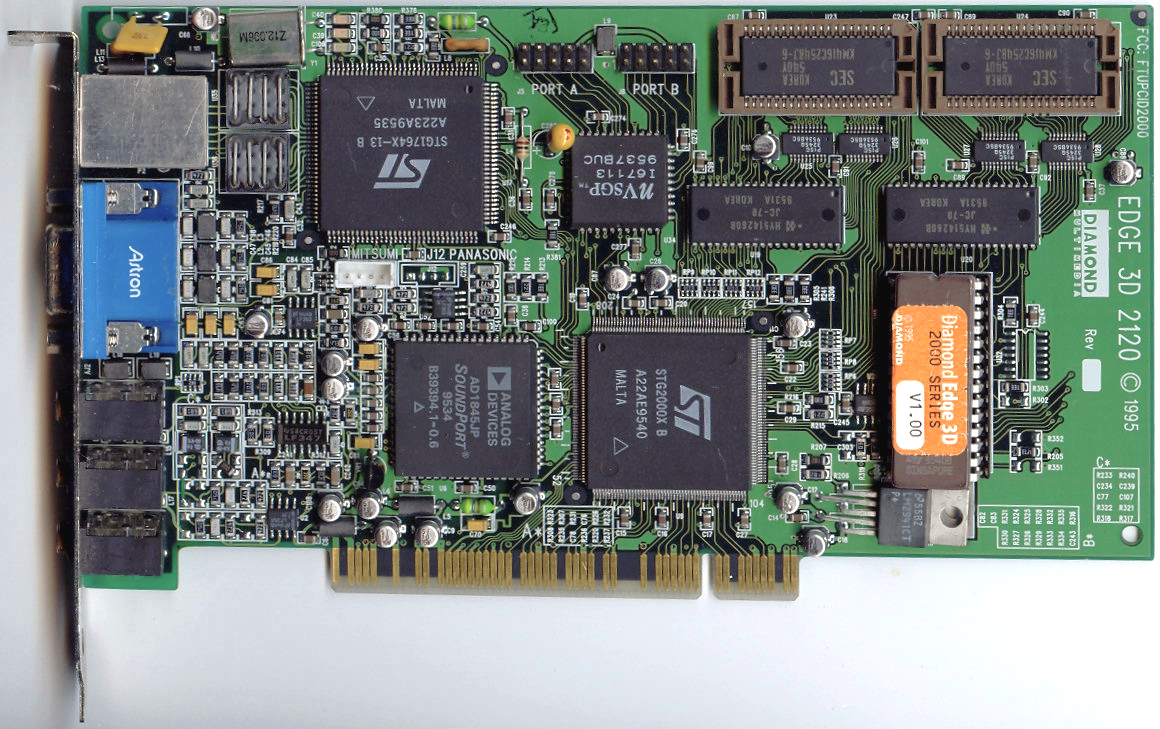 🇺🇸 United StatesNV1
Nvidia's first graphics accelerator with quadratic mapping and integrated audio.GPU · GPU architecture · 1995
 🇺🇸 United StatesRIVA 128
Nvidia's first successful consumer 3D graphics accelerator chipGPU · GPU architecture · 1997