
PowerPC G4
32-bit PowerPC microprocessor family with AltiVec vector processing
The PowerPC G4 is a series of 32-bit microprocessors used in Apple Macintosh computers and embedded systems. Developed by Motorola and IBM, it introduced the AltiVec vector unit for high-performance media processing.
- First PowerPC chip with 128-bit AltiVec vector unit
- Clock speeds ranged from 350 MHz to over 2 GHz
- Used in Apple PowerBook, iBook, and Power Mac G4
- Fabricated using processes from 0.20 μm down to 90 nm
- Popular in embedded routers and military avionics
What it is
The PowerPC G4 is a designation Apple used for a fourth generation of 32-bit PowerPC microprocessors. These chips were primarily manufactured by Motorola and later Freescale, with design input from IBM. The internal model family is known as PowerPC 74xx. They powered many Apple Macintosh computers, including the PowerBook G4, iBook G4, and Power Mac G4. Beyond personal computers, these processors found widespread use in embedded environments such as routers, telecom switches, and military avionics due to their vector processing capabilities.
How it came about
Motorola debuted the first G4 chip, the PowerPC 7400 codenamed Max, in August 1999. Initial production yields were low, forcing Apple to withdraw advertised 500 MHz models and downgrade speeds temporarily. This incident strained relations between Apple and Motorola. The 500 MHz version returned in February 2000 after manufacturing issues were resolved. In 2004, Freescale rebranded the core as e600, shifting focus from general computing to high-end embedded system-on-chip devices.
Inside the chip
The G4 architecture features a 128-bit vector processing unit called AltiVec by Motorola and Velocity Engine by Apple. This unit allows simultaneous execution of multiple floating-point or integer operations, boosting performance in media applications. The 7400 had a four-stage pipeline, while the later 7450 redesign extended this to seven stages for higher clock speeds. The 7450 also integrated a 256 KB L2 cache on the die. Later models like the 7447 added dynamic frequency scaling and thermal diodes. The design supports symmetric multiprocessing and uses either the older 60x bus or the advanced MPX bus.
How it was made
Manufacturing processes evolved from Motorola's 0.20 μm HiPerMOS6 process for the original 7400 to 90 nm silicon-on-insulator technology for the 7448. The initial 7400 contained 10.5 million transistors on an 83 mm2 die with copper interconnects. The more complex 7450 held 33 million transistors, while the 7447 reached 58 million. Freescale produced these chips, utilizing copper interconnects and silicon-on-insulator techniques in later nodes to reduce power consumption and improve speed.
Where it went
Apple integrated G4 processors into desktops like the Power Mac G4 and Cube, and laptops such as the PowerBook and iBook G4. They also appeared in the eMac, early Xserves, and first-generation Mac minis. Outside Apple, the AmigaOne and Pegasos computers used these chips. Embedded applications included Cisco routers, telecom switches, and imaging systems. The AltiVec unit made them suitable for tasks requiring heavy media processing, such as video editing and signal analysis in industrial or military contexts.
Versions and family
The family includes the 7400, low-power 7410, and redesigned 7450. The 7455 and 7445 introduced silicon-on-insulator fabrication, with the 7455 supporting external L3 cache. The 7447 and 7457 moved to a 130 nm process, with the 7457 supporting up to 4 MB of L3 cache. The final pure G4 was the 7448, featuring a 1 MB L2 cache and 90 nm process. Upgrade modules for older Macs were produced by companies like Sonnet Technology and PowerLogix using these later variants.
Why it matters
The G4 brought vector processing to mainstream personal computing, offering significant speedups for compatible software like Adobe Photoshop. It maintained Apple's product line until the transition to the 64-bit PowerPC 970 and later Intel processors. The architecture influenced other designs, including the Xbox 360 Xenon CPU and IBM POWER6. Its longevity in embedded systems demonstrates the versatility of the AltiVec unit beyond traditional desktop roles.
Problems and reception
Initial reception was marred by supply issues with the 500 MHz model, causing a public rift between Apple and Motorola. Despite this, the performance benefits of AltiVec were well-regarded in professional media workflows. The eventual stagnation in clock speeds compared to contemporary x86 processors led Apple to seek alternative architectures for its high-end desktops.


Questions people ask about PowerPC G4
What is AltiVec in the PowerPC G4?
AltiVec is a 128-bit vector processing unit built into the G4 processor. It allows the chip to perform multiple mathematical operations simultaneously, significantly speeding up tasks like image rendering and media conversion.
Which Apple computers used the PowerPC G4?
Apple used G4 processors in the PowerBook G4, iBook G4, Power Mac G4, Power Mac G4 Cube, eMac, first-generation Xserves, first-generation Mac minis, and the iMac G4.
Why did Apple stop using the G4 in desktops?
Apple phased out the G4 in desktops when it adopted the 64-bit PowerPC 970 processor, known as the G5. The G5 offered higher performance for demanding desktop tasks, leading to the discontinuation of G4-based desktop models.
Good reading and sources
The facts on this page come from the Wikipedia article "PowerPC G4", written by its contributors and used under the CC BY-SA 4.0 licence, and from its Wikidata record (CC0). EveryChip rewrote the text in its own words, with AI assistance, and compares every page with the article to make sure no passage is copied. It may be reused under the same CC BY-SA 4.0 licence with a link back.
It may contain mistakes, and figures change over time. Nothing here is investment or buying advice. If something is wrong, tell us. Last refreshed 2026-11-14.
Like PowerPC G4
All CPUs and microprocessors 🇺🇸 United StatesPowerPC 7xx
Third-generation 32-bit PowerPC microprocessor family for PCs and embedded systems.CPU · Power · 1997
 🇺🇸 United StatesPowerPC e600
32-bit PowerPC microprocessor core for high-performance SoCsCPU · Power · 2004
 🇺🇸 United StatesMotorola 68060
Final general-purpose 32-bit CPU in the Motorola 68000 lineCPU · 68k · 1994
 🇺🇸 United StatesPowerPC 400
Embedded 32-bit RISC processor cores for diverse applicationsCPU · Power · 1994
More from Motorola
All of them 🇺🇸 United StatesAthlon
AMD's x86 desktop processor brand, from the first 1 GHz chip to entry-level Zen APUsCPU · x86 · 1999
 🇺🇸 United StatesPOWER3
64-bit PowerPC microprocessor for IBM workstations and serversCPU · Power · 1998
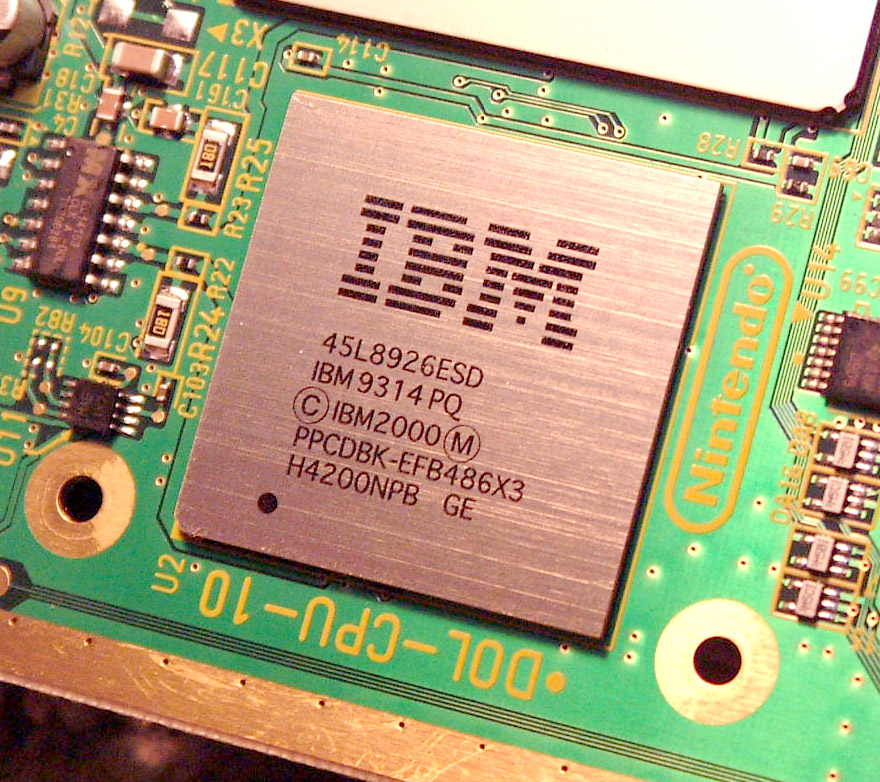 🇺🇸 United StatesGekko
Custom PowerPC CPU for the Nintendo GameCubeCPU · Power · 2000
 🇺🇸 United StatesAlpha 21264
High-performance RISC microprocessor by Digital Equipment CorporationCPU · RISC · 1998