PCs and laptops
Desktop and laptop processors, chipsets and graphics. 484 chips on EveryChip so far.
Personal computers and laptops have been built around x86 processors since IBM chose the Intel 8088 for its PC in 1981. Intel and AMD have competed for decades, from the 486 and Pentium to Athlon, Core and Ryzen. Since 2020 Apple's Arm-based M-series and later Qualcomm's Snapdragon X chips have brought Arm into laptops. A PC also holds a GPU, chipset, memory and storage chips.
Intel, AMD and the clock race
Through the 1990s PC chips were sold on clock speed, which rose from tens of megahertz to over 1 GHz in 2000. After the Pentium 4 hit power limits, the focus moved to multiple cores and efficiency, led by Intel's Core 2 in 2006 and AMD's Zen-based Ryzen in 2017. Today's laptop chips mix performance and efficiency cores and include AI engines called NPUs.
Arm arrives
Apple's M1 of 2020 showed that an Arm SoC could match or beat x86 laptops in performance per watt, and Apple moved its whole Mac range to its own chips by 2023. Microsoft's Windows on Arm gained Qualcomm's Snapdragon X Elite in 2024. Intel's Lunar Lake of 2024 responded with memory placed in the processor package, a technique Apple also uses.
Famous PCs and laptops chips
 Intel 8088The processor of the 1981 IBM PC
 I486Intel's 1989 chip with on-chip cache and maths unit
 PentiumIntel's 1993 brand that defined 1990s PCs
 Athlon 64AMD's 64-bit desktop chip, 2003
 Intel Core 2Intel's 2006 efficient multi-core line
 RyzenAMD's Zen-based PC processors, 2017
 Apple M1 UltraApple's first Mac chip, 2020
 Lunar LakeIntel's 2024 laptop chip with on-package memory
Further reading
 🇺🇸 United StatesBroadwell
Intel's 14 nm shrink of the Haswell CPU microarchitectureCPU · x86 · 2014
 🇮🇱 IsraelIce Lake
Intel 10 nm mobile and server processors with Sunny Cove coresCPU · x86 · 2019
🇺🇸 United StatesTiger Lake
11th generation mobile processors from Intel using Willow Cove coresCPU · x86 · 2020
 🇺🇸 United StatesRocket Lake
Intel's 11th-gen desktop CPU family on 14 nmCPU · x86 · 2021
 🇺🇸 United StatesArrow Lake
Intel Core Ultra Series 2 desktop and mobile processorsCPU · x86 · 2024
 🇺🇸 United StatesSapphire Rapids
Intel server and workstation chips with chiplet designCPU · x86 · 2023
 🇺🇸 United StatesCascade Lake
Intel 14 nm server and workstation processor generationCPU · x86 · 2019
🇺🇸 United StatesOryon
Custom ARM CPU core microarchitecture by QualcommCPU · Arm · 2024
WorldKryo
ARM-based CPU cores for Snapdragon SoCsCPU · Arm · 2015
 🇺🇸 United StatesRigel
DEC VAX microprocessor chipset from 1989CPU · Other · 1989
 🇺🇸 United StatesNvidia RTX Spark
ARM system on chip for Windows laptops and desktopsSoC · Arm · 2026
🇺🇸 United StatesProject Denver
Nvidia ARM CPU with binary translationCPU · Arm · 2014
 🇺🇸 United StatesApple silicon
Arm-based chips designed by Apple for its devicesSoC · Arm · 2010
 🇺🇸 United StatesTMS34010
First programmable graphics processor integrated circuitGPU · Other · 1986
 WorldIntel 486 OverDrive
Upgrade processors for older Intel 486 personal computersCPU · x86
🇮🇱 IsraelTimna
Cancelled Intel CPU with integrated graphics and memory controllerCPU · x86 · 2000
 🇺🇸 United StatesPOWER1
IBM's first high-end RISC processor, launched in 1990.CPU · Power · 1990
🇺🇸 United StatesSnapdragon X Elite
Arm-based system on a chip for Windows laptopsSoC · Arm
 🇺🇸 United StatesMotorola 68000 series
32-bit CISC microprocessor family from MotorolaCPU · 68k · 1979
 🇺🇸 United StatesIntel 80186
16-bit microprocessor with integrated peripherals for embedded systemsCPU · x86 · 1982
 WorldMotorola 68012
32-bit microprocessor with extended memory and virtualization supportCPU · 68k · 1982
 🇹🇼 TaiwanCyrix III
x86 processor from VIA using Centaur and Cyrix coresCPU · x86 · 2000
 🇺🇸 United StatesCyrix Cx486DLC
Hybrid x86 desktop CPU bridging 386 and 486 architecturesCPU · x86 · 1992
 🇯🇵 JapanNEC µPD780C
Zilog Z80 compatible 8-bit microprocessor by NECCPU · Other
 🇺🇸 United StatesHP FOCUS
First commercial single-chip 32-bit microprocessor from 1982CPU · Other · 1982
🇺🇸 United StatesI486
32-bit microprocessor with on-chip cache and FPUCPU · x86 · 1989
 🇺🇸 United StatesRISC Single Chip
IBM single-chip microprocessor for entry-level workstationsCPU · RISC
WorldMOS Technology 6509
6502 microprocessor with on-chip bank switching for 1 MB RAMCPU · 8-bit
🇺🇸 United StatesIBM PALM processor
16-bit CPU module used in early IBM portable computersCPU · Other · 1975
 🇹🇼 TaiwanUMC Green CPU
Pin-compatible x86 alternative to the Intel 80486 from UMCCPU · x86 · 1990
 🇺🇸 United StatesCyrix Cx486
x86 desktop microprocessor competing with Intel 486CPU · x86 · 1993
🇺🇸 United StatesIvy Bridge-E
Server and workstation CPUs based on the Ivy Bridge microarchitecture.CPU · x86 · 2013
🇺🇸 United StatesX704
High-frequency 32-bit PowerPC microprocessor by Exponential TechnologyCPU · Power · 1997
🇺🇸 United StatesSandy Bridge-E
32 nm server and workstation processors from IntelCPU · x86 · 2011
 🇺🇸 United StatesIntel Core
Multi-core x86 CPU family for PCs and servers by IntelCPU · x86 · 2006
 🇺🇸 United StatesDEC Alpha
A 64-bit RISC architecture by Digital Equipment CorporationCPU · RISC · 1992
 🇺🇸 United StatesIntel Core
Multi-core x86 CPUs for PCs and servers by Intel.CPU · x86 · 2006
 🇺🇸 United StatesIntel Core 5
Mid-range processor series from IntelCPU · x86 · 2024
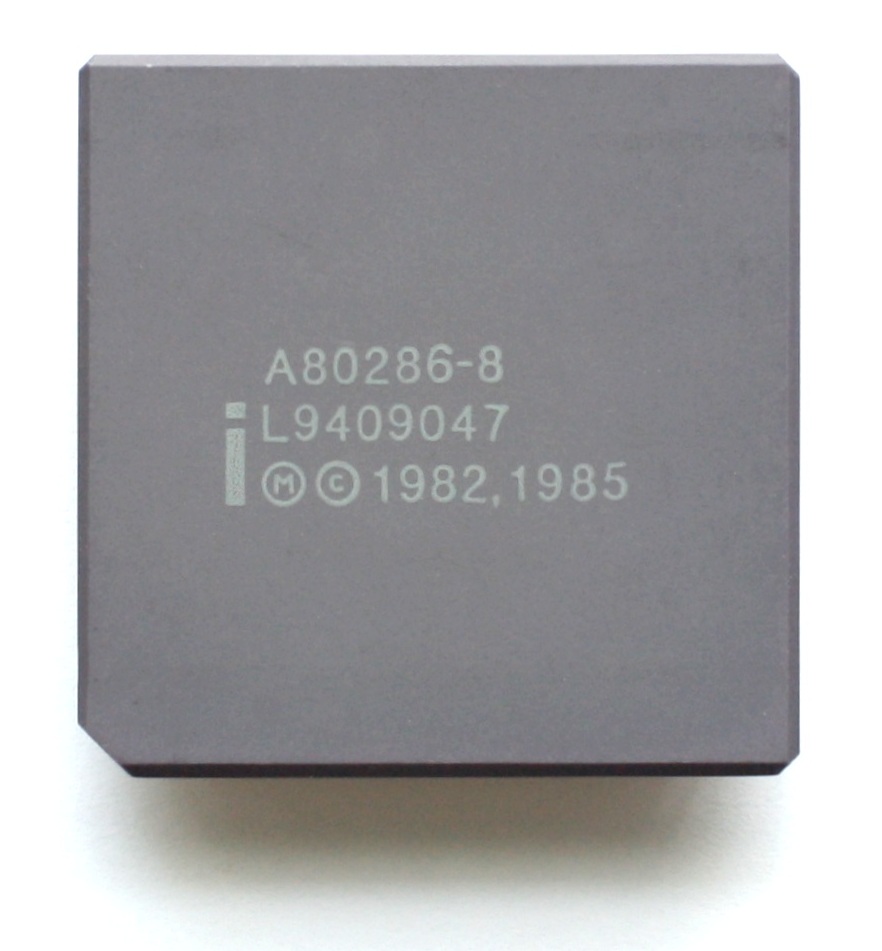 🇺🇸 United StatesIntel 80286
16-bit microprocessor with protected mode and 16 MB memory supportCPU · x86 · 1982
 🇺🇸 United StatesIntel Core
Multi-core x86 CPUs for PCs, workstations and servers.CPU · x86 · 2017
 🇺🇸 United StatesZilog Z80
An 8-bit microprocessor that powered early personal computers and game consoles.CPU · Other · 1976
🇺🇸 United StatesApple M6
ARM-based system on a chip with 12 cores and 2 nm processSoC · Arm · 2026
 🇺🇸 United StatesApple M1 Pro
Professional ARM system-on-a-chip for Mac laptopsSoC · Arm · 2021
🇺🇸 United StatesApple M1 Max
High-performance ARM system-on-a-chip for professional MacsSoC · Arm · 2021
 🇺🇸 United StatesZilog Z80
An 8-bit microprocessor that powered early personal computers and game consoles.CPU · Other · 1976
🇺🇸 United StatesApple M1 Ultra
Dual-chip workstation SoC with 20 cores and 114 billion transistorsSoC · Arm · 2022
 🇺🇸 United StatesI386
First 32-bit x86 microprocessor by IntelCPU · x86 · 1985
 🇺🇸 United StatesSuperCPU
Processor upgrade cartridge for Commodore 64 and 128 systemsCPU · Other · 1997
Photo credits on this page
The small pictures above come from Wikimedia Commons under free licences. Some are cropped to fit.
- Lunar Lake: LaptopMedia, CC BY 3.0, source
- Intel 80286: Konstantin Lanzet (with permission), CC BY-SA 3.0, source
- HP FOCUS: Thomas Schanz, CC BY-SA 3.0, source
- Apple U1: Henriok, CC0, source
- Intel Core 2: Raimond Spekking, CC BY-SA 4.0, source
- Intel 8088: Unknown author, CC BY-SA 3.0, source
- Motorola 68000: en:User:ArnoldReinhold, CC BY-SA 3.0, source
- Pentium: Pdesousa359, CC BY-SA 3.0, source
- Zilog Z80: Zilog Inc., Public domain, source
- Nehalem: smial ( talk ), FAL, source
- Broadwell: Asimzb, CC BY-SA 4.0, source
- Ice Lake: Fritzchens Fritz, CC0, source
- Rocket Lake: 4300streetcar, CC BY 4.0, source
- Arrow Lake: ZMASLO, CC BY 3.0, source
- Sapphire Rapids: 极客湾Geekerwan, CC BY 3.0, source
- Cascade Lake: Smial ( talk ), FAL, source
- Rigel: Pauli Rautakorpi, CC BY 3.0, source
- Nvidia RTX Spark: Daniel Lu ( User:dllu ), CC BY-SA 4.0, source
- TMS34010: Konstantin Lanzet, CC BY 3.0, source
- UMC Green CPU: Pauli Rautakorpi, CC BY 3.0, source
- Intel 486 OverDrive: Myself User:ZyMOS, CC BY-SA 4.0, source
- Cyrix Cx486: Appaloosa, CC BY-SA 3.0, source
- POWER1: Retro-Computing Society of Rhode Island, CC BY-SA 3.0, source
- Alpha 21064: Dirk Oppelt, CC BY-SA 3.0, source
- IBM Power: Henriok, CC0, source
- Intel 80186: Armin Kübelbeck, CC BY-SA 3.0, source
- Motorola 68012: Pauli Rautakorpi, CC BY 3.0, source
- Cyrix III: Konstantin Lanzet, CC BY-SA 3.0, source
- Cyrix Cx486DLC: Pauli Rautakorpi, CC BY 3.0, source
- NEC µPD780C: Konstantin Lanzet, CC BY-SA 4.0, source
- I486: Konstantin Lanzet, GFDL, source
- Intel Core 5: Photo: Qurren ( talk ), with IXY Digital 10 compact digital camera., CC BY-SA 3.0, source
- Intel Core: Köf3, CC BY-SA 3.0, source
- Intel Core: PantheraLeo1359531, CC BY 4.0, source
- Apple M1 Max: Sonic8400, CC BY-SA 4.0, source
- Apple M1 Ultra: Henriok, CC0, source
- SuperCPU: Thomas Conté, CC BY-SA 2.0, source
- I386: Konstantin Lanzet, CC BY-SA 3.0, source
- Ryzen: ICCTsHeY, CC BY-SA 4.0, source
- Athlon 64: Astraera, CC BY-SA 4.0, source
- Zilog Z80: User Baz1521 on ja.wikipedia, CC BY-SA 3.0, source