
Apple M1 Max
High-performance ARM system-on-a-chip for professional Macs
The Apple M1 Max is a system-on-a-chip designed by Apple and manufactured by TSMC. Launched in October 2021, it features ten CPU cores and up to thirty-two GPU cores. It serves as the high-end variant of the M1 family, offering double the memory bandwidth of the M1 Pro for demanding creative workloads.
- Contains 57 billion transistors on a 5 nm process
- Delivers 400 GB/s memory bandwidth with unified LPDDR5
- Features up to 32 GPU cores and 10 CPU cores
- Powers 2021 MacBook Pro and 2022 Mac Studio models
What it is
The Apple M1 Max is a high-performance system-on-a-chip developed by Apple Inc. It belongs to the Apple Silicon family and uses ARM-based architecture. Introduced in late 2021, this chip targets professional users requiring substantial computing power. It integrates central processing units, graphics processors, and memory into a single package. The design focuses on delivering high throughput for video editing and 3D rendering while maintaining energy efficiency. It represents a significant step in Apple's transition away from Intel processors for its Mac lineup.
How it came about
Apple launched the M1 Max in October 2021 alongside the M1 Pro. This release followed the original M1 chip, which debuted in November 2020. The M1 Max was part of Apple's broader strategy to replace Intel components in Mac computers. It succeeded the combination of Intel CPUs and discrete GPUs used in previous high-end models. The chip was designed to address the needs of professionals who found the base M1 insufficient for heavy workloads. It paved the way for the later M1 Ultra, which combined two M1 Max units.
Inside the chip
The chip uses a hybrid core design with eight high-performance Firestorm cores and two efficiency-focused Icestorm cores. The performance cores run at approximately 3.2 GHz. It includes a large system-level cache of 48 MB. The graphics unit contains up to thirty-two cores, providing significant parallel processing capability. Memory is unified, meaning the CPU and GPU share the same pool of LPDDR5 RAM. This configuration allows for 400 GB/s of memory bandwidth. The chip also features a sixteen-core Neural Engine for machine learning tasks and dedicated media engines for video codec acceleration.
How it was made
TSMC manufactures the M1 Max using its five-nanometre process node. The die contains fifty-seven billion transistors. Apple packages the processor and memory chips together in a system-in-package design. This approach reduces latency and increases data transfer speeds between components. The physical size of the die is larger than that of the standard M1 or M1 Pro to accommodate the additional graphics cores and memory interface width.
Where it went
This processor powers the fourteen-inch and sixteen-inch MacBook Pro models released in 2021. It is also found in the Mac Studio desktop computer launched in 2022. These devices are marketed towards video editors, software developers, and 3D artists. The chip supports multiple high-resolution external displays. It enables hardware-accelerated encoding and decoding for ProRes and HEVC video formats. The High Power Mode feature on the sixteen-inch MacBook Pro utilizes the full thermal headroom of the M1 Max.
Versions and family
The M1 Max sits above the M1 Pro and below the M1 Ultra in the product hierarchy. The M1 Pro offers fewer graphics cores and half the memory bandwidth. The M1 Ultra essentially combines two M1 Max dies using an interconnect called UltraFusion. The successor to the M1 Max is the Apple M2 Max. Previous generations relied on Intel Core processors and separate graphics cards from AMD or integrated Intel graphics.
Why it matters
The M1 Max demonstrated that ARM-based chips could compete with high-end x86 workstation processors. It offered superior performance per watt compared to contemporary Intel and AMD offerings. Critics praised the battery life and sustained performance of laptops using this chip. It accelerated the industry shift towards custom silicon for personal computers. The unified memory architecture changed how developers optimized applications for macOS.
Problems and reception
Reviewers highlighted the exceptional speed and efficiency of the chip. Some security researchers identified vulnerabilities such as M1racles and Pacman. These flaws involved covert channels and speculative execution but were not deemed critical threats by Apple. Users reported issues with certain third-party USB-C hubs causing device failures. Apple addressed this through software updates and logic board replacements.


Questions people ask about Apple M1 Max
What is the difference between M1 Max and M1 Pro?
The M1 Max has double the GPU cores and twice the memory bandwidth of the M1 Pro. It also includes more system-level cache. Both chips share the same ten-core CPU configuration, but the Max is designed for heavier graphical and memory-intensive tasks.
Can the M1 Max support external monitors?
Yes, the M1 Max supports up to three 6K displays via Thunderbolt and one 4K monitor via HDMI 2.0. This is an improvement over the M1 Pro, which supports only two external 6K displays.
Who manufactures the Apple M1 Max?
Apple designs the M1 Max, but it is manufactured by TSMC. The production uses TSMC's five-nanometre process technology, which allows for high transistor density and energy efficiency.
Good reading and sources
- Checking your browserAnandTech, Article
- Apple’s M1 Chip Has a Fascinating FlawWired, Article
- Apple Silicon M1 chip: Here's what we knowZDNET, Article
- The Best MacBooksThe New York Times, Article
The facts on this page come from the Wikipedia article "Apple M1", written by its contributors and used under the CC BY-SA 4.0 licence, and from its Wikidata record (CC0). EveryChip rewrote the text in its own words, with AI assistance, and compares every page with the article to make sure no passage is copied. It may be reused under the same CC BY-SA 4.0 licence with a link back.
It may contain mistakes, and figures change over time. Nothing here is investment or buying advice. If something is wrong, tell us. Last refreshed 2026-11-14.
Like Apple M1 Max
All systems on a chip 🇺🇸 United StatesApple M1 Ultra
Dual-chip workstation SoC with 20 cores and 114 billion transistorsSoC · Arm · 2022
🇷🇺 RussiaBaikal CPU
Russian microprocessor line using MIPS, ARM and RISC-V coresCPU · MIPS · 2016
🇺🇸 United StatesProject Denver
Nvidia ARM CPU with binary translationCPU · Arm · 2014
 🇺🇸 United StatesApple M1 Pro
Professional ARM system-on-a-chip for Mac laptopsSoC · Arm · 2021
More from Apple Inc.
All of them 🇬🇧 United KingdomRP2040
Dual-core ARM Cortex-M0+ microcontroller by Raspberry PiMicrocontroller · Arm · 2021
 🇺🇸 United StatesApple A15 Bionic
Six-core ARM system on a chip for Apple mobile devicesSoC · Arm · 2021
 🇺🇸 United StatesApple S7
System in package chip for Apple Watch Series 7SoC · Arm · 2021
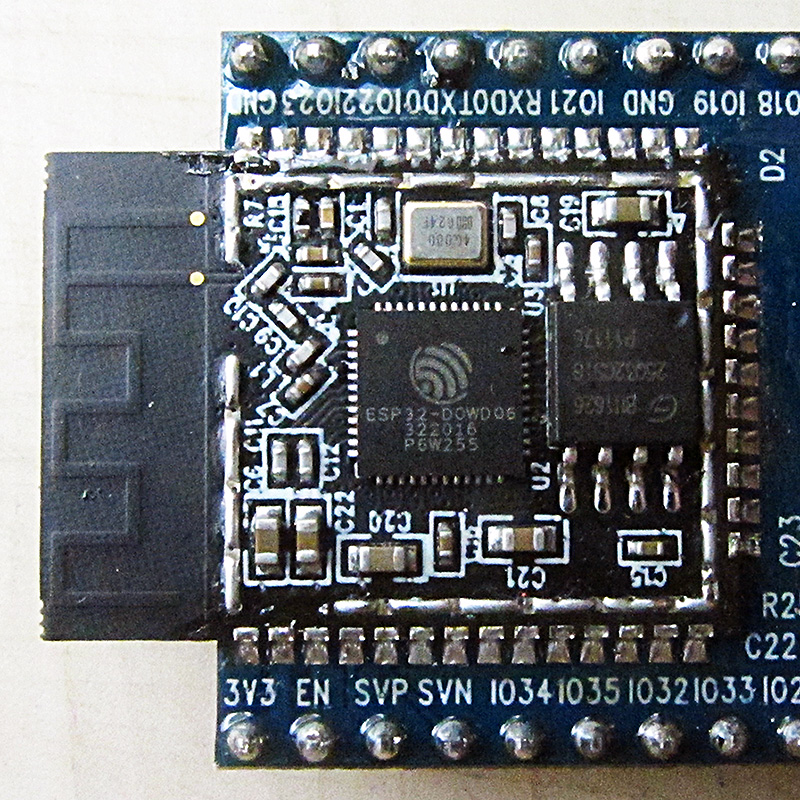 🇨🇳 ChinaESP32
Low-cost Wi-Fi and Bluetooth microcontroller family by EspressifMicrocontroller · RISC · 2021