
Apple M1 Pro
Professional ARM system-on-a-chip for Mac laptops
The Apple M1 Pro is a professional-grade system-on-a-chip designed by Apple and manufactured by TSMC. Launched in October 2021, it scales up the original M1 design with more CPU cores, higher memory bandwidth, and enhanced graphics performance for demanding creative workflows.
- Contains 33.7 billion transistors on a 5 nm process
- Offers up to 200 GB/s memory bandwidth
- Features 10 CPU cores with hybrid architecture
- Supports up to 32 GB of unified LPDDR5 memory
What it is
The Apple M1 Pro is a system-on-a-chip designed for professional computing tasks. It integrates central processing, graphics, and memory into a single unit. Apple introduced this chip in late 2021 to bridge the gap between consumer and high-end workstation performance. It serves as the engine for larger MacBook Pro models, offering significant gains in speed and efficiency over previous Intel-based systems. The chip uses an ARM instruction set, marking a continued shift in Apple hardware strategy.
How it came about
Apple developed the M1 Pro as a scaled-up version of the original M1 chip released in 2020. The company aimed to address the needs of power users who required more graphical power and memory bandwidth. This launch occurred in October 2021, following the successful transition of entry-level Macs to Apple silicon. It represented the second step in Apple's roadmap to replace Intel processors across its entire product line, focusing first on professional laptops.
Inside the chip
The chip employs a hybrid core design with high-performance Firestorm cores and energy-efficient Icestorm cores. The standard configuration includes eight performance cores and two efficiency cores, though some variants have six performance cores. These cores are grouped into clusters that share L2 cache memory. The graphics processor features up to sixteen cores, providing substantial rendering capability. A unified memory architecture allows all components to access data quickly without copying it between separate pools.
How it was made
TSMC manufactures the M1 Pro using a five-nanometre process node. This advanced fabrication technique allows the chip to pack 33.7 billion transistors into a small area. The processor and memory chips are mounted together in a system-in-package design. This physical integration reduces latency and improves power efficiency compared to traditional motherboard layouts where components are spaced apart.
Where it went
This processor powers the fourteen-inch and sixteen-inch MacBook Pro models released in 2021. It handles intensive tasks such as video editing, software compilation, and graphic design. The chip supports multiple high-resolution external displays via Thunderbolt connections. Its efficiency allows these powerful laptops to operate without fans in some configurations, maintaining quiet operation during heavy workloads while extending battery life significantly.
Versions and family
The M1 Pro sits between the base M1 and the more powerful M1 Max. While the M1 Max doubles the graphics cores and memory bandwidth, the M1 Pro offers a balanced upgrade for most professionals. It was succeeded by the M2 Pro in 2023. The M1 Ultra, designed for desktop workstations, essentially combines two M1 Max units, placing the M1 Pro as a mid-tier option in the broader M1 family hierarchy.
Why it matters
The release of the M1 Pro demonstrated that ARM-based chips could compete with high-end x86 processors in professional markets. It helped solidify Apple's control over its hardware supply chain. Critics praised the balance of performance and power consumption, noting that it delivered workstation-class speeds in a portable form factor. This success encouraged other manufacturers to explore similar system-on-chip designs for laptops.
Problems and reception
Users reported issues with certain third-party USB-C hubs causing device failures, which Apple addressed through software updates and logic board replacements. Security researchers identified minor vulnerabilities named M1racles and Augury, but these were not considered critical threats to most users. Overall, the chip received positive reviews for its speed and thermal management, with few complaints regarding real-world performance.


Questions people ask about Apple M1 Pro
What is the difference between M1 Pro and M1 Max?
The M1 Max has double the GPU cores and memory bandwidth of the M1 Pro. While the M1 Pro tops out at 16 graphics cores and 200 GB/s bandwidth, the M1 Max offers 32 graphics cores and 400 GB/s bandwidth, making it better for extreme graphical tasks.
Can the M1 Pro support external monitors?
Yes, the M1 Pro supports two external 6K displays at 60 Hz over Thunderbolt connections. This is an improvement over the base M1, which typically supports only one external display, making the Pro model suitable for multi-screen professional setups.
Who manufactures the Apple M1 Pro chip?
Apple designs the M1 Pro in-house, but it is manufactured by TSMC using their five-nanometre process technology. This partnership allows Apple to leverage advanced semiconductor fabrication techniques while retaining control over the chip architecture and features.
Good reading and sources
- Checking your browserAnandTech, Article
- Apple’s M1 Chip Has a Fascinating FlawWired, Article
- Apple Silicon M1 chip: Here's what we knowZDNET, Article
- The Best MacBooksThe New York Times, Article
The facts on this page come from the Wikipedia article "Apple M1", written by its contributors and used under the CC BY-SA 4.0 licence, and from its Wikidata record (CC0). EveryChip rewrote the text in its own words, with AI assistance, and compares every page with the article to make sure no passage is copied. It may be reused under the same CC BY-SA 4.0 licence with a link back.
It may contain mistakes, and figures change over time. Nothing here is investment or buying advice. If something is wrong, tell us. Last refreshed 2026-11-14.
Like Apple M1 Pro
All systems on a chip 🇺🇸 United StatesApple M2
Apple's second-generation ARM SoC family for Macs, iPads and Vision ProSoC · Arm · 2022
🇺🇸 United StatesApple M3
Apple's 3 nm Mac and iPad SoC family with CPU, GPU and Neural EngineSoC · Arm · 2023
🇺🇸 United StatesApple M4
ARM-based system on a chip for Apple devicesSoC · Arm · 2024
WorldKryo
ARM-based CPU cores for Snapdragon SoCsCPU · Arm · 2015
More from Apple Inc.
All of them 🇬🇧 United KingdomRP2040
Dual-core ARM Cortex-M0+ microcontroller by Raspberry PiMicrocontroller · Arm · 2021
 🇺🇸 United StatesApple A15 Bionic
Six-core ARM system on a chip for Apple mobile devicesSoC · Arm · 2021
 🇺🇸 United StatesApple M1 Max
High-performance ARM system-on-a-chip for professional MacsSoC · Arm · 2021
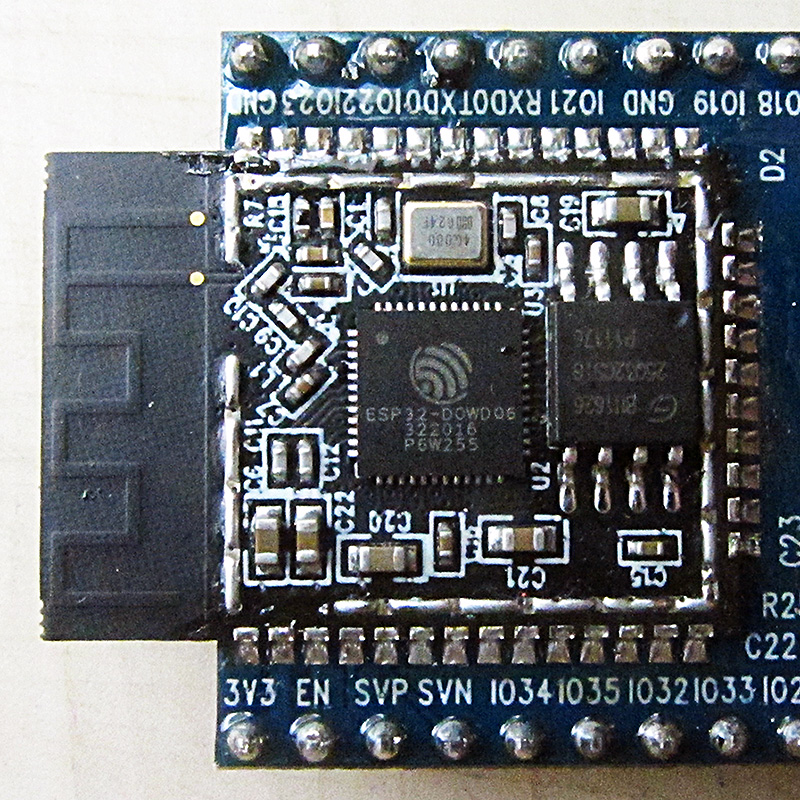 🇨🇳 ChinaESP32
Low-cost Wi-Fi and Bluetooth microcontroller family by EspressifMicrocontroller · RISC · 2021