MOS Technology 6509
6502 microprocessor with on-chip bank switching for 1 MB RAM
The MOS Technology 6509 is an enhanced microprocessor based on the 6502 design. It integrates bank switching logic directly onto the chip, allowing it to address up to one megabyte of RAM. This component was used in the Commodore CBM-II computer line.
- Addresses up to 1 MB of RAM
- Integrates bank switching logic on-chip
- Used in Commodore CBM-II computers
- Based on the popular 6502 microprocessor
- Known for difficult programming model
What it is
The MOS Technology 6509 is a microprocessor that serves as an improved version of the well-known 6502 chip. Its primary distinction is the inclusion of bank switching logic directly on the silicon die. This integration allows the processor to manage up to one megabyte of random access memory without needing external support circuits. It belongs to the 65xx family of chips and was utilized in specific personal computer systems.
How it came about
This chip was developed as an enhancement to the popular 6502 architecture. While other processors in this family could perform bank switching, they typically required separate external logic gates to do so. The 6509 solved this by placing the necessary control mechanisms on the chip itself. It found its main application in the Commodore CBM-II series of computers.
Inside the chip
The processor uses a specific register scheme to handle memory banks. A register at address zero selects the bank from which the central processing unit fetches instructions, defaulting to bank fifteen on startup. Another register at address one controls data transfer between banks using specific CPU opcodes. This method allows reading and writing across different memory sections but has a reputation for being challenging for programmers to master.
Where it went
The primary known use for this microprocessor is within the Commodore CBM-II line of computers. These machines leveraged the expanded memory addressing capabilities of the chip to support more complex software and larger datasets than earlier eight-bit systems could handle without additional hardware complexity.
Versions and family
It is part of the MOS Technology 65xx family. It follows the design lineage of the 6502 microprocessor, offering similar core functionality but with added memory management features. No specific successor model is identified in the available records.
Why it matters
By integrating bank switching logic, the chip simplified the hardware design required for accessing large amounts of memory. However, its complex programming model meant it did not achieve the same widespread adoption or ease of use as the standard 6502 in hobbyist and general computing markets.
Problems and reception
The chip is noted for having a reputation among developers for being difficult to program. This difficulty stems from its specific bank switching scheme, which requires careful management of registers to move data and instructions between memory banks effectively.
Questions people ask about MOS Technology 6509
What is the main difference between the 6509 and the 6502?
The 6509 includes bank switching logic directly on the chip, whereas the 6502 requires separate external logic to perform similar memory management tasks. This allows the 6509 to address more memory internally.
How much memory can the MOS Technology 6509 address?
This microprocessor is capable of addressing up to one megabyte of RAM. It achieves this capacity through its built-in bank switching mechanism, which manages access to different memory segments.
Which computers used the MOS Technology 6509 chip?
The chip was used in the Commodore CBM-II line of computers. These systems utilized the processor's ability to handle larger memory spaces compared to earlier eight-bit designs.
Good reading and sources
The facts on this page come from the Wikipedia article "MOS Technology 6509", written by its contributors and used under the CC BY-SA 4.0 licence, and from its Wikidata record (CC0). EveryChip rewrote the text in its own words, with AI assistance, and compares every page with the article to make sure no passage is copied. It may be reused under the same CC BY-SA 4.0 licence with a link back.
It may contain mistakes, and figures change over time. Nothing here is investment or buying advice. If something is wrong, tell us. Last refreshed 2026-11-14.
Like MOS Technology 6509
All CPUs and microprocessors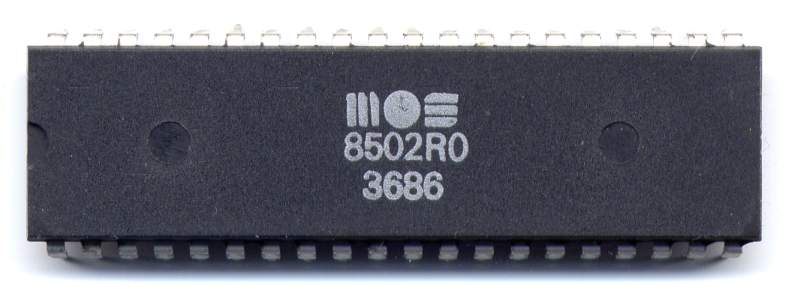 WorldMOS Technology 8502
An 8-bit CPU from MOS Technology that powered the Commodore 128CPU · 8-bit
 WorldMOS Technology 6510
8-bit 6502-derived CPU with a built-in I/O port, used in the Commodore 64CPU · 8-bit
 🇺🇸 United StatesIntel 8008
Early 8-bit microprocessor from Intel, launched April 1972CPU · 8-bit · 1972
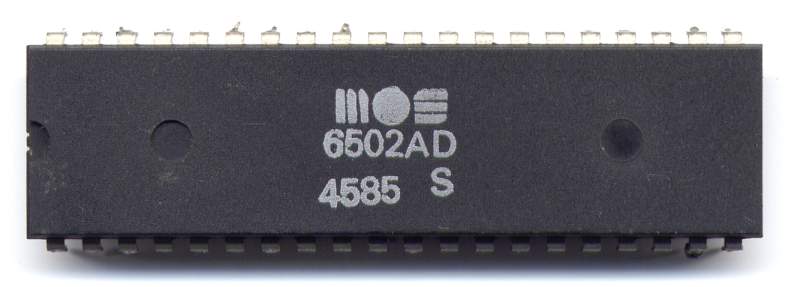 🇺🇸 United StatesMOS Technology 6502
An 8-bit microprocessor from 1975 that made cheap home computing possibleCPU · 8-bit · 1975
More from MOS Technology
All of them 🇺🇸 United StatesMOS Technology 6522
I/O controller chip for 6502 microprocessorsMicrocontroller · Other
🇺🇸 United StatesMOS 6530
Integrated circuit with ROM, RAM, I/O and timerMicrocontroller · Other