
Cyrix Cx486DLC
Hybrid x86 desktop CPU bridging 386 and 486 architectures
The Cyrix Cx486DLC is a desktop microprocessor launched in June 1992 by Cyrix. It combines the instruction set of the Intel 486 with the socket compatibility of the 386DX, offering a budget upgrade path for older systems.
- Released in June 1992 at $119 for manufacturers
- Combines 486 instructions with 386DX socket compatibility
- Features 1 KB L1 cache, expandable to 8 KB in TI version
- Supports external 387DX math coprocessors
- Runs at speeds between 25 MHz and 66 MHz
What it is
The Cyrix Cx486DLC is an x86 microprocessor designed for desktop computers. Cyrix developed this chip as its second central processing unit offering, following a successful line of math coprocessors. Released in June 1992, it targets users seeking better performance than the 386 without the high cost of a full 486 system. The chip acts as a hybrid, merging the instruction set of the newer Intel 80486 with the physical socket design of the older 386DX. This allows it to run on existing motherboards while providing modern features like an on-board level one cache.
How it came about
Cyrix entered the CPU market after establishing itself with competitive floating-point units. The company aimed to challenge Intel by offering a cheaper alternative that still delivered improved speed. The 486DLC launched at $119 for manufacturers, positioning it as a budget option against the Intel 486SX. As Intel lowered prices on its own 486 lineup, Cyrix struggled to maintain the competitive edge of the DLC and SLC models. This pressure led to the release of fully pin-compatible 486SX and DX clones in 1993, marking the end of the hybrid approach for mainstream adoption.
Inside the chip
This processor functions as a 386DX core enhanced with the 486 instruction set and 1 KB of internal L1 cache. It uses the 32-bit bus of the 386DX, unlike the 16-bit bus found in the similar 486SLC model. The chip lacks an integrated math coprocessor, similar to the 486SX, but it can work with external numeric coprocessors like the Intel 387DX. Clock speeds range from 25 to 66 MHz, with front-side bus speeds between 25 and 40 MHz. A 33 MHz DLC can match the performance of a 25 MHz 486SX while costing less, though it falls behind in direct clock-for-clock comparisons due to the smaller cache size.
How it was made
Texas Instruments and SGS-Thomson manufactured the chips for Cyrix. Texas Instruments later produced its own variant called the TI486SXL, which increased the internal cache from 1 KB to 8 KB while retaining the 32-bit bus. The original Cyrix design used a PGA132 socket, allowing it to fit into slots designed for the 386DX. This manufacturing strategy allowed Cyrix to leverage existing production lines while offering a distinct product that differed from standard Intel designs in both cache structure and bus architecture.
Where it went
The chip found limited acceptance among large original equipment manufacturers but gained popularity with hardware enthusiasts. Budget-minded builders appreciated that a 33 MHz 486DLC could keep pace with a 25 MHz 486SX at a lower price. Some users installed it as a direct replacement for 386 CPUs to gain a speed boost, though this often caused stability issues on older boards not designed for the chip. Proper operation required motherboards with specific cache control lines and BIOS settings to manage cache coherency, features not present in all 386-era systems.
Versions and family
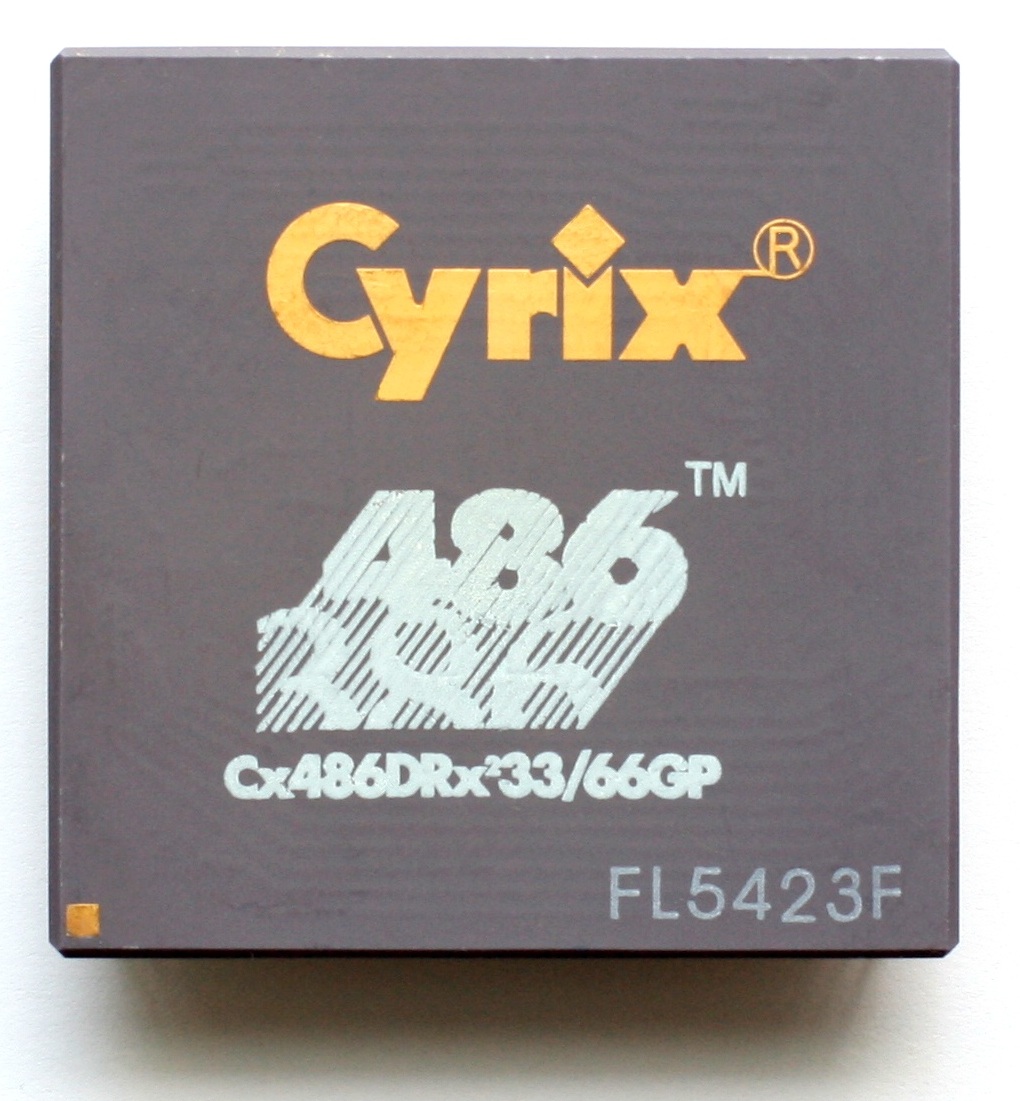
Texas Instruments released the TI486SXL with 8 KB of cache, improving on the original 1 KB design. Cyrix also offered the Cx486DRu2, an upgrade kit for 386DX systems that included a standard DLC and an external adapter for cache control. This was soon replaced by the Cx486DRx2, which integrated the cache coherency circuitry directly into the processor. The DRx2 launched in 1994 but faced poor sales due to high costs and mediocre performance compared to the Intel 486DX2. The IBM 486DLC series is unrelated and based on Intel i386 designs.
Why it matters
The 486DLC demonstrated that hybrid designs could offer a viable upgrade path for older systems, influencing the budget CPU market. It highlighted the importance of cache size and bus architecture in overall performance, showing that instruction set compatibility alone was not enough to compete with established leaders. While it did not achieve widespread commercial success against Intel, it provided a cost-effective option for enthusiasts and extended the useful life of 386-based computers. The challenges faced by Cyrix with this chip led to the development of more direct competitors in the subsequent year.
Problems and reception
Enthusiasts welcomed the chip for its price-to-performance ratio, noting it could match slower Intel parts for less money. However, general adoption was hindered by compatibility issues. Users who attempted to drop the chip into older 386 motherboards often experienced instability because the boards lacked the necessary cache control mechanisms. The need for Cyrix-aware motherboards or special upgrade kits limited its appeal to non-technical users. Critics noted that while it was cheaper, the lack of a built-in math coprocessor and smaller cache made it inferior to true 486DX processors for demanding tasks.


Questions people ask about Cyrix Cx486DLC
What makes the Cyrix Cx486DLC different from a standard 486?
It uses the 486 instruction set but fits into a 386DX socket. It has a smaller 1 KB L1 cache compared to standard 486 chips and lacks an internal math coprocessor, relying on the 386 bus architecture instead of the native 486 bus.
Can I use an Intel math coprocessor with this chip?
Yes. Unlike the Intel 486SX which requires a specific 487 replacement CPU, the Cyrix 486DLC can work with standard Intel 387DX or compatible numeric coprocessors. This allows for a cheaper floating-point upgrade path for users.
Why did some users experience stability issues with this CPU?
The chip requires specific cache control lines to maintain data consistency. Older 386 motherboards often lacked these connections. Without Cyrix-aware BIOS settings or extra hardware adapters, the on-board cache could cause system crashes or errors.
What is the TI486SXL variant?
Texas Instruments produced this version of the chip with an increased internal cache of 8 KB, compared to the 1 KB in the original Cyrix design. It retains the 32-bit bus and offers better performance due to the larger cache size.
Good reading and sources
- Cyrix Cx486DLC on WikipediaEncyclopedia
- More photos on Wikimedia CommonsPhotos
- Wikidata recordOpen data
The facts on this page come from the Wikipedia article "Cyrix Cx486DLC", written by its contributors and used under the CC BY-SA 4.0 licence, and from its Wikidata record (CC0). EveryChip rewrote the text in its own words, with AI assistance, and compares every page with the article to make sure no passage is copied. It may be reused under the same CC BY-SA 4.0 licence with a link back.
It may contain mistakes, and figures change over time. Nothing here is investment or buying advice. If something is wrong, tell us. Last refreshed 2026-11-14.
Like Cyrix Cx486DLC
All CPUs and microprocessors 🇺🇸 United StatesCyrix Cx486SLC
Hybrid x86 CPU bridging 386SX boards to 486 featuresCPU · x86 · 1992
 🇺🇸 United StatesCyrix Cx486
x86 desktop microprocessor competing with Intel 486CPU · x86 · 1993
 🇺🇸 United StatesCyrix 6x86
Pin-compatible Pentium rival with strong integer performanceCPU · x86 · 1995
 🇺🇸 United StatesIntel 80486
32-bit x86 CPU with pipelined execution and on-chip cache, launched 1989CPU · x86 · 1989
More from Cyrix
All of them 🇺🇸 United States and 1 moreSuperSPARC
Sun Microsystems SPARC V8 microprocessor from 1992CPU · RISC · 1992
 🇺🇸 United StatesMSP430
A 16-bit mixed-signal microcontroller family designed for very low power use.Microcontroller · Other · 1992
 WorldARM7
A family of 32-bit RISC cores licensed by ARM for microcontroller useCPU · Arm · 1993
 🇺🇸 United StatesDigital micromirror device
MEMS chip of tiny tilting mirrors that forms images in DLP projectorsSensor · Other · 1990