Other foundries
Tower, VIS, Hua Hong, X-FAB, SkyWater and others. 305 chips on EveryChip so far.
Beyond the giants, many foundries make specialised or mature-node chips: Tower Semiconductor in Israel, Vanguard International (VIS) and PSMC in Taiwan, Hua Hong in China, X-FAB in Germany and SkyWater in the United States, among others. In earlier years Chartered of Singapore and the European firm SGS-Thomson made chips for designers without fabs, including early Nvidia graphics chips.
Specialty foundries
These foundries focus on analog, power, image sensors, radio, MEMS and embedded memory, often on 200 mm wafers and older nodes. Tower, founded in 1993, was to be bought by Intel, but the deal was dropped in August 2023 after it did not receive Chinese regulatory approval in time. SkyWater, in Minnesota, released an open-source 130 nm process design kit with Google in 2020.
Early foundry partners
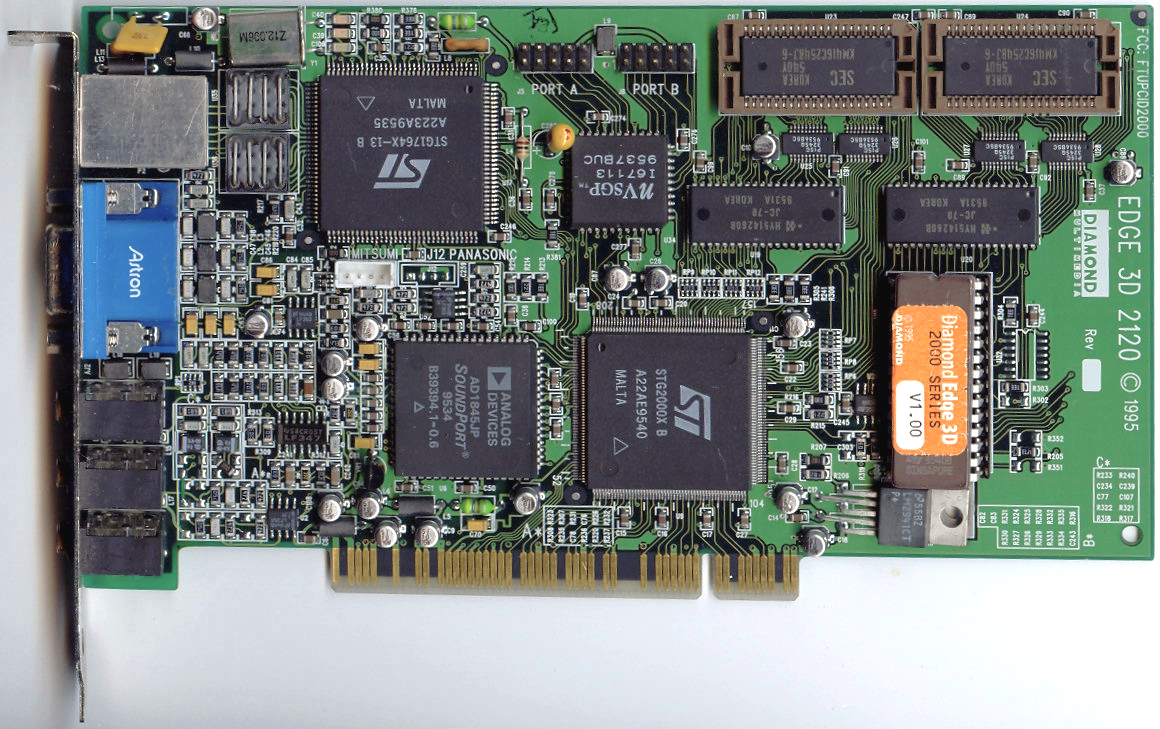
Before TSMC dominated, chip start-ups often used spare capacity in established firms' fabs. Nvidia's first chips, the NV1 and the RIVA 128, were made by SGS-Thomson. Chartered made some of AMD's Athlon 64 processors and helped make the Xbox 360's processor. PSMC is the technology partner for India's first commercial fab, at Dholera.
Famous other foundries chips


Further reading
 🇺🇸 United States and 1 moreEspresso
32-bit PowerPC CPU for the Nintendo Wii U consoleCPU · Power · 2012
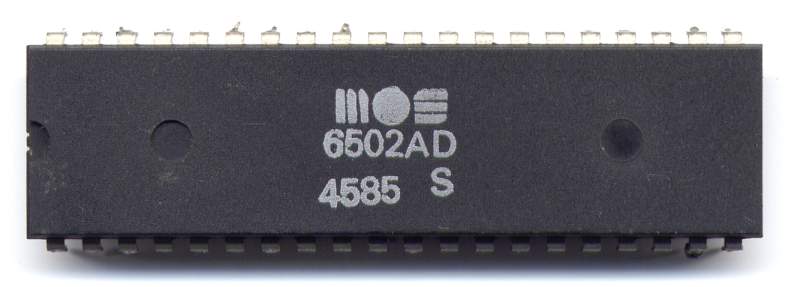 🇺🇸 United StatesMOS Technology 6502
An 8-bit microprocessor from 1975 that made cheap home computing possibleCPU · 8-bit · 1975
 🇺🇸 United StatesJaguar
Low-power x86 microarchitecture for consoles and embedded systemsCPU · x86 · 2013
 🇺🇸 United States and 1 moreDEC T-11
DEC's first single-chip PDP-11 microprocessor, built for embedded control workCPU · Other · 1982
 🇺🇸 United StatesPowerPC 7xx
Third-generation 32-bit PowerPC microprocessor family for PCs and embedded systems.CPU · Power · 1997
 🇩🇪 Germany and 3 moreU880
East German clone of the Zilog Z80 microprocessorCPU · Other · 1980
 🇯🇵 JapanNEC V60
32-bit CISC microprocessor family from NEC for embedded and arcade useCPU · Other · 1986
 🇺🇸 United StatesR3000
32-bit RISC microprocessor chipset from MIPS Computer SystemsCPU · MIPS · 1988
 🇺🇸 United StatesR5000
64-bit MIPS microprocessor for workstations and embedded systemsCPU · MIPS · 1996
 🇺🇸 United StatesAMD APU
AMD chips combining CPU and GPU on one dieCPU · x86 · 2011
 🇺🇸 United StatesMotorola 68010
16/32-bit microprocessor with virtual memory support from 1982CPU · 68k · 1982
🇺🇸 United StatesWDC 65C816
16-bit microprocessor from the 6502 family with 24-bit addressingCPU · Other · 1985
 🇺🇸 United StatesGeneral Instrument CP1600
A 16-bit microprocessor from 1975, best known inside the Intellivision consoleCPU · Other · 1975
 🇺🇸 United StatesMotorola 68000
A 16/32-bit CISC microprocessor introduced by Motorola in 1979CPU · 68k · 1979
 🇺🇸 United StatesSignetics 2650
8-bit microprocessor from 1975 modelled on the IBM 1130 minicomputerCPU · 8-bit · 1975
 🇺🇸 United StatesRCA 1802
8-bit CMOS microprocessor family from RCA, first of its kindCPU · 8-bit · 1974
 WorldARM7
A family of 32-bit RISC cores licensed by ARM for microcontroller useCPU · Arm · 1993
 🇯🇵 JapanRicoh 2A03
8-bit CPU and sound chip for the Nintendo Entertainment SystemCPU · 68k · 1983
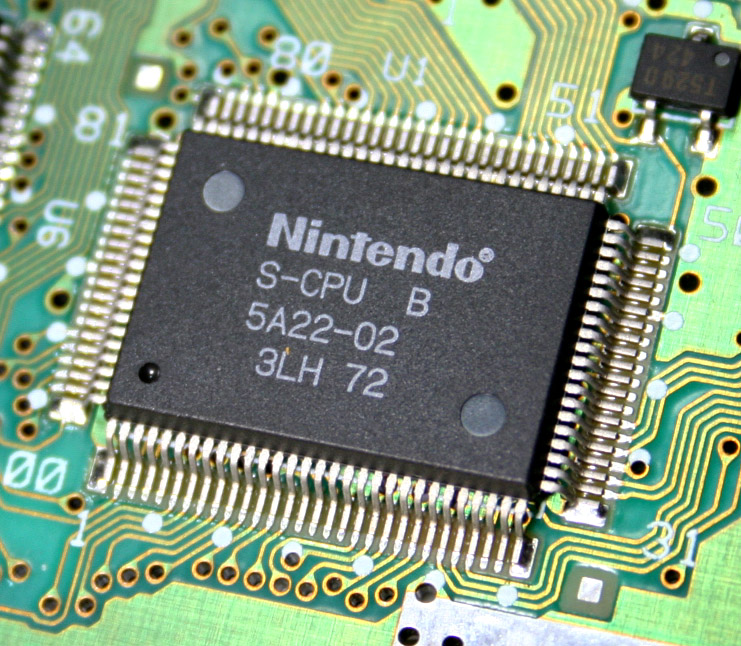 🇯🇵 JapanRicoh 5A22
Custom CPU for the Super Nintendo Entertainment SystemCPU · 8-bit
 🇯🇵 JapanHuC6280
8-bit microprocessor for the TurboGrafx-16 consoleCPU · 8-bit
 🇯🇵 JapanNEC µPD780C
Zilog Z80 compatible 8-bit microprocessor by NECCPU · Other
 🇺🇸 United StatesZilog Z80
An 8-bit microprocessor that powered early personal computers and game consoles.CPU · Other · 1976
🇺🇸 United StatesMOS Technology 6502
Low-cost 8-bit microprocessor that powered the home computer revolutionCPU · Other · 1975
 🇺🇸 United StatesZilog Z80
An 8-bit microprocessor that powered early personal computers and game consoles.CPU · Other · 1976
🇺🇸 United StatesPhysX P1
Dedicated microprocessor for video game physics calculationsCPU · MIPS · 2006
Photo credits on this page
The small pictures above come from Wikimedia Commons under free licences. Some are cropped to fit.
- Microsoft XCPU (Xenon): Konstantin Lanzet, CC BY 3.0, source
- AMD APU: Wikiinger, CC0, source
- MOS Technology 6502: Dirk Oppelt, CC BY-SA 3.0, source
- Jaguar: Fritzchens Fritz, CC0, source
- DEC T-11: Pauli Rautakorpi, CC BY 3.0, source
- HuC6280: The original uploader was Baz1521 at Japanese Wikipedia ., CC BY-SA 3.0, source
- Motorola 68010: Konstantin Lanzet (with permission), CC BY-SA 3.0, source
- General Instrument CP1600: Evan-Amos, CC BY-SA 3.0, source
- Motorola 68000: en:User:ArnoldReinhold, CC BY-SA 3.0, source
- Signetics 2650: Konstantin Lanzet, GFDL, source
- Zilog Z80: Zilog Inc., Public domain, source
- RCA 1802: Konstantin Lanzet (with permission), CC BY-SA 3.0, source
- ARM7: Raimond Spekking, CC BY-SA 4.0, source
- NV1: Swaaye at English Wikipedia, CC BY-SA 3.0, source
- RIVA 128: Raimond Spekking, CC BY-SA 4.0, source
- Ricoh 2A03: PantheraLeo1359531, CC BY 4.0, source
- Ricoh 5A22: Yaca2671, CC BY-SA 3.0, source
- PowerPC 7xx: Henrik Wannheden, Public domain, source
- U880: Konstantin Lanzet (with permission), CC BY-SA 3.0, source
- NEC V60: Pauli Rautakorpi, CC BY 3.0, source
- R3000: Pauli Rautakorpi, CC BY 3.0, source
- R5000: Konstantin Lanzet, CC BY-SA 3.0, source
- NEC µPD780C: Konstantin Lanzet, CC BY-SA 4.0, source
- Athlon 64: Astraera, CC BY-SA 4.0, source
- Zilog Z80: User Baz1521 on ja.wikipedia, CC BY-SA 3.0, source
- Espresso: Henriok, CC0, source