x86 and x86-64
From the 8086 to Core and Ryzen: the instruction set of the PC and most servers. 195 chips on EveryChip so far.
x86 is the instruction set that began with Intel's 8086 of 1978 and still runs most PCs and servers. An instruction set is the list of commands a processor understands, the contract between hardware and software. x86 grew from 16 bits to 32 bits with the 80386 in 1985 and to 64 bits with AMD's x86-64, first shipped in the Opteron in 2003. Intel and AMD are its main makers.
Compatibility above all
x86's great strength is that software written decades ago still runs. Each generation added instructions, such as MMX, SSE and AVX for working on many numbers at once, without dropping the old ones. Inside, modern x86 chips break complex instructions into simpler internal operations, so their cores work much like RISC designs, while the outside stays compatible.
Intel, AMD and others
IBM chose the Intel 8088 for its PC in 1981 and asked for a second source, which led to AMD making x86 chips. Over the years Cyrix, VIA, Transmeta and China's Zhaoxin also made x86 processors. AMD defined the 64-bit extension that Intel later adopted. In 2024 Intel and AMD formed an advisory group to keep the instruction set consistent across their chips.
Famous x86 chips


Further reading
 🇷🇺 RussiaK1810VM86
Soviet 16-bit microprocessor clone of the Intel 8086CPU · x86 · 1985
 🇺🇸 United StatesIntel 80486SX
A 1991 Intel 486 CPU sold without a working floating-point unitCPU · x86 · 1991
 🇺🇸 United States and 1 morePentium M
Intel's power-saving laptop CPU line, launched in 2003 on the P6 designCPU · x86 · 2003
 🇺🇸 United StatesAlder Lake
Intel's 12th-gen hybrid x86 CPUs mixing performance and efficiency coresCPU · x86 · 2021
 🇺🇸 United StatesIntel 80387SX
Floating-point coprocessor for the Intel 80386SXCPU · x86 · 1987
 🇺🇸 United StatesXeon
Intel's x86 processor brand for servers, workstations and embedded systems since 1998CPU · x86 · 1998
 🇺🇸 United StatesPanther Lake
Intel's Core Ultra Series 3 mobile CPU line with tiled CPU, GPU and I/O diesCPU · x86 · 2026
🇺🇸 United StatesEmerald Rapids
Fifth-generation Xeon server processors from IntelCPU · x86 · 2023
 🇩🇪 GermanyU80601
East German clone of the Intel 80286 microprocessorCPU · x86 · 1989
🇺🇸 United StatesAtom
Low-power x86 system on a chip for mobile and embedded devices.SoC · x86 · 2012
 🇯🇵 JapanNEC μCOM series
NEC microprocessor and microcontroller family from the 1970s and 1980sCPU · x86 · 1973
 🇹🇼 Taiwan and 1 moreVIA Nano
64-bit low-power x86 processor for PCs and embedded systemsCPU · x86 · 2008
 🇺🇸 United StatesGeode
Low-power x86 system-on-chip for embedded devicesSoC · x86 · 1999
 🇺🇸 United StatesMediaGX
Integrated x86 system on a chip for low-cost PCsSoC · x86 · 1997
 🇷🇺 RussiaKR580VM80A
Soviet clone of the Intel 8080 microprocessorCPU · x86 · 1979
 🇺🇸 United StatesIntel Quark
Low-power 32-bit x86 system on a chip for wearables and IoT.SoC · x86 · 2013
🇺🇸 United StatesGoldmont Plus
Low-power Atom microarchitecture for Celeron and Pentium Silver SoCsCPU · x86 · 2017
 🇺🇸 United StatesRyzen
AMD's multi-core x86-64 CPU brand built on the Zen microarchitectureCPU · x86 · 2016
 WorldVIA C7
Low-power x86 processor for compact and mobile devicesCPU · x86 · 2005
 🇺🇸 United StatesSandy Bridge
A 2011 x86-64 microarchitecture from Intel featuring integrated graphics and AVX support.CPU · x86 · 2011
 WorldOpteron
A discontinued line of server and workstation CPUs from AMD, first to support x86-64.CPU · x86 · 2003
 🇹🇼 TaiwanVortex86
x86-compatible system-on-chip for embedded systemsSoC · x86
 🇺🇸 United StatesAMD K5
AMD's first in-house x86 microprocessor for desktop PCsCPU · x86 · 1996
 WorldEpyc
AMD's server and embedded x86-64 CPUs built on Zen coresCPU · x86 · 2017
 🇺🇸 United StatesIntel 8086
16-bit microprocessor that introduced the x86 instruction set in 1978CPU · x86 · 1978
 🇺🇸 United StatesBobcat
Low-power x86 microarchitecture for AMD APUsCPU · x86 · 2011
 🇺🇸 United StatesJaguar
Low-power x86 microarchitecture for consoles and embedded systemsCPU · x86 · 2013
 🇺🇸 United StatesIntel 8089
An I/O coprocessor that moved data for 8086 and 8088 systemsCPU · x86 · 1979
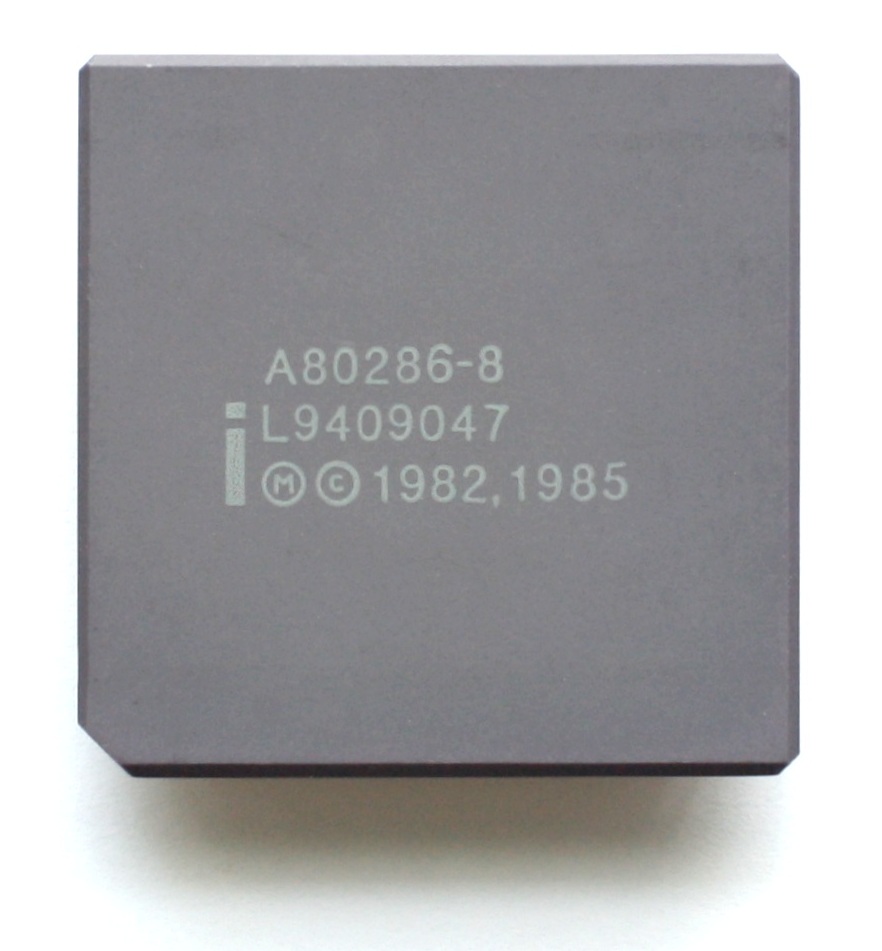 🇺🇸 United StatesIntel 80286
16-bit x86 CPU with protected mode and 24-bit addressing, launched in 1982CPU · x86 · 1982
 🇺🇸 United StatesAm386
AMD's first independent x86 microprocessor cloneCPU · x86 · 1991
 🇺🇸 United StatesIntel 80486
32-bit x86 CPU with pipelined execution and on-chip cache, launched 1989CPU · x86 · 1989
 🇺🇸 United StatesAm5x86
High-speed 486-class CPU for legacy system upgradesCPU · x86 · 1995
 🇺🇸 United StatesTransmeta Crusoe
Low-power x86 microprocessor using software translationCPU · x86 · 2000
 WorldVIA Eden
Low-power x86 processor for embedded systemsCPU · x86
 WorldRise mP6
Low-cost x86 microprocessor for Super Socket 7 systemsCPU · x86 · 1998
 🇺🇸 United StatesIntel 8080
An 8-bit microprocessor released in 1974 that launched the personal computer era.CPU · x86 · 1974
 🇺🇸 United StatesIntel Atom
Intel's low-power x86 processor line for netbooks, embedded and server useCPU · x86 · 2008
 🇺🇸 United StatesXeon D
Intel's low-power x86 system-on-chip line for microserversCPU · x86 · 2015
 🇺🇸 United StatesP6
Intel's sixth x86 design, first with out-of-order executionCPU · x86 · 1995
🇷🇺 RussiaElbrus 2000
Russian VLIW microprocessor with x86 translationCPU · VLIW · 2008
 🇺🇸 United StatesSilvermont
Intel's 22 nm low-power Atom core design, used across four SoC familiesCPU · x86 · 2013
 🇺🇸 United StatesCannon Lake
Intel's 10 nm Core microarchitecture, shipped in one laptop CPU onlyCPU · x86 · 2018
 🇺🇸 United States and 1 moreIntel Core 2
Intel's 2006 x86-64 desktop and laptop CPU family, from single-core to quad-core.CPU · x86 · 2006
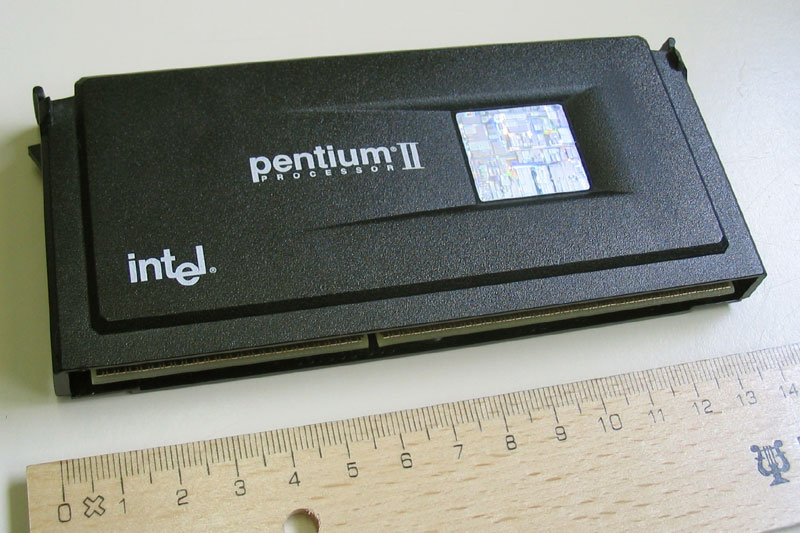 🇺🇸 United StatesPentium II
Intel's 1997 P6 desktop CPU line with MMX, sold in a slot cartridgeCPU · x86 · 1997
 🇺🇸 United StatesIntel 80386
Intel's 32-bit x86 CPU from 1985, the base of the IA-32 instruction setCPU · x86 · 1985
 🇮🇱 IsraelIntel 8088
A 16-bit Intel microprocessor with an 8-bit external data bus, used in the original IBM PC.CPU · x86 · 1979
 🇺🇸 United StatesPentium
Intel's first superscalar x86 chip, with dual integer pipelines and a faster FPUCPU · x86 · 1993
 🇺🇸 United StatesIntel Core
Intel's multi-core x86 CPU line for laptops, desktops and workstationsCPU · x86 · 2006
Photo credits on this page
The small pictures above come from Wikimedia Commons under free licences. Some are cropped to fit.
- Intel 80486SX: Henry Mühlpfordt, CC BY-SA 3.0, source
- Pentium M: Raimond Spekking, CC BY-SA 4.0, source
- Alder Lake: Jacek Halicki, CC BY-SA 4.0, source
- Intel 80387SX: Konstantin Lanzet (with permission), CC BY-SA 3.0, source
- Xeon: Rjluna2, CC BY-SA 4.0, source
- Pentium Pro: Thomas Nguyen, CC BY-SA 4.0, source
- Panther Lake: 极客湾Geekerwan, CC BY 3.0, source
- Epyc: Smial ( talk ), FAL, source
- Intel 8086: Thomas Nguyen, CC BY-SA 4.0, source
- Bobcat: Brit robin, CC BY-SA 4.0, source
- Jaguar: Fritzchens Fritz, CC0, source
- Intel 8089: Pauli Rautakorpi, CC BY 3.0, source
- Intel 80286: Konstantin Lanzet (with permission), CC BY-SA 3.0, source
- Am386: Raimond Spekking, CC BY-SA 4.0, source
- Intel 80486: Thomas Nguyen, CC BY-SA 4.0, source
- Am5x86: Konstantin Lanzet, CC BY-SA 3.0, source
- Transmeta Crusoe: Konstantin Lanzet, CC BY-SA 3.0, source
- VIA Eden: Konstantin Lanzet, CC BY 3.0, source
- Rise mP6: Konstantin Lanzet (with permission), CC BY-SA 3.0, source
- Intel 8080: Christian Bassow, CC BY-SA 4.0, source
- Intel Atom: Raimond Spekking, CC BY-SA 4.0, source
- P6: Fritzchens Fritz, CC0, source
- Xeon D: Intel Corporation, Public domain, source
- Silvermont: Raimond Spekking, CC BY-SA 4.0, source
- Cannon Lake: Fritzchens Fritz, CC0, source
- Intel Core 2: Raimond Spekking, CC BY-SA 4.0, source
- Pentium II: Unknown author, Public domain, source
- Intel 80386: Mister rf, CC BY-SA 4.0, source
- Intel 8088: Unknown author, CC BY-SA 3.0, source
- Pentium: Pdesousa359, CC BY-SA 3.0, source
- Intel Core: Intel Corporation, Public domain, source
- Skylake: Eric Gaba ( Sting - fr:Sting ), CC BY-SA 4.0, source
- AMD K9: The original uploader was Smial at German Wikipedia . ( Original text:, CC BY-SA 2.0 de, source
- U80601: Konstantin Lanzet, CC BY-SA 3.0, source
- NEC μCOM series: Konstantin Lanzet, CC BY-SA 3.0, source
- VIA Nano: VIA Gallery, CC BY 2.0, source
- Geode: Appaloosa, CC BY-SA 3.0, source
- MediaGX: Appaloosa, CC BY-SA 3.0, source
- KR580VM80A: Konstantin Lanzet, CC BY-SA 3.0, source
- Intel Quark: Embedded_World_2014_Intel_Galileo.jpg : Ordercrazy derivative work: Re, CC0, source
- K1810VM86: Konstantin Lanzet, GFDL, source
- I386: Konstantin Lanzet, CC BY-SA 3.0, source
- Ryzen: Fritzchens Fritz, CC0, source
- VIA C7: Konstantin Lanzet, CC BY-SA 3.0, source
- Sandy Bridge: Jud McCranie, CC BY-SA 4.0, source
- Athlon 64: Astraera, CC BY-SA 4.0, source
- Vortex86: 2008Computex_DMnP_Vortex86DX.jpg : Rico Shen derivative work: Mewtu (, CC BY-SA 3.0, source
- AMD K5: No machine-readable author provided. Denniss assumed (based on copyrig, CC BY-SA 2.5, source