
Geode
Low-power x86 system-on-chip for embedded devices
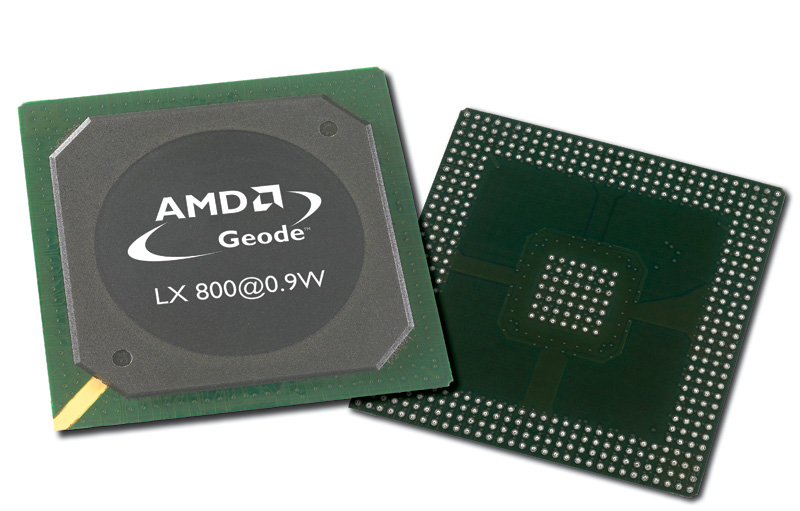
Geode is a family of x86-compatible system-on-chip microprocessors designed for low power and cost. Originally launched by National Semiconductor in 1999, AMD acquired the line in 2003. It powered thin clients, industrial systems, and the One Laptop per Child project before being discontinued in 2019.
- Launched by National Semiconductor in 1999
- Acquired by AMD in August 2003
- Powered the One Laptop per Child XO-1
- Discontinued by AMD in 2019
- Integrates CPU, graphics, and I/O on one chip
What it is
Geode is a series of x86-compatible system-on-chip microprocessors targeted at the embedded computing market. These chips integrate the central processing unit, memory controller, graphics, and input/output functions into a single package. National Semiconductor launched the family in 1999, deriving the core from the Cyrix MediaGX platform. Advanced Micro Devices purchased the business in 2003 to strengthen its embedded product line. The processors are optimized for low power consumption and low cost while maintaining software compatibility with standard x86 applications. AMD discontinued the entire Geode line in 2019 after extending availability several times.
How it came about
The Geode lineage began with National Semiconductor's acquisition of Cyrix in 1997. In 1999, National launched the Geode family, rebranding the MediaGX technology. The design team operated out of Longmont, Colorado. AMD bought the Geode business from National in August 2003. Before this purchase, AMD sold its own Élan embedded chips. After the acquisition, AMD expanded the series into two classes: MediaGX-derived models and Athlon-derived models. The Longmont design center later closed, with staff moving to Fort Collins. AMD announced in 2009 that no new microarchitecture upgrades were planned. The company extended the last buy date for the LX series to 2019.
Inside the chip
The Geode family includes three main branches. The GX and LX models use a core derived from the Cyrix 5x86 architecture. These chips lack modern instruction sets like SSE but include MMX and 3DNow!. The LX model added a 128-bit AES encryption module and a true random number generator. The NX branch uses the K7 Thoroughbred core from the Athlon XP-M, supporting SSE instructions. Geode chips tightly integrate functions usually found in separate chipsets, such as the northbridge. The GX and LX models use a proprietary GeodeLink interconnect. The NX models are pin-compatible with Socket A motherboards. Cache sizes range from 16 KB unified in early models to 64 KB split L1 and 128 KB L2 in the LX.
How it was made
National Semiconductor and AMD manufactured Geode processors using various process nodes. Early GXm models used a 0.35 μm four-layer metal CMOS process. Later GXLV and GX1 models shrunk to 0.25 μm and 0.18 μm respectively. The GX2 and LX models were built on a 0.15 μm and 0.13 μm process. The NX series also used the 0.13 μm node. Packages included Ball Grid Array formats and Socket A for the NX line. Companion chips like the CS5530, CS5535, and CS5536 handled southbridge duties such as USB, audio, and legacy I/O. The CS5536 added USB 2.0 support.
Where it went
Geode processors powered thin clients, set-top boxes, and industrial control systems. The One Laptop per Child project selected the Geode LX for its XO-1 laptop. Other consumer devices included the 3Com Audrey internet appliance and the Linutop thin client. Industrial single-board computers from vendors like PC Engines, Soekris, and Artec Group utilized these chips. The NX variant, with its stronger floating-point unit, served in information kiosks and casino gaming machines. Reports indicate that second-hand Geode processors were later used in Russian missile guidance systems during the war in Ukraine.
Versions and family
The GX series includes the GXm, GXLV, GX1, and GX2. The GXm was a rebranded Cyrix MediaGXm. The LX series offered higher clock speeds up to 600 MHz and improved security features. The NX series comprised embedded Athlon derivatives, including the NX1250, NX1500, NX1750, and NX2001. The NX2001 was a relabeled desktop Athlon XP 2200+ running at 1.8 GHz. The SCxxxx series integrated the CPU and chipset into a single chip, similar to competitors like VIA CoreFusion. AMD discontinued all variants in 2019.
Why it matters
Geode provided a low-cost, low-power x86 option for embedded markets where ARM was not yet dominant. It enabled the production of affordable thin clients and educational laptops like the OLPC XO-1. The integration of graphics and memory control reduced board complexity and cost for manufacturers. However, the line faced increasing pressure from VIA Technologies and ARM-based processors. The closure of the Longmont design center signaled a reduction in development focus. Its long supply guarantee made it popular for industrial applications requiring long-term stability.



Questions people ask about Geode
Who originally designed the Geode processor?
National Semiconductor launched the Geode family in 1999. The core technology was derived from the Cyrix MediaGX platform, which National acquired when it merged with Cyrix in 1997.
What is the difference between Geode GX and Geode NX?
The Geode GX and LX are based on the older Cyrix 5x86 core and lack SSE instructions. The Geode NX is based on the AMD Athlon XP-M K7 core, offering higher performance, SSE support, and compatibility with Socket A.
Why was Geode used in the One Laptop per Child project?
The OLPC project chose the Geode LX for its low power consumption, low cost, and integration of graphics and memory control. These features allowed for a simple, durable, and affordable laptop design for children in developing regions.
Is the Geode processor still available today?
No. AMD discontinued all Geode processors in 2019. The company had previously extended the availability of the LX series multiple times, with the final shipment date set for that year.
Good reading and sources
- Geode (processor) on WikipediaEncyclopedia
- More photos on Wikimedia CommonsPhotos
- Wikidata recordOpen data
The facts on this page come from the Wikipedia article "Geode (processor)", written by its contributors and used under the CC BY-SA 4.0 licence, and from its Wikidata record (CC0). EveryChip rewrote the text in its own words, with AI assistance, and compares every page with the article to make sure no passage is copied. It may be reused under the same CC BY-SA 4.0 licence with a link back.
It may contain mistakes, and figures change over time. Nothing here is investment or buying advice. If something is wrong, tell us. Last refreshed 2026-11-14.
Like Geode
All systems on a chip 🇹🇼 TaiwanVIA CoreFusion
Low-power x86 system-on-chip line by VIA TechnologiesSoC · x86 · 2003
 WorldOpenRISC
Open-source RISC processor architecture and reference implementationsCPU · RISC · 2000
 🇺🇸 United StatesMediaGX
Integrated x86 system on a chip for low-cost PCsSoC · x86 · 1997
 🇺🇸 United StatesPSoC
Configurable microcontroller with mixed-signal blocksMicrocontroller · Arm · 2002
More from National Semiconductor
All of them 🇺🇸 United StatesAthlon
AMD's x86 desktop processor brand, from the first 1 GHz chip to entry-level Zen APUsCPU · x86 · 1999
 🇺🇸 United StatesVirtex
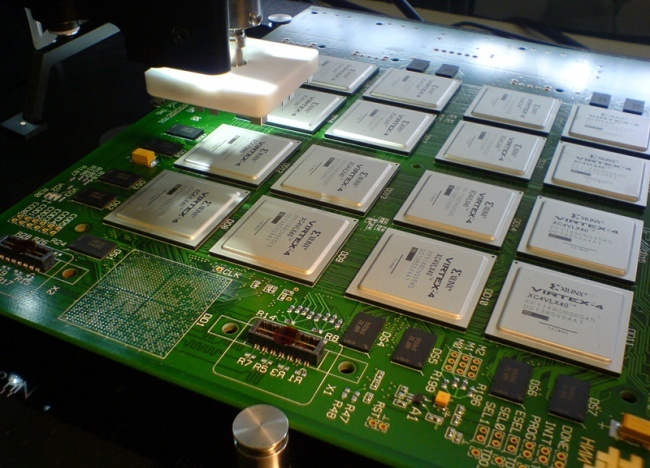
High-performance FPGA family by AMD and XilinxFPGA · Other · 1999
 🇺🇸 United StatesAMD K6-III
x86 desktop processor with on-die L2 cacheCPU · x86 · 1999
🇺🇸 United StatesAlchemy
Ultra low power MIPS embedded microprocessor familySoC · MIPS · 2000