
Intel 80486SX
A 1991 Intel 486 CPU sold without a working floating-point unit
The Intel 80486SX is a 32-bit microprocessor that Intel brought out in 1991 as a lower-cost member of its 486 line. It is essentially an i486DX whose floating-point unit was switched off, giving system builders a cheaper chip while keeping the 486's on-chip cache and performance.
- Released by Intel in 1991 as the low-cost member of the 486 family
- An i486DX with its floating-point unit disabled
- 32-bit inside and out, unlike the 16-bit-bus i386SX
- 16, 20 and 25 MHz grades with 8 KB on-chip cache
- Upgradable via the i487, a keyed full i486DX
What it is
The Intel 80486SX is a single-chip x86 microprocessor that arrived in 1991 as the budget member of Intel's 486 family. Inside it is the same design as the i486DX, except that its floating-point unit (the part that handles decimal and real-number maths in hardware) does not work. Everything else stays: 32-bit data paths, an on-chip cache of 8 KB, and clock rates of 16, 20 or 25 MHz. Intel set it up so that buyers who ran ordinary office software could get 486-class speed without paying for maths hardware they would never use.
How it came about
At the start of the 1990s, word processors and database programs gained little from hardware floating point; only CAD work really needed it. At the same time AMD was selling its Am386, a clone of Intel's i386DX that ran faster than Intel's own part. Intel wanted a cheaper 486 for companies that assembled complete systems, yet it did not want to give up the healthy margins on the full chip. The answer was the i486SX, whose first batches were the i486 with the maths unit turned off inside. It reached the market in the middle of 1991 at 20 MHz.
Inside the chip
Architecturally the chip is a 486: a 32-bit processor with an 8 KB cache (a small fast memory holding recently used data) built onto the same piece of silicon as the CPU. The pipeline and instruction set match the i486DX. The one difference is the floating-point unit, which is disabled in early parts and physically deleted from versions made from 1992 onwards to save money. Unlike the older i386SX, which narrowed the outside data and address buses to cut cost, the i486SX keeps full 32-bit buses on the outside as well as inside.
How it was made
Intel built the chip itself. Early units came in a pin grid array package, a square of pins that plugs into a socket, and later ones also appeared in surface-mount form soldered straight to the board. Low-power versions ran at 16, 20 and 25 MHz. In lots of a thousand they cost US$235, US$266 and US$366 respectively, while the original 20 MHz part carried a price of US$258. No process node or transistor figure is given here.
Where it went
The first machine sold with an i486SX already fitted was Advanced Logic Research's Business VEISA 486/20SX, which shipped in April 1991. The chip also went into embedded designs, where low power and low cost matter more than maths speed. Many boards offered an upgrade route: the i487, a full i486DX with one extra pin used only as a key so it cannot be fitted the wrong way round, would take over from the installed i486SX and leave that chip idle. Later 486 OverDrive parts fitted the same 169-pin socket, later called Socket 1.
Versions and family
Speed grades covered 16, 20 and 25 MHz, with a low-power family across those rates. The 20 MHz part is quoted at up to 20 MIPS, about 70% quicker than a 33 MHz Intel386DX that has to fetch cache from outside the chip. Some OverDrive upgrades carried the 486SX name to show they were aimed at SX owners, yet they quietly included working floating point. The i487 served as the official maths upgrade, and the i386SX was the earlier, cheaper sibling in Intel's naming scheme.
Why it matters
The SX suffix gave Intel a way to segment the 486 market the same way it had split the 386 line, letting assemblers offer a lower price point without a separate design. It kept Intel competitive against AMD's faster Am386 while protecting sales of the full i486DX. The upgrade path through the i487 and OverDrive parts also showed how a budget CPU could be sold as the first step of a longer buying chain.
Problems and reception
Technology magazines and buyers reacted badly to the chip at first. Many treated it as crippleware: a product with a working feature deliberately switched off so it could be sold more cheaply. That criticism stuck to the early parts, which were full i486DX dies with the maths unit disabled rather than a genuinely smaller design.


Questions people ask about Intel 80486SX
What makes the 80486SX different from the 80486DX?
The floating-point unit is disabled. Early chips were ordinary i486DX parts with that block switched off, and from 1992 the maths hardware was removed from the design altogether to reduce cost. The rest of the processor, including the 32-bit buses and 8 KB cache, is unchanged.
How is it different from the older i386SX?
The i386SX cut cost by narrowing its external buses to 16 bits for data and 24 bits for addresses. The i486SX does not do that. It is a full 32-bit part inside and out; the only thing missing is working floating point.
Could floating point be added later?
Yes. The i487 was sold as an upgrade and was really a complete i486DX with one extra pin used purely as a mechanical key. Once fitted it took over from the i486SX, which stayed in its socket because those sockets were often hard to open or the chip was soldered down.
How fast was it?
Low-power versions ran at 16, 20 and 25 MHz. The 20 MHz Intel486 SX-20 is quoted at up to 20 MIPS, which is about 70% faster than a 33 MHz Intel386DX that has to use external cache.
Good reading and sources
The facts on this page come from the Wikipedia article "I486SX", written by its contributors and used under the CC BY-SA 4.0 licence, and from its Wikidata record (CC0). EveryChip rewrote the text in its own words, with AI assistance, and compares every page with the article to make sure no passage is copied. It may be reused under the same CC BY-SA 4.0 licence with a link back.
It may contain mistakes, and figures change over time. Nothing here is investment or buying advice. If something is wrong, tell us. Last refreshed 2026-11-14.
Like Intel 80486SX
All CPUs and microprocessors 🇺🇸 United StatesPentium
Intel's first superscalar x86 chip, with dual integer pipelines and a faster FPUCPU · x86 · 1993
 🇺🇸 United StatesIntel 80486
32-bit x86 CPU with pipelined execution and on-chip cache, launched 1989CPU · x86 · 1989
 🇺🇸 United StatesI486
32-bit microprocessor with on-chip cache and FPUCPU · x86 · 1989
 🇺🇸 United StatesP6
Intel's sixth x86 design, first with out-of-order executionCPU · x86 · 1995
More from Intel
All of them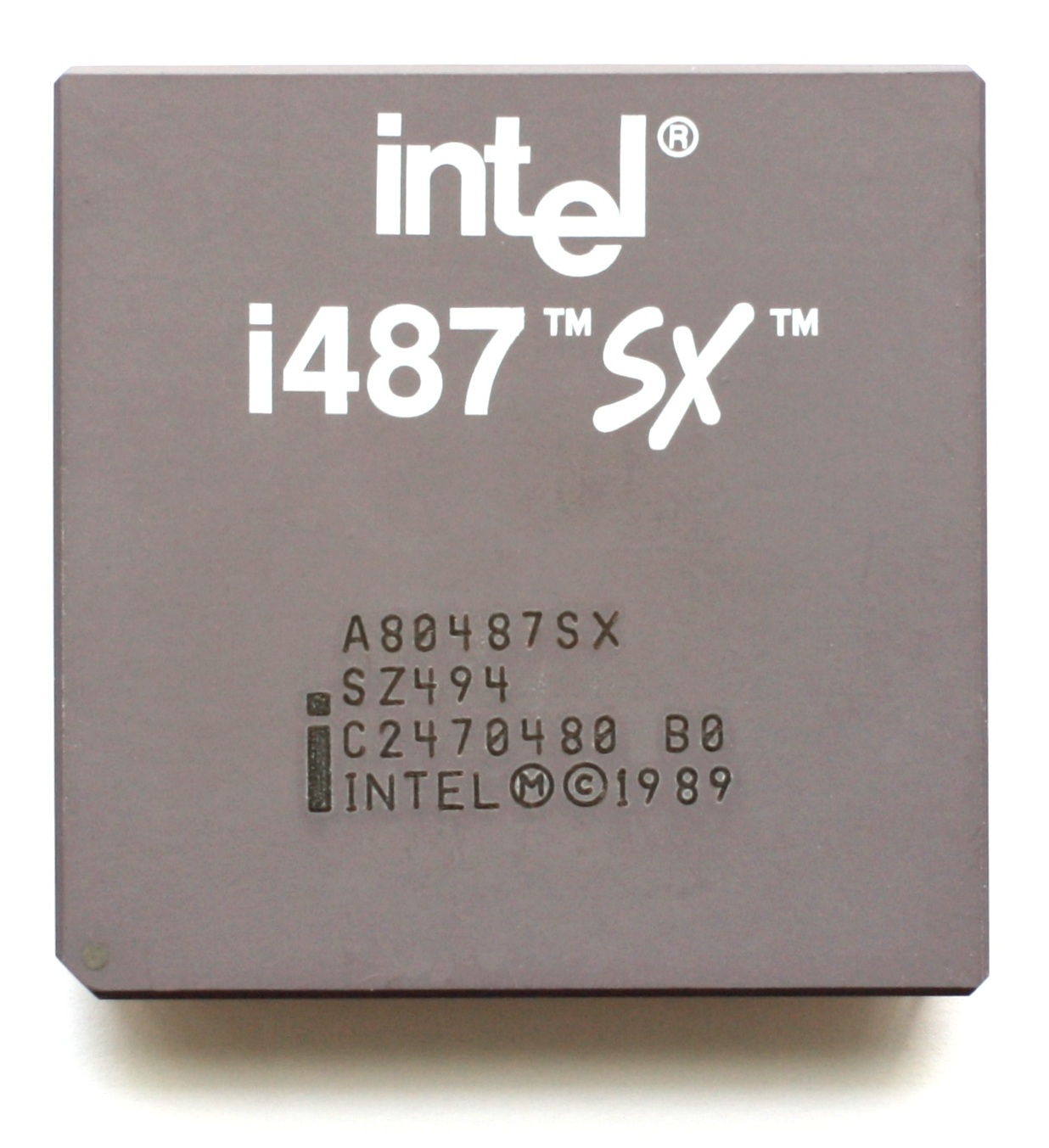 🇺🇸 United StatesIntel 80487SX
Floating-point upgrade chip for Intel 486SX systemsCPU · x86 · 1991
 🇺🇸 United StatesIntel 486DX2
A 486 CPU whose internal clock ran at twice the bus speedCPU · x86 · 1992
 🇺🇸 United StatesDEC Alpha
A 64-bit RISC architecture by Digital Equipment CorporationCPU · RISC · 1992