PCs and laptops
Desktop and laptop processors, chipsets and graphics. 484 chips on EveryChip so far.
Personal computers and laptops have been built around x86 processors since IBM chose the Intel 8088 for its PC in 1981. Intel and AMD have competed for decades, from the 486 and Pentium to Athlon, Core and Ryzen. Since 2020 Apple's Arm-based M-series and later Qualcomm's Snapdragon X chips have brought Arm into laptops. A PC also holds a GPU, chipset, memory and storage chips.
Intel, AMD and the clock race
Through the 1990s PC chips were sold on clock speed, which rose from tens of megahertz to over 1 GHz in 2000. After the Pentium 4 hit power limits, the focus moved to multiple cores and efficiency, led by Intel's Core 2 in 2006 and AMD's Zen-based Ryzen in 2017. Today's laptop chips mix performance and efficiency cores and include AI engines called NPUs.
Arm arrives
Apple's M1 of 2020 showed that an Arm SoC could match or beat x86 laptops in performance per watt, and Apple moved its whole Mac range to its own chips by 2023. Microsoft's Windows on Arm gained Qualcomm's Snapdragon X Elite in 2024. Intel's Lunar Lake of 2024 responded with memory placed in the processor package, a technique Apple also uses.
Famous PCs and laptops chips
 Intel 8088The processor of the 1981 IBM PC
 I486Intel's 1989 chip with on-chip cache and maths unit
 PentiumIntel's 1993 brand that defined 1990s PCs
 Athlon 64AMD's 64-bit desktop chip, 2003
 Intel Core 2Intel's 2006 efficient multi-core line
 RyzenAMD's Zen-based PC processors, 2017
 Apple M1 UltraApple's first Mac chip, 2020
 Lunar LakeIntel's 2024 laptop chip with on-package memory
Further reading
 WorldRadeon HD 2000 series
ATI's first DirectX 10 graphics card family with unified shaders.GPU · GPU architecture · 2007
 🇨🇦 CanadaRadeon X1000 series
ATI graphics cards from 2005 using the R500 architectureGPU · GPU architecture · 2005
 🇨🇦 CanadaRadeon HD 3000 series
ATI graphics cards using TeraScale 1 architecture and 55 nm process.GPU · GPU architecture · 2007
 🇺🇸 United StatesRadeon HD 6000 series
AMD graphics processor family using TeraScale architectureGPU · GPU architecture · 2010
WorldRadeon HD 8000 series
OEM rebadged graphics processors from AMDGPU · GPU architecture
 🇺🇸 United StatesRadeon 200 series
AMD graphics processors using GCN and TeraScale architectures.GPU · GPU architecture · 2013
 🇺🇸 United StatesRadeon HD 5000 series
First DirectX 11 graphics processor family from AMDGPU · GPU architecture · 2009
 🇺🇸 United StatesRadeon 300 series
AMD graphics processors using GCN architecture and 28 nm processGPU · GPU architecture · 2015
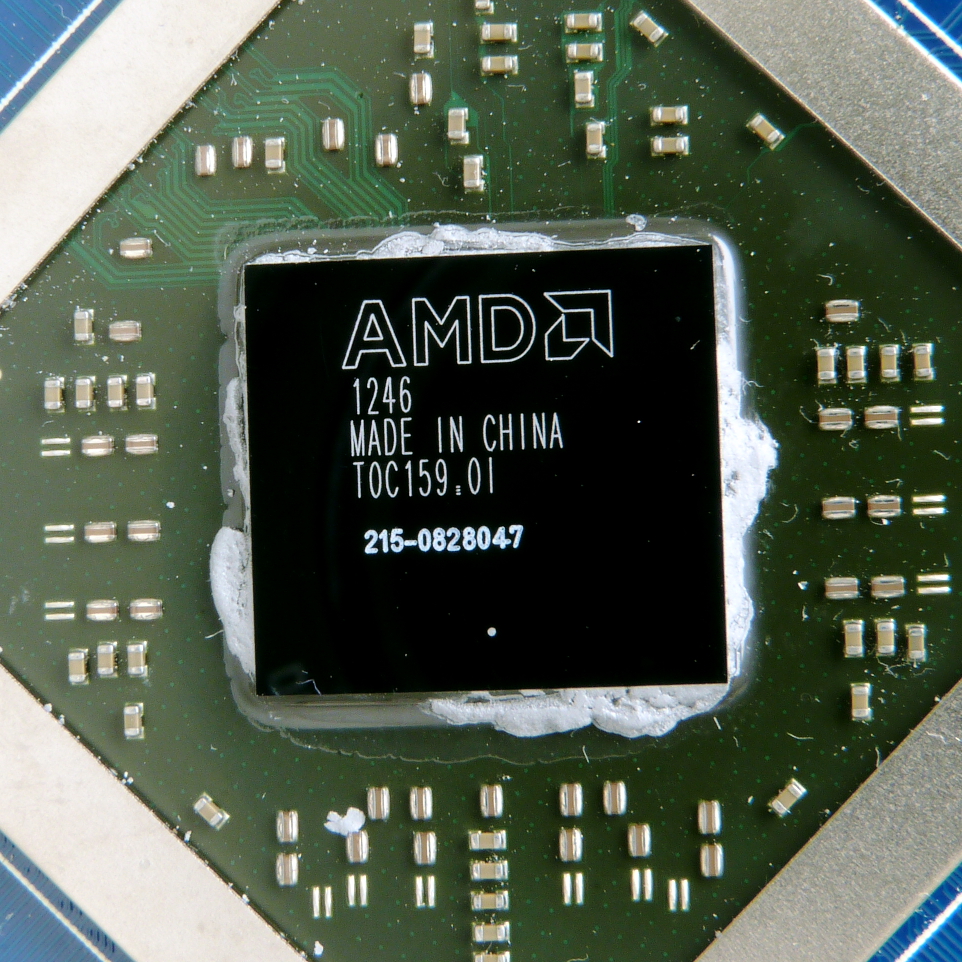 🇺🇸 United StatesRadeon HD 7000 series
AMD graphics processor family using 28 nm process and GCN architectureGPU · GPU architecture · 2012
🇺🇸 United StatesRadeon RX 400 series
AMD graphics processors using Polaris chips and GCN 4 architectureGPU · GPU architecture · 2016
🇺🇸 United StatesRadeon RX Vega
AMD graphics processors using the fifth generation GCN architectureGPU · GPU architecture · 2017
🇺🇸 United StatesRadeon RX 6000 series
AMD RDNA 2 graphics cards with ray tracingGPU · GPU architecture · 2020
WorldRadeon RX 5000 series
AMD graphics processors using RDNA architecture and 7 nm processGPU · GPU architecture · 2019
 🇺🇸 United StatesRadeon RX 9000 series
Mainstream consumer graphics cards using RDNA 4 architectureGPU · GPU architecture · 2025
 🇺🇸 United StatesRadeon RX 7000 series
AMD RDNA 3 graphics cards with chiplet designGPU · GPU architecture · 2022
🇺🇸 United StatesAMD FirePro
Professional graphics cards for workstations and servers by AMDGPU · GPU architecture
 🇺🇸 United StatesIntel Arc
Discrete graphics processors by Intel for gaming and workstationsGPU · GPU architecture · 2022
 🇺🇸 United StatesIntel740
1998 AGP graphics chip by Intel using system RAM for texturesGPU · 1998
 🇺🇸 United StatesIntel GMA
Integrated graphics series for low-cost PCs by IntelGPU · GPU architecture · 2004
🇺🇸 United StatesIntel Xe
Graphics architecture for integrated and discrete GPUsGPU · GPU architecture · 2020
 🇨🇦 CanadaMatrox G200
1998 graphics chip for PCs and servers by MatroxGPU · Other · 1998
 WorldMatrox Parhelia
A 2002 GPU known for triple-monitor support and high image quality.GPU · GPU architecture · 2002
 🇺🇸 United StatesVoodoo2
3D graphics accelerator chipset with dual-texturing and SLI supportGPU · GPU architecture · 1998
 WorldMatrox Mystique
Early 2D and 3D graphics accelerator for PCsGPU · 1996
 WorldMatrox G400
Dual-monitor graphics card with high-quality 2D outputGPU · GPU architecture · 1999
 🇺🇸 United StatesVoodoo3
Gaming graphics card series by 3dfx InteractiveGPU · GPU architecture · 1999
 WorldS3 Trio
Integrated 2D graphics accelerator series for PCsGPU · 1995
 🇺🇸 United StatesVoodoo 5
Final graphics card series from 3dfx InteractiveGPU · GPU architecture · 2000
 WorldS3 ViRGE
Early mass-market 2D and 3D graphics accelerator chip from S3.GPU · GPU architecture · 1996
 🇺🇸 United StatesS3 Savage
PC graphics chipset series by S3 GraphicsGPU · GPU architecture · 1998
 WorldTseng Labs ET4000
SVGA graphics controller chips from the early 1990sGPU
 🇺🇸 United StatesTMS34010
First programmable graphics processor integrated circuitGPU · Other · 1986
 🇺🇸 United StatesGeometry Engine
Early VLSI vector processor for 3D graphicsGPU · Other · 1981
🇺🇸 United StatesNeural Engine
Apple's on-device AI accelerator for machine learning tasksAI accelerator · Arm · 2017
🇯🇵 JapanHD63484
Hitachi graphics chip from 1984 supporting 4K monochrome outputGPU · 1984
 🇯🇵 JapanNEC μPD7220
Early single-chip graphics display controller for bit-mapped screensGPU · 1981
WorldMpact 2
Vector-processing media co-processor for graphics and audioGPU · Other · 1996
🇺🇸 United StatesGB10 Grace Blackwell Superchip
AI superchip for desktop workstationsSoC · Arm
🇺🇸 United StatesSnapdragon X Elite
Arm-based system on a chip for Windows laptopsSoC · Arm
🇺🇸 United StatesWormhole
RISC-V AI accelerator with mesh networkingAI accelerator · RISC-V
 🇺🇸 United StatesMotorola 68000 series
32-bit CISC microprocessor family from MotorolaCPU · 68k · 1979
 🇺🇸 United StatesIntel 80186
16-bit microprocessor with integrated peripherals for embedded systemsCPU · x86 · 1982
 WorldRAMDAC
Chip converting digital color data to analog signals for monitorsAnalog · 1987
 WorldMotorola 68012
32-bit microprocessor with extended memory and virtualization supportCPU · 68k · 1982
 🇹🇼 TaiwanCyrix III
x86 processor from VIA using Centaur and Cyrix coresCPU · x86 · 2000
 🇺🇸 United StatesCyrix Cx486DLC
Hybrid x86 desktop CPU bridging 386 and 486 architecturesCPU · x86 · 1992
 🇺🇸 United StatesRISC Single Chip
IBM single-chip microprocessor for entry-level workstationsCPU · RISC
 🇯🇵 JapanNEC µPD780C
Zilog Z80 compatible 8-bit microprocessor by NECCPU · Other
Photo credits on this page
The small pictures above come from Wikimedia Commons under free licences. Some are cropped to fit.
- Lunar Lake: LaptopMedia, CC BY 3.0, source
- Intel Core 2: Raimond Spekking, CC BY-SA 4.0, source
- Intel 8088: Unknown author, CC BY-SA 3.0, source
- Motorola 68000: en:User:ArnoldReinhold, CC BY-SA 3.0, source
- Pentium: Pdesousa359, CC BY-SA 3.0, source
- Radeon HD 2000 series: Tors, Public domain, source
- Radeon X1000 series: Sgroey, CC BY-SA 4.0, source
- Radeon HD 3000 series: futase_tdkr, Public domain, source
- Radeon HD 6000 series: smial ( talk ), FAL, source
- Radeon 200 series: D-Kuru, CC BY-SA 3.0 at, source
- Radeon HD 5000 series: Monstapix, CC BY-SA 4.0, source
- Radeon 300 series: C. Spille/pcgameshardware.de, CC BY-SA 4.0, source
- Radeon HD 7000 series: Liam McSherry, CC BY-SA 4.0, source
- Radeon RX 9000 series: MoreThanTech Personality rights Personality rights Personality rights, CC BY 3.0, source
- Radeon RX 7000 series: Shinobara, CC BY 4.0, source
- Intel Arc: Telaneo, CC0, source
- Intel740: Futase_tdkr, Public domain, source
- Intel GMA: Harumphy at English Wikipedia, CC BY-SA 3.0, source
- Matrox G200: Piotr Kuczyński, CC BY-SA 3.0, source
- Matrox Parhelia: Futase_tdkr, Public domain, source
- Voodoo2: No machine-readable author provided. Stonda~commonswiki assumed (based, CC BY 2.5, source
- Matrox Mystique: Trio3D, CC BY-SA 4.0, source
- Matrox G400: kashichan, Public domain, source
- Voodoo3: User:Tullius, CC BY-SA 3.0, source
- S3 Trio: AVRS, CC BY-SA 3.0, source
- Voodoo 5: Konstantin Lanzet, CC BY-SA 3.0, source
- S3 ViRGE: The original uploader was Salam32 at Arabic Wikipedia ., Public domain, source
- S3 Savage: Futase_tdkr., Public domain, source
- Tseng Labs ET4000: Atreyu, CC BY 2.5, source
- TMS34010: Konstantin Lanzet, CC BY 3.0, source
- Geometry Engine: Pauli Rautakorpi, CC BY 3.0, source
- NEC μPD7220: Drahtlos, CC BY-SA 4.0, source
- IBM Power: Henriok, CC0, source
- Intel 80186: Armin Kübelbeck, CC BY-SA 3.0, source
- RAMDAC: Alecv, CC BY-SA 3.0, source
- Motorola 68012: Pauli Rautakorpi, CC BY 3.0, source
- Cyrix III: Konstantin Lanzet, CC BY-SA 3.0, source
- Cyrix Cx486DLC: Pauli Rautakorpi, CC BY 3.0, source
- NEC µPD780C: Konstantin Lanzet, CC BY-SA 4.0, source
- I486: Konstantin Lanzet, GFDL, source
- Apple M1 Ultra: Henriok, CC0, source
- Ryzen: ICCTsHeY, CC BY-SA 4.0, source
- Athlon 64: Astraera, CC BY-SA 4.0, source