
Intel GMA
Integrated graphics series for low-cost PCs by Intel
Intel launched the Graphics Media Accelerator line in 2004 to provide budget-friendly visual processing. These chips share system memory and sit on the motherboard, powering netbooks and office desktops before HD Graphics took over.
- Launched in 2004 to replace Intel Extreme Graphics
- Uses system RAM instead of dedicated video memory
- Powered 90% of PC motherboards in early 2007
- X3000 introduced unified shader architecture in 2006
- Final model X4700MHD released in October 2008
What it is
The Intel Graphics Media Accelerator is a family of integrated graphics processors. Intel introduced the line in 2004 to replace its earlier Extreme Graphics technology. These units do not have their own video memory. Instead, they borrow capacity from the main system RAM. This design keeps costs low for manufacturers. The chips appear on motherboards for budget laptops, netbooks, and business desktops. They handle basic display tasks rather than heavy gaming. Intel discontinued the brand when it moved graphics logic directly into the central processor with the HD Graphics series.
How it came about
This series evolved from the Intel740 discrete cards and the Extreme Graphics core. Early versions relied heavily on the main CPU for calculations, which limited speed. Critics sometimes called them decelerators due to poor gaming performance. A major shift occurred in 2006 with the fourth generation. This update moved more functions into hardware. Later models licensed PowerVR technology from Imagination Technologies for specific Atom platforms. The line ended as Intel adopted the Platform Controller Hub architecture, merging graphics into the CPU die under the new HD and Iris branding.
Inside the chip
Early generations used separate clock domains for display and rendering. The GMA 900 supported four pixels per clock but lacked hardware vertex shading. The X3000 introduced a unified shader array with eight scalar execution units. A scheduler assigned tasks dynamically to improve throughput. Later chips like the X3500 added support for DirectX 10 and Shader Model 4.0. Video playback features improved over time, with high-definition decoding arriving in the X4500HD. Some variants, such as the GMA 500, used licensed PowerVR cores instead of Intel's internal design.
How it was made
Intel manufactured most of these chips using its internal fabrication facilities. The process nodes varied across the lifespan of the product line. For instance, the Cedar Trail Atom processors with GMA 3600 graphics used a 32 nanometre process. Packaging depended on the host chipset, often integrating directly into the northbridge or system controller hub. The reliance on shared memory meant no dedicated video RAM packages were required for these units.
Where it went
These processors powered a vast majority of personal computers in the mid-2000s. By early 2007, roughly ninety percent of sold motherboards included an integrated GPU. They were standard in netbooks and entry-level laptops where battery life and cost mattered more than 3D performance. Business desktops also utilized them for office applications. Apple included the GMA 950 and X3100 in several Mac Mini and MacBook models during this period. Linux and Windows drivers provided varying levels of OpenGL and DirectX support.
Versions and family
The family includes many distinct models. Generation 3 featured the GMA 900, 950, and 3100. Generation 4 introduced the X3000, X3500, and X4500 series. Mobile versions carried an M suffix, such as the X3100 and 4500MHD. A separate branch used PowerVR technology, including the GMA 500, 600, and 3600 series for Atom processors. The X4700MHD was the final model released under the GMA name in late 2008. Each variant offered different clock speeds and feature sets for video decoding.
Why it matters
The GMA series made integrated graphics viable for everyday computing. It helped drive the adoption of netbooks and affordable laptops globally. While it did not compete with dedicated cards for gamers, it satisfied the needs of general users. The transition to unified shaders in the X3000 laid groundwork for future Intel graphics architectures. Its widespread presence in OEM systems ensured that basic 3D acceleration became a standard expectation for PC buyers.
Problems and reception
Reviewers often criticized early models for slow performance in games. The nickname Graphics Media Decelerator reflected this sentiment. Support for operating systems was mixed. Mac OS X required specific kernel modes for certain GMA chips, limiting upgrades to newer software versions. Linux drivers for the PowerVR-based models were particularly problematic, often treating the GPU as a simple framebuffer rather than utilizing its full capabilities.
Questions people ask about Intel GMA
Does Intel GMA have its own video memory?
No. These integrated processors use the computer's main system memory for storage. They do not include dedicated video RAM, which helps reduce the overall cost of the motherboard and system.
Can Intel GMA run modern video games?
Generally no. The series targets low-cost solutions and office tasks. While later models support DirectX 10, they lack the power for demanding 3D titles. Early versions were often too slow for gaming.
Which Intel GMA model supports DirectX 10?
The GMA X3100, X3500, and X4500 series support DirectX 10 and Shader Model 4.0. Earlier models like the GMA 950 only support DirectX 9.0 and older shader standards.
Did Intel design all GMA chips internally?
Not all. While most were Intel designs, the GMA 500, 600, and 3600 series used PowerVR cores licensed from Imagination Technologies. These were built for low-power Atom platforms.
Good reading and sources
The facts on this page come from the Wikipedia article "Intel GMA", written by its contributors and used under the CC BY-SA 4.0 licence, and from its Wikidata record (CC0). EveryChip rewrote the text in its own words, with AI assistance, and compares every page with the article to make sure no passage is copied. It may be reused under the same CC BY-SA 4.0 licence with a link back.
It may contain mistakes, and figures change over time. Nothing here is investment or buying advice. If something is wrong, tell us. Last refreshed 2026-11-14.
Like Intel GMA
All graphics processors 🇨🇦 CanadaRadeon HD 3000 series
ATI graphics cards using TeraScale 1 architecture and 55 nm process.GPU · GPU architecture · 2007
 🇺🇸 United StatesIntel Graphics Technology
Integrated graphics processors for Intel CPUsGPU · GPU architecture · 2010
 🇨🇦 CanadaR420
ATI GPU core for Radeon X800 graphics cardsGPU · GPU architecture · 2004
 🇺🇸 United StatesRankine
Nvidia GPU microarchitecture from 2003 for DirectX 9GPU · GPU architecture · 2003
More from Intel
All of them 🇺🇸 United StatesTejas and Jayhawk
Cancelled Intel CPU cores planned as successors to Prescott Pentium 4 and XeonCPU · x86 · 2004
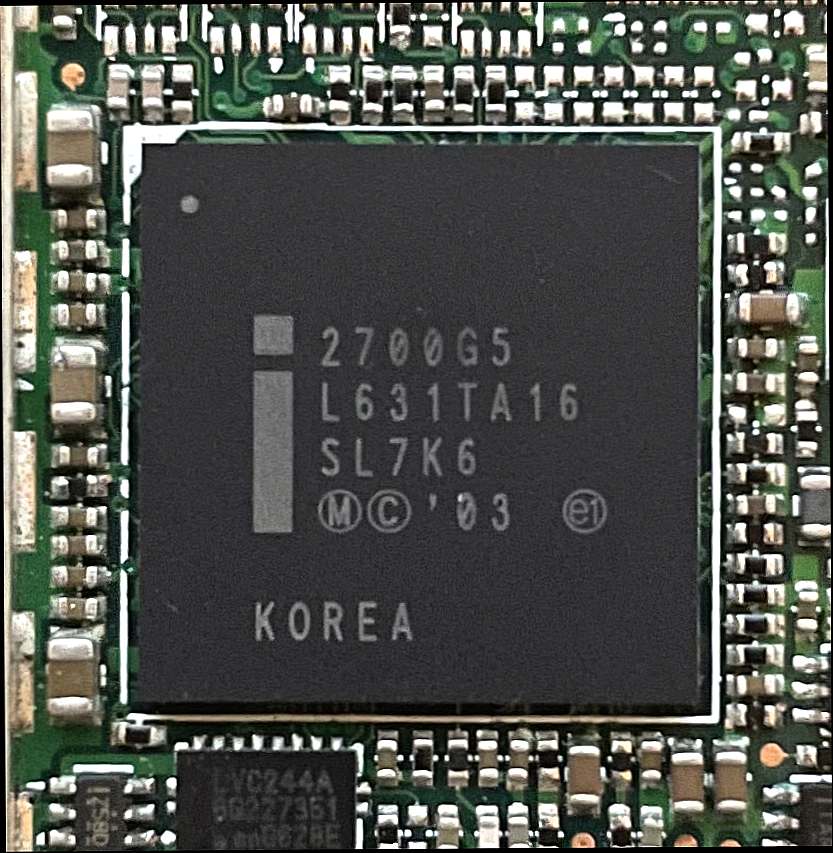 🇺🇸 United StatesIntel 2700G
Mobile graphics co-processor for XScale PXA27xGPU · GPU architecture · 2004
 🇺🇸 United StatesPentium D
Intel's first dual-core desktop Pentium, two NetBurst cores in one packageCPU · x86 · 2005
 🇺🇸 United States and 1 morePentium M
Intel's power-saving laptop CPU line, launched in 2003 on the P6 designCPU · x86 · 2003