Games consoles
The processors and graphics chips inside home and handheld consoles. 195 chips on EveryChip so far.
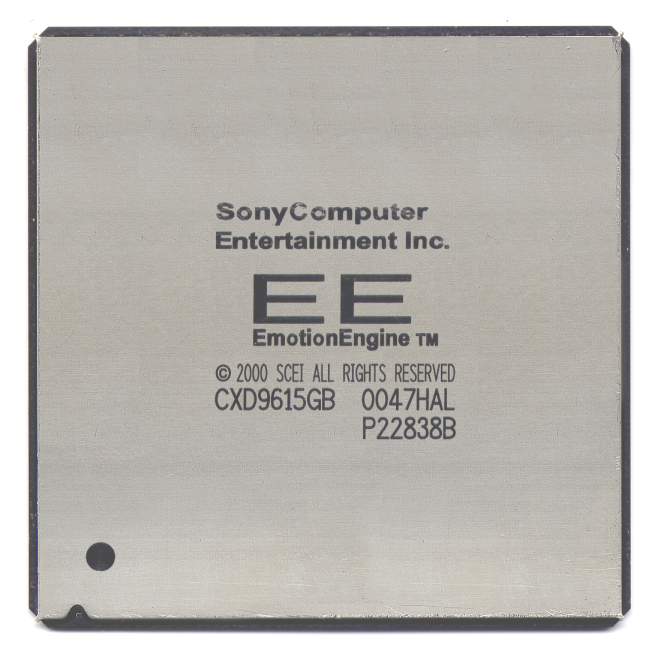
Games consoles have driven chip design since the 1970s. Each console uses a fixed set of chips for years, made in tens of millions, so its makers can afford custom designs. From the Atari 2600's TIA and the NES's Ricoh 2A03 to the PlayStation 2's Emotion Engine and the PlayStation 3's Cell, console chips were often unusual. Recent PlayStation and Xbox consoles use custom AMD SoCs.
Custom chips
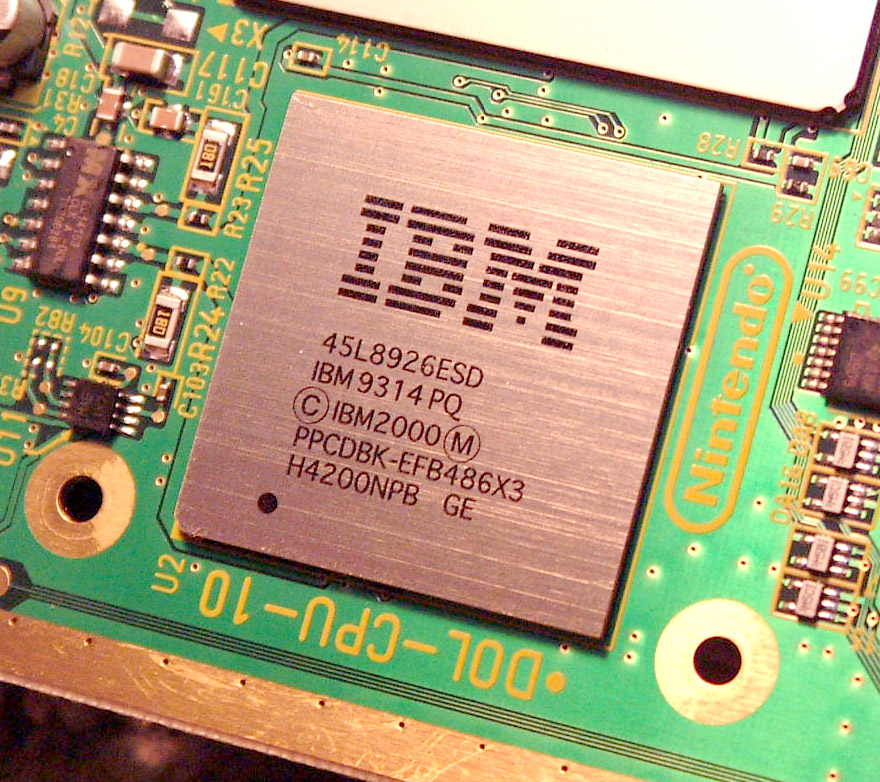
Early consoles needed chips that could draw sprites and scroll backgrounds on a TV with very little memory. Later, the PlayStation 2's vector units and the Cell's eight helper cores gave great power to developers who mastered them. IBM supplied the processors of the GameCube, Wii, Xbox 360 and PlayStation 3 in the same years.
PC-like consoles
The PlayStation 4 and Xbox One of 2013 both used AMD SoCs with x86 CPU cores and Radeon graphics, and their 2020 successors use AMD Zen 2 and RDNA 2. Nintendo chose Nvidia's Tegra X1 for the Switch of 2017 and a newer Nvidia chip for the Switch 2 of 2025. Handheld gaming PCs, such as Valve's Steam Deck, also use AMD chips.
Famous games consoles chips





Further reading
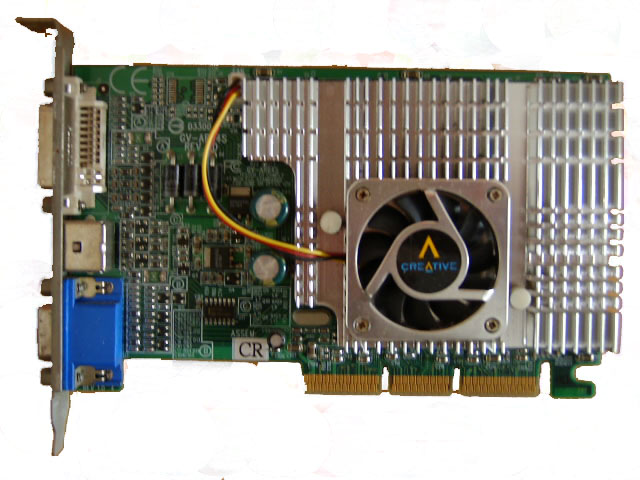 🇨🇦 CanadaRadeon R100
First generation Radeon graphics chip with hardware T&LGPU · GPU architecture · 2000
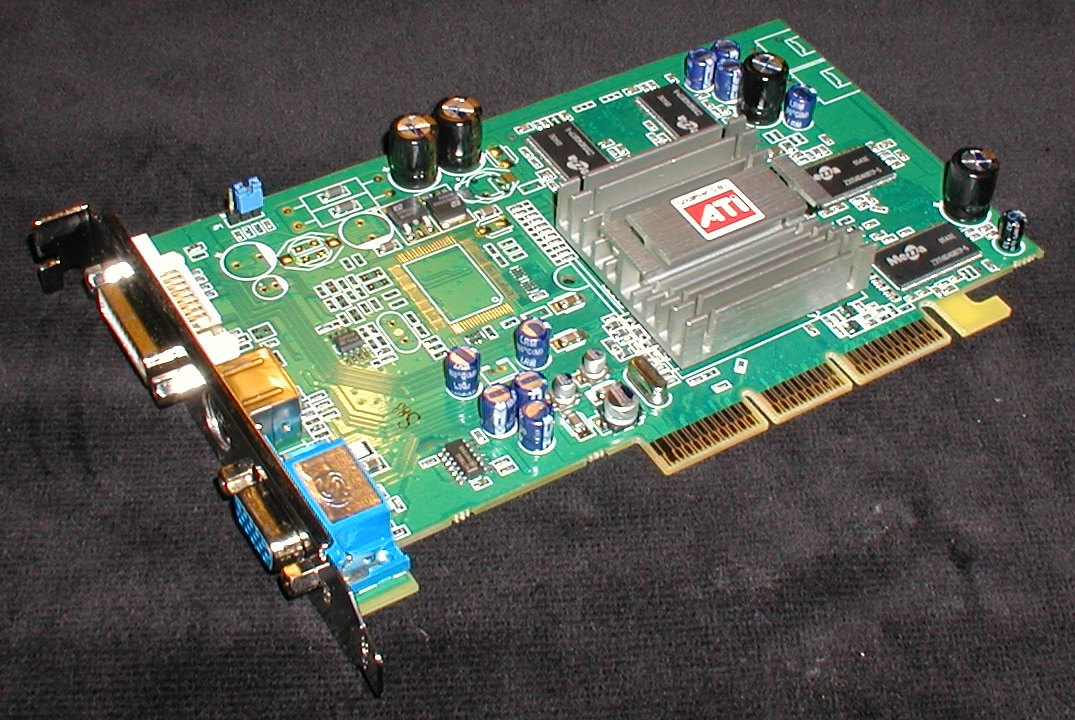 🇨🇦 CanadaRadeon R200
Second-generation ATI GPU with DirectX 8.1 supportGPU · GPU architecture · 2001
 🇨🇦 CanadaRadeon R300
First consumer GPU with full Direct3D 9 supportGPU · GPU architecture · 2002
 WorldRadeon HD 2000 series
ATI's first DirectX 10 graphics card family with unified shaders.GPU · GPU architecture · 2007
 🇨🇦 CanadaRadeon X1000 series
ATI graphics cards from 2005 using the R500 architectureGPU · GPU architecture · 2005
 🇺🇸 United StatesRadeon HD 6000 series
AMD graphics processor family using TeraScale architectureGPU · GPU architecture · 2010
 🇺🇸 United StatesRadeon 200 series
AMD graphics processors using GCN and TeraScale architectures.GPU · GPU architecture · 2013
 🇺🇸 United StatesRadeon HD 5000 series
First DirectX 11 graphics processor family from AMDGPU · GPU architecture · 2009
 🇺🇸 United StatesRadeon 300 series
AMD graphics processors using GCN architecture and 28 nm processGPU · GPU architecture · 2015
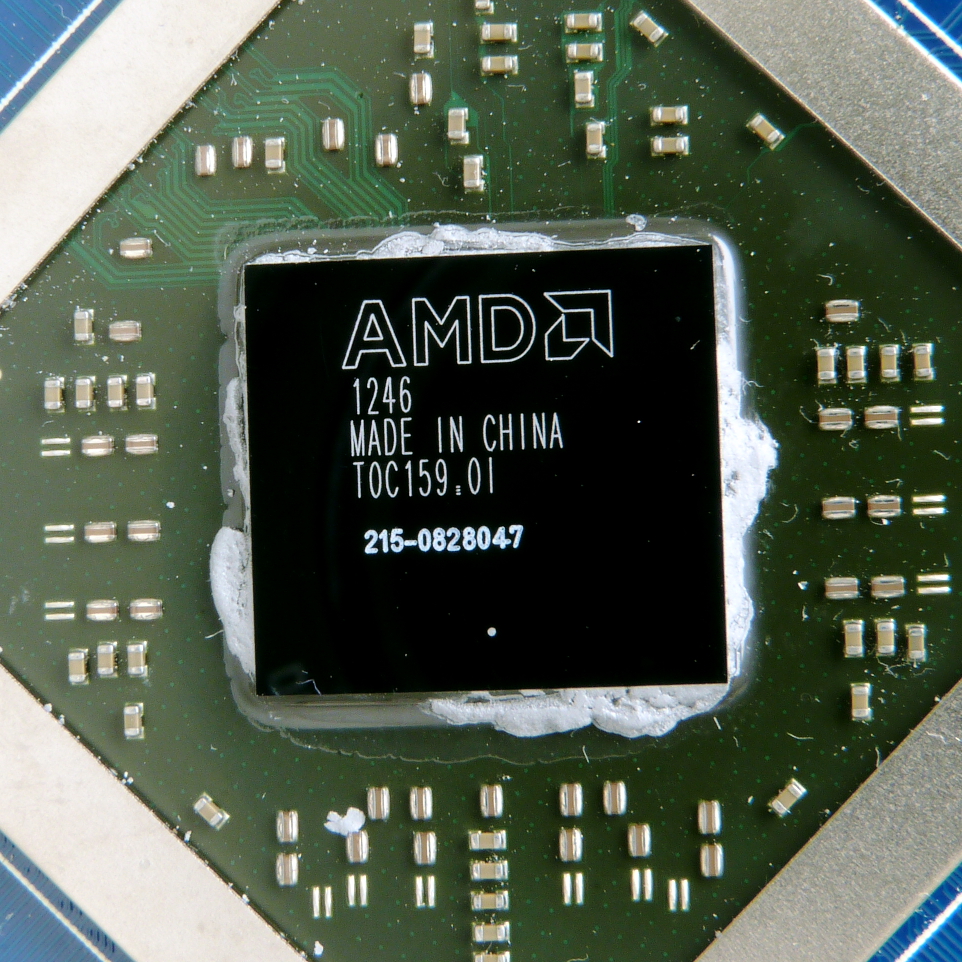 🇺🇸 United StatesRadeon HD 7000 series
AMD graphics processor family using 28 nm process and GCN architectureGPU · GPU architecture · 2012
🇺🇸 United StatesRadeon RX 400 series
AMD graphics processors using Polaris chips and GCN 4 architectureGPU · GPU architecture · 2016
🇺🇸 United StatesRadeon RX 6000 series
AMD RDNA 2 graphics cards with ray tracingGPU · GPU architecture · 2020
WorldRadeon RX 5000 series
AMD graphics processors using RDNA architecture and 7 nm processGPU · GPU architecture · 2019
 🇯🇵 JapanHollywood
ATI system-on-a-chip for the Nintendo Wii consoleSoC · Arm
 🇺🇸 United StatesRadeon RX 9000 series
Mainstream consumer graphics cards using RDNA 4 architectureGPU · GPU architecture · 2025
 🇨🇦 CanadaXenos
Custom GPU for the Xbox 360 console by ATIGPU · GPU architecture
 🇺🇸 United StatesRadeon RX 7000 series
AMD RDNA 3 graphics cards with chiplet designGPU · GPU architecture · 2022
 🇺🇸 United StatesIntel Arc
Discrete graphics processors by Intel for gaming and workstationsGPU · GPU architecture · 2022
🇺🇸 United StatesIntel Xe
Graphics architecture for integrated and discrete GPUsGPU · GPU architecture · 2020
 🇺🇸 United StatesPowerVR
Graphics and AI accelerator IP for mobile and embedded systemsGPU · GPU architecture · 1985
 WorldMatrox Parhelia
A 2002 GPU known for triple-monitor support and high image quality.GPU · GPU architecture · 2002
 🇺🇸 United StatesVoodoo2
3D graphics accelerator chipset with dual-texturing and SLI supportGPU · GPU architecture · 1998
 🇺🇸 United StatesVoodoo3
Gaming graphics card series by 3dfx InteractiveGPU · GPU architecture · 1999
 🇺🇸 United StatesVoodoo 5
Final graphics card series from 3dfx InteractiveGPU · GPU architecture · 2000
 WorldS3 ViRGE
Early mass-market 2D and 3D graphics accelerator chip from S3.GPU · GPU architecture · 1996
🇺🇸 United StatesNvidia L40S
Data centre GPU for AI and graphics workloadsGPU · GPU architecture · 2023
WorldNVENC
Dedicated video encoding hardware in Nvidia GPUsGPU · GPU architecture · 2012
 WorldNvidia GRID
GPU family for virtualization and cloud gamingGPU · GPU architecture · 2008
 🇺🇸 United States and 1 moreLatte
AMD Radeon-based graphics chip for the Nintendo Wii U consoleGPU · GPU architecture · 2012
 🇺🇸 United StatesRIVA TNT
Dual-pipeline PC graphics chip from NvidiaGPU · GPU architecture · 1998
 🇺🇸 United StatesBlackwell
Nvidia GPU microarchitecture for AI and gamingGPU · GPU architecture · 2024
Photo credits on this page
The small pictures above come from Wikimedia Commons under free licences. Some are cropped to fit.
- Cell Broadband Engine: Greenpro, CC BY-SA 3.0, source
- Microsoft XCPU (Xenon): Konstantin Lanzet, CC BY 3.0, source
- Emotion Engine: Unknown author, CC BY-SA 3.0, source
- Nvidia GRID: Phiarc, CC BY-SA 4.0, source
- Radeon R100: Original uploader was CY at zh.wikipedia, CC BY-SA 3.0, source
- Radeon R200: ich selbst, Ulli1105, CC BY-SA 2.5, source
- Radeon R300: ATI R300 GPU.jpg : Gona.eu derivative work dated 7 April 2024: Pittigr, CC BY-SA 2.5, source
- Radeon HD 2000 series: Tors, Public domain, source
- Radeon X1000 series: Sgroey, CC BY-SA 4.0, source
- Radeon HD 6000 series: smial ( talk ), FAL, source
- Radeon 200 series: D-Kuru, CC BY-SA 3.0 at, source
- Radeon HD 5000 series: Monstapix, CC BY-SA 4.0, source
- Radeon 300 series: C. Spille/pcgameshardware.de, CC BY-SA 4.0, source
- Radeon HD 7000 series: Liam McSherry, CC BY-SA 4.0, source
- Hollywood: ZyMOS, CC BY-SA 4.0, source
- Radeon RX 9000 series: MoreThanTech Personality rights Personality rights Personality rights, CC BY 3.0, source
- Xenos: Myself User:ZyMOS, CC BY-SA 4.0, source
- Radeon RX 7000 series: Shinobara, CC BY 4.0, source
- Intel Arc: Telaneo, CC0, source
- PowerVR: Gona.eu, Public domain, source
- Matrox Parhelia: Futase_tdkr, Public domain, source
- Voodoo2: No machine-readable author provided. Stonda~commonswiki assumed (based, CC BY 2.5, source
- Voodoo3: User:Tullius, CC BY-SA 3.0, source
- Voodoo 5: Konstantin Lanzet, CC BY-SA 3.0, source
- S3 ViRGE: The original uploader was Salam32 at Arabic Wikipedia ., Public domain, source
- Gekko: Baz1521, CC BY-SA 3.0, source
- Broadway: ZyMOS, CC BY-SA 4.0, source
- Ricoh 2A03: PantheraLeo1359531, CC BY 4.0, source
- RIVA TNT: Raimond Spekking, CC BY-SA 4.0, source
- Blackwell: 极客湾Geekerwan, CC BY 3.0, source
- Latte: Takimata (edited by: Tokyoship ), CC BY-SA 3.0, source
- Tegra: Raimond Spekking, CC BY-SA 4.0, source