Data centres and servers
Xeon, EPYC, Graviton, H100 and the chips of the cloud. 296 chips on EveryChip so far.
Data centres and cloud servers use the largest and most power-hungry chips: server CPUs with up to a few hundred cores, AI accelerators drawing 700 W to over 1,000 W each, network chips and DPUs, and huge amounts of memory. Intel's Xeon and AMD's Epyc dominate general-purpose servers, while Arm designs such as Amazon's Graviton have grown fast. Nvidia's GPUs lead in AI.
Server CPUs
A server processor is built for many tasks at once and for long, reliable running. It supports large amounts of error-correcting memory, many PCIe lanes for storage and network cards, and two or more sockets on one board. AMD's Epyc, launched in 2017, used chiplets to fit more cores than single-die designs, and took a large share of the market from Intel's Xeon.
Custom cloud chips
The largest cloud companies now design their own chips. Amazon has Graviton CPUs and Trainium and Inferentia AI chips, Google its TPU and Axion CPU, and Microsoft its Cobalt CPU and Maia accelerator. They buy fewer standard parts this way and tune chips to their own software. The power used by AI servers has become a constraint on where data centres can be built.
Famous data centres and servers chips


Still to be written: AWS Graviton.
Further reading
 🇺🇸 United StatesAMD K8
First x86 microarchitecture with integrated 64-bit support and on-chip memory control.CPU · x86 · 2003
 🇺🇸 United StatesPiledriver
Second-generation AMD x86 microarchitecture for desktops and serversCPU · x86 · 2012
🇺🇸 United StatesBellmac 32
Bell Labs CMOS microprocessor, first to move 32 bits per clock cycleCPU · Other · 1980
 🇺🇸 United StatesGranite Rapids
Intel's high-performance server processor series for data centres.CPU · x86 · 2024
 🇺🇸 United StatesCVAX
DEC's second-generation single-chip VAX microprocessor with DRAM cacheCPU · Other · 1987
 🇺🇸 United StatesItanium
64-bit EPIC server microprocessor family from Intel and HPCPU · VLIW · 2001
 🇺🇸 United StatesXeon D
Intel's low-power x86 system-on-chip line for microserversCPU · x86 · 2015
 🇺🇸 United StatesP6
Intel's sixth x86 design, first with out-of-order executionCPU · x86 · 1995
 🇺🇸 United StatesNetBurst
Intel's Pentium 4-era x86 CPU design, built for very high clock speedsCPU · x86 · 2000
 🇺🇸 United States and 1 moreKaby Lake
Intel's 7th-gen Core CPUs on a refined 14 nm processCPU · x86 · 2016
 🇮🇱 IsraelCoffee Lake
Intel's 8th-gen desktop CPU family, six and eight cores on 14 nm++CPU · x86 · 2017
 🇺🇸 United StatesComet Lake
Intel's 10th-gen Core CPUs on a refined 14 nm Skylake processCPU · x86 · 2019
 🇮🇱 IsraelRaptor Lake
Hybrid x86 desktop and mobile processors from IntelCPU · x86 · 2022
🇺🇸 United StatesSierra Forest
Intel Xeon 6 server CPU with up to 288 E-cores for cloud density.CPU · x86 · 2024
 🇺🇸 United StatesTuring
Nvidia GPU microarchitecture with real-time ray tracing and AI coresGPU · GPU architecture · 2018
 🇺🇸 United StatesRadeon Pro
Professional workstation graphics cards by AMDGPU · GPU architecture · 2016
 WorldDDR2 SDRAM
Second-generation double data rate memory standard for computersMemory · 2003
🇺🇸 United StatesAgilex
FPGA brand by Altera for data centres and RFFPGA · Arm · 2019
 🇺🇸 United StatesMC88100
First Motorola RISC microprocessor implementing the 88000 architecture.CPU · RISC · 1988
 🇺🇸 United StatesSilvermont
Intel's 22 nm low-power Atom core design, used across four SoC familiesCPU · x86 · 2013
 🇺🇸 United StatesPowerPC 970
IBM's 64-bit PowerPC desktop CPU family, sold by Apple as the G5.CPU · Power · 2002
 🇺🇸 United StatesHaswell
Intel's 2013 x86-64 CPU microarchitecture on 22 nm FinFETCPU · x86 · 2013
🇺🇸 United StatesPenryn
Intel's 45 nm shrink of the Core microarchitecture, from 2007CPU · x86 · 2007
 🇺🇸 United StatesPentium III
Intel's 32-bit P6 desktop and server CPU line, launched in 1999 with SSE.CPU · x86 · 1999
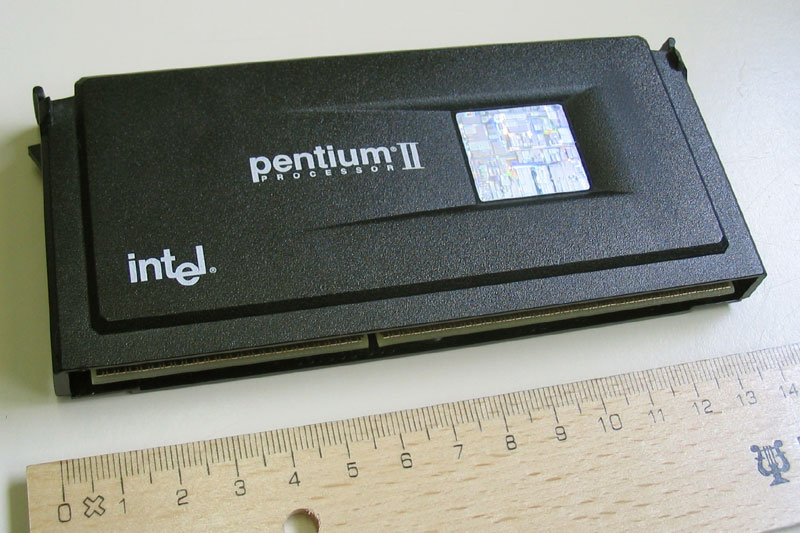 🇺🇸 United StatesPentium II
Intel's 1997 P6 desktop CPU line with MMX, sold in a slot cartridgeCPU · x86 · 1997
 🇺🇸 United StatesPentium 4
Intel's single-core desktop CPU line built on the NetBurst microarchitectureCPU · x86 · 2000
 🇺🇸 United StatesXeon Phi
Intel's x86 manycore coprocessor family for supercomputers and HPCCPU · x86 · 2010
 🇺🇸 United StatesWestmere
Intel's 32 nm shrink of Nehalem, with six and ten core parts and AES instructionsCPU · x86 · 2010
 🇺🇸 United StatesIntel Core
Intel's multi-core x86 CPU line for laptops, desktops and workstationsCPU · x86 · 2006
 🇺🇸 United StatesZen 2
AMD's seventh-nanometre processor design used in Ryzen, Epyc and game consoles.CPU · x86 · 2019
 🇺🇸 United StatesNehalem
Intel's 45 nm CPU design behind the first Core i5 and i7 chipsCPU · x86 · 2008
 🇺🇸 United StatesNvidia Tesla
Former brand for Nvidia general-purpose GPU computing cardsGPU · GPU architecture · 2007
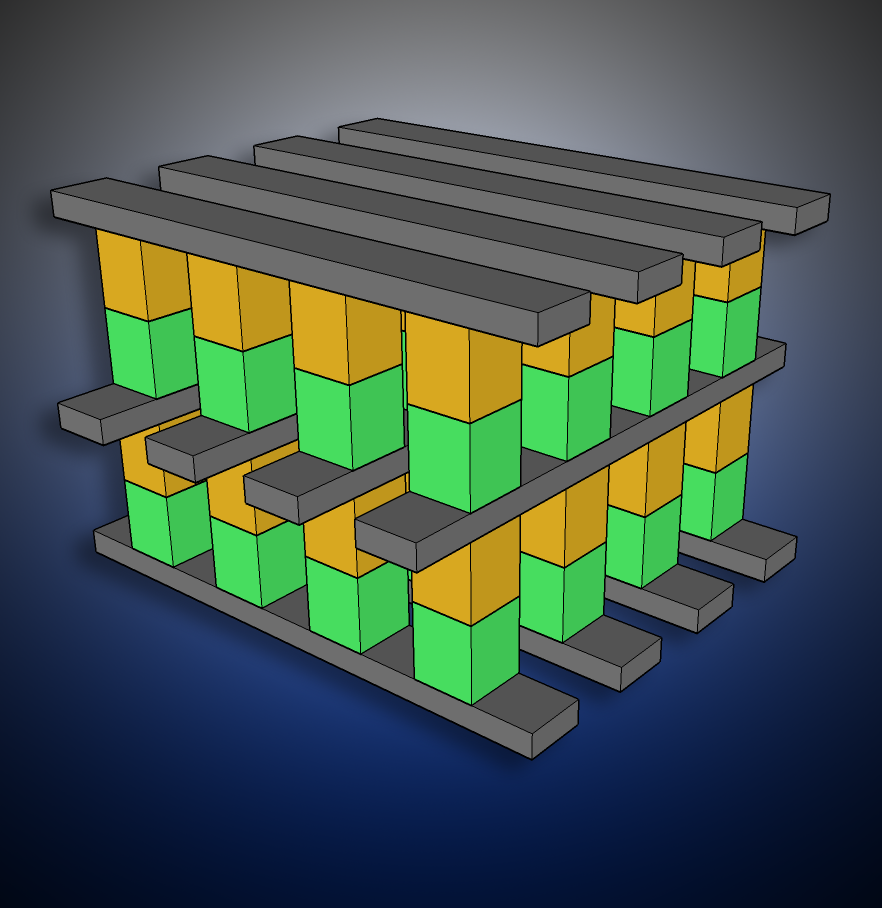 🇺🇸 United States3D XPoint
Non-volatile memory from Intel and Micron, sold as OptaneMemory · 2015
🇺🇸 United StatesTPU v5e
Google AI accelerator for training and inference workloadsAI accelerator · Tensor design
🇺🇸 United StatesCorsair
AI inference accelerator with in-memory computeAI accelerator · Tensor design · 2024
🇺🇸 United StatesIntel Data Center GPU Max
Data centre GPU for HPC and AI workloadsGPU · GPU architecture
🇺🇸 United StatesIntel Gaudi 3
AI accelerator chip using Ethernet for scalingAI accelerator · Other · 2024
🇺🇸 United StatesInferentia2
Second-generation AI inference accelerator from AWSAI accelerator · Other
🇺🇸 United States and 1 moreGaudi 2
AI training accelerator chip by IntelAI accelerator · Other · 2022
🇺🇸 United StatesIntel Gaudi
AI accelerator series from Intel for training and inference workloads.AI accelerator · Other · 2024
🇺🇸 United StatesTrainium3
Fourth-generation AI accelerator chip from AWSAI accelerator · Other · 2025
🇺🇸 United StatesAMD Instinct MI250X
Dual-GPU accelerator for supercomputersGPU · GPU architecture
🇺🇸 United StatesCerebras WSE-3 Turbo
Wafer-scale AI processor with 4 trillion transistorsAI accelerator · Other · 2026
🇺🇸 United States and 1 moreAMD Instinct MI100
CDNA architecture GPU for high-performance computing and AI workloads.GPU · GPU architecture · 2020
🇺🇸 United StatesAMD Instinct MI300X
AI accelerator GPU with 192GB HBM3 memoryGPU · GPU architecture · 2023
🇺🇸 United StatesAMD Instinct MI350X
Air-cooled AI accelerator using CDNA4 architecture and 3nm process.AI accelerator · GPU architecture · 2025
🇺🇸 United StatesTPU v2
Google AI accelerator chip for machine learning trainingAI accelerator · Other · 2019
🇺🇸 United StatesTPU v3
Google AI accelerator chip with water coolingAI accelerator · Other
Photo credits on this page
The small pictures above come from Wikimedia Commons under free licences. Some are cropped to fit.
- Epyc: Smial ( talk ), FAL, source
- AMD K8: Redfox, Public domain, source
- Piledriver: D-Kuru, CC BY-SA 4.0, source
- Granite Rapids: Intel Corporation, Public domain, source
- CVAX: wdwd, CC BY-SA 3.0, source
- Itanium: Konstantin Lanzet (with permission), CC BY-SA 3.0, source
- NetBurst: mitopencourseware, CC BY-SA 4.0, source
- P6: Fritzchens Fritz, CC0, source
- Xeon D: Intel Corporation, Public domain, source
- Kaby Lake: Eric Gaba ( Sting - fr:Sting ), CC BY-SA 4.0, source
- Coffee Lake: ElooKoN, CC BY-SA 4.0, source
- Raptor Lake: Fritzchens Fritz, CC0, source
- Comet Lake: Smial ( talk ), FAL, source
- Turing: Fritzchens Fritz, CC0, source
- Radeon Pro: David290, CC BY-SA 4.0, source
- DDR2 SDRAM: An-d, CC BY-SA 3.0, source
- MC88100: Pauli Rautakorpi, CC BY 3.0, source
- Silvermont: Raimond Spekking, CC BY-SA 4.0, source
- PowerPC 970: Henriok, CC0, source
- Haswell: Intel Free Press, CC BY 2.0, source
- Pentium III: Konstantin Lanzet, CC BY-SA 3.0, source
- Pentium II: Unknown author, Public domain, source
- Pentium 4: László Szalai (Beyond silence), Public domain, source
- Xeon Phi: Capitalistcakes, CC0, source
- Westmere: smial ( talk ), FAL, source
- Intel Core: Intel Corporation, Public domain, source
- Zen 2: Fritzchens Fritz, CC0, source
- Nehalem: smial ( talk ), FAL, source
- Nvidia Tesla: division, CSIRO, CC BY 3.0, source
- 3D XPoint: Trolomite, CC BY-SA 4.0, source
- Tensor Processing Unit: Norman P. Jouppi, George Kurian, Sheng Li, Peter Ma, Rahul Nagarajan,, CC BY 4.0, source
- Hopper: 极客湾Geekerwan, CC BY 3.0, source