
Kaby Lake
Intel's 7th-gen Core CPUs on a refined 14 nm process
Kaby Lake is Intel's codename for its seventh generation Core microprocessor family, announced on 30 August 2016 and shipped to PC makers from the second quarter of that year. Built on an improved 14 nm process, it kept the Skylake core design but raised clock speeds and reworked the graphics engine for 4K video.
- Announced 30 August 2016; desktop launch 3 January 2017
- Built on Intel's improved 14FF+ process at 14 nm
- Same per-clock performance as Skylake, with higher clock speeds
- First Core design with hyper-threading on Pentium desktop chips
- Short loops could misbehave with hyper-threading on; BIOS fix available
What it is
Kaby Lake is the codename for Intel's seventh generation of Core-branded microprocessors, announced on 30 August 2016. Desktop models reached the market in January 2017. The chips are x86-64 processors with two to four cores, running between 1.00 GHz and 4.5 GHz, and they carry integrated graphics alongside the CPU cores. They were made on an improved 14 nanometer process called 14FF+. Kaby Lake mattered because it was the first step in Intel's new process-architecture-optimization schedule, replacing the older tick-tock model in which each year alternated between a new process and a new design. It also brought hardware video handling for 4K formats into the mainstream PC.
How it came about
Intel's Israeli team in Haifa led the work, as they had for earlier designs including Banias, Dothan, Conroe and Skylake. Development manager Ran Senderovitz said the project began with modest goals but grew into a larger effort. Intel claimed gains of 12% for applications and 19% for web use over the sixth generation, though outside testing did not confirm those figures for games. Chips started going to manufacturers in the second quarter of 2016, and desktop parts launched on 3 January 2017. A refresh family, Kaby Lake R, followed in August 2017 as part of the eighth generation.
Inside the chip
The CPU core is essentially the Skylake core, so performance per clock cycle is unchanged. What improved was the way clock speeds move: Speed Shift lets the chip jump between low-power and high-performance states faster. The graphics block advanced from Gen 9 to Gen 9.5, adding fixed-function hardware for decoding H.264, HEVC and VP9 video up to 4K at 60 frames per second in 10-bit, plus hardware encoding for several of those formats. Cache is 64 KB L1 and 256 KB L2 per core, up to 8 MB of shared L3, and 64 MB of eDRAM as L4 on models with Iris Plus graphics. The chips speak x86-64 with AVX2, AES-NI, SGX and virtualisation extensions.
How it was made
Kaby Lake was produced on Intel's improved 14 nm process, labelled 14FF+. It was the third 14 nm family in a row, after Broadwell and Skylake, because the planned 10 nm successor, Cannon Lake, slipped. Desktop chips use the LGA 1151 package, high-end desktop parts use LGA 2066, and mobile versions come in several BGA packages. Desktop production ended on 9 October 2020.
Where it went
The family spanned desktops, laptops and servers. Desktop parts sat in LGA 1151 boards, with the 200 series chipset adding Optane Memory caching; older 100 series boards worked after a BIOS update. Mobile chips were grouped into H, U and Y power bands for notebooks, from 45 W down to 5 W. Xeon versions served workstations and servers. Kaby Lake G parts paired the CPU with an AMD Radeon graphics chip on one package, linked over PCI Express and connected to HBM memory through an embedded interconnect bridge.
Versions and family
Beyond the standard desktop and mobile lines, Intel shipped Kaby Lake-X high-end desktop chips on LGA 2066 with no integrated graphics, and Kaby Lake G parts with on-package AMD graphics. Kaby Lake R, announced in August 2017, was sold as eighth generation mobile silicon. Amber Lake, revealed in August 2018 and extended in 2019, covered ultra-low-power notebooks. The design replaced Skylake and was succeeded by Coffee Lake on desktop, Whiskey Lake on mobile and Cascade Lake for servers.
Why it matters
Kaby Lake marked the end of Intel's tick-tock rhythm, in which each year alternated a new manufacturing process with a new microarchitecture. Instead it was the optimisation stage of a three-step process-architecture-optimisation cycle. It was also the first Core design to offer hyper-threading on Pentium desktop chips and the first overclockable Core i3. Its video engine brought hardware 4K HEVC and VP9 handling to ordinary PCs, and its graphics block was the first of Intel's to support hardware-accelerated GPU scheduling in Windows 10.
Problems and reception
Intel's own figures for the seventh generation were not matched by third-party testing in games. A more serious problem sat in the silicon: with hyper-threading turned on, certain short instruction loops could make the system behave unpredictably. Motherboard makers could issue BIOS updates carrying the fix. Microsoft's support policy, introduced in January 2016, limited Kaby Lake to Windows 10, and Windows 11 later dropped support for most of the family, keeping only a handful of variants such as Kaby Lake R, Kaby Lake G, Kaby Lake X, Amber Lake and the Core i7-7820HQ.


Questions people ask about Kaby Lake
What kind of chip is Kaby Lake?
It is Intel's seventh generation Core microprocessor family, covering desktop, notebook and server CPUs with two to four cores and integrated graphics. The codename covers the whole range, from low-power mobile parts to Xeon workstation chips.
How is it different from Skylake?
The CPU core is the same, so instructions per clock do not change. What improved is the 14 nm process, the clock speeds and how fast the chip switches between power states, plus a new graphics engine with hardware 4K video decode and encode.
Why did Intel keep using 14 nm?
The planned 10 nm successor, Cannon Lake, was delayed in July 2015 to the second half of 2017. Kaby Lake filled the gap as a third 14 nm generation, and Coffee Lake followed in October 2017 as a fourth.
What was the hyper-threading bug?
Some short instruction loops could cause unpredictable behaviour when hyper-threading was enabled. Motherboard manufacturers could release BIOS updates containing the fix.
Does it run Windows 11?
Most Kaby Lake chips are not supported by Windows 11. The exceptions are Kaby Lake R, Kaby Lake G, Kaby Lake X, Amber Lake and the Core i7-7820HQ.
Good reading and sources
- Intel Developer ZoneIntel, Article
- Checking your browserAnandTech, Article
- AMD: Sorry, there will be no official Ryzen drivers for Windows 7PCWorld, Article
The facts on this page come from the Wikipedia article "Kaby Lake", written by its contributors and used under the CC BY-SA 4.0 licence, and from its Wikidata record (CC0). EveryChip rewrote the text in its own words, with AI assistance, and compares every page with the article to make sure no passage is copied. It may be reused under the same CC BY-SA 4.0 licence with a link back.
It may contain mistakes, and figures change over time. Nothing here is investment or buying advice. If something is wrong, tell us. Last refreshed 2026-11-14.
Like Kaby Lake
All CPUs and microprocessors 🇺🇸 United States and 1 moreSkylake
Intel's 2015 sixth-generation Core microarchitecture, built on 14 nmCPU · x86 · 2015
 🇮🇱 IsraelCoffee Lake
Intel's 8th-gen desktop CPU family, six and eight cores on 14 nm++CPU · x86 · 2017
 🇺🇸 United StatesIntel Core
Multi-core x86 CPUs for PCs, workstations and servers.CPU · x86 · 2017
🇺🇸 United StatesCoffee Lake
Eighth and ninth generation Intel desktop microprocessors using the 14 nm++ process.CPU · x86 · 2017
More from Intel
All of them 🇺🇸 United StatesXeon D
Intel's low-power x86 system-on-chip line for microserversCPU · x86 · 2015
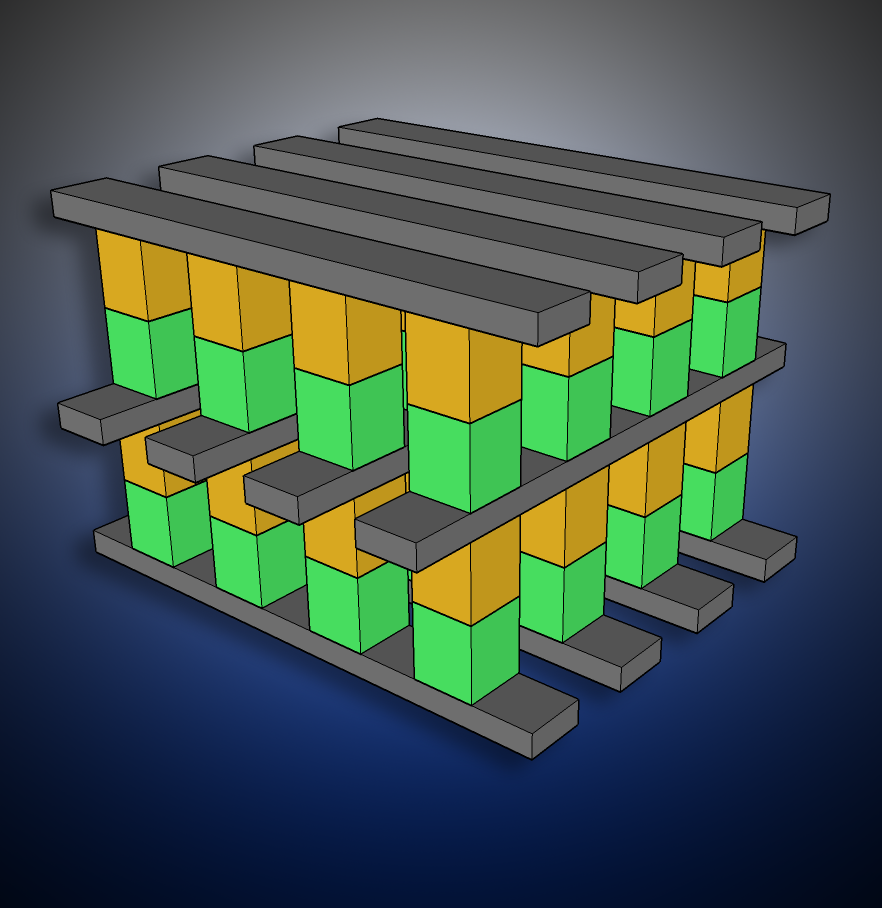 🇺🇸 United States3D XPoint
Non-volatile memory from Intel and Micron, sold as OptaneMemory · 2015