Goldmont
Low-power Atom microarchitecture for entry-level SoCs, up to four cores.
Goldmont is Intel's second-generation out-of-order low-power Atom microarchitecture, used in Atom, Celeron and Pentium branded SoCs. Unveiled in April 2016 with the Apollo Lake platform, it brought a 3-wide pipeline, Gen9 graphics and a claimed performance gain of more than 30 percent over Braswell.
- 3-wide out-of-order pipeline, one thread per core
- 14 nm process with 3D tri-gate transistors
- More than 30 percent faster than the Braswell platform
- Erratum APL46: LPC, RTC, SD and GPIO may stop working
- CPUID 80668 (Apollo Lake) and 80765 (Denverton)
What it is
Goldmont is a microarchitecture for low-power processors sold under the Atom, Celeron and Pentium brands and built into systems on a chip by Intel. It targets entry-level desktops and notebooks, with up to four cores and only one thread per core. The Apollo Lake platform carrying the 14 nm Goldmont core was shown at the Intel Developer Forum in Shenzhen in April 2016. Drawing on ideas from the Skylake Core design, it delivered more than 30 percent higher performance than the earlier Braswell platform, and it suits cheap, power-frugal devices such as Cloudbooks, 2-in-1 netbooks, small PCs, IP cameras and in-car entertainment.
How it came about
Goldmont is the second generation of Intel's out-of-order low-power Atom line, following Silvermont. It was built for entry-level desktop and notebook computers and was unveiled as the Apollo Lake platform at the Intel Developer Forum in Shenzhen, China, in April 2016. The design borrows heavily from Skylake Core processors. A tablet platform called Willow Trail was cancelled, and Apollo Lake was offered in its place.
Inside the chip
The core runs a 3-wide superscalar pipeline: the decoder handles three instructions per cycle, the microcode sequencer issues three micro-operations per cycle, and retirement peaks at three per cycle. Branch prediction is decoupled from the decoder, and larger buffers allow deeper out-of-order work across integer, floating-point and memory code. Memory execution is fully out-of-order, doing one load and one store each cycle, with a second-level TLB of 512 entries for 4 KB pages. Three integer pipelines handle up to three simple ALU operations per cycle. SIMD work runs in a 128-bit engine, with faster AES, PCLMULQDQ and new SHA1/SHA256 instructions, plus RDSEED random number generation.
How it was made
Goldmont is built on a 14 nm process using 3D tri-gate transistors and is implemented as a system on chip. Consumer parts go up to quad-core. The platform supports SSE4.2, AES-NI, PCLMUL, RDRAND, RDSEED, SHA extensions and MPX, along with Gen 9 Intel HD Graphics, eMMC 5.0, USB 3.1 and USB-C, and an image signal processor for four camera streams.
Where it went
The chips go into Cloudbooks, 2-in-1 netbooks, small desktop PCs, IP cameras and in-car entertainment systems. Product families cover desktop, mobile, embedded and automotive use, including the Atom A3900 series, which carries AEC-Q100 qualification for automotive customers. Server versions appear in the Denverton line. Graphics support DirectX 12, OpenGL 4.6 on Windows 10, OpenGL ES 3.2 and OpenCL 2.0, with hardware decoding for HEVC Main10 and VP9 Profile0.
Versions and family
Goldmont cores appear in the Apollo Lake platform for desktop, mobile, embedded and automotive parts, and in the Denverton platform for servers. CPUID codes include 80668 for Apollo Lake and 80765 for Denverton. The design follows Silvermont and the Airmont die shrink, and is succeeded by Goldmont Plus, described as an optimisation. The cancelled Willow Trail tablet platform was replaced by Apollo Lake.
Why it matters
Goldmont brought out-of-order execution and Skylake-derived ideas to Intel's cheapest x86 SoCs, lifting performance by more than 30 percent over Braswell while keeping power low enough for small fanless devices. Its reach ran from notebooks and small PCs to cameras, cars and entry servers, and it set up the Goldmont Plus generation that followed.
Problems and reception
As with Silvermont, circuitry flaws emerged that could stop a processor working after several years of active use. Erratum APL46, added in June 2017, warns that the LPC, RTC, SD card and GPIO interfaces may stop functioning. Mitigations include an LPC firmware change, avoiding SD cards as boot devices and running UHS-I cards at 1.8 V. Congatec also reports effects on USB and eMMC, with duty-cycle limits advised. Newer Atom C3000 Denverton designs do not appear affected.
Questions people ask about Goldmont
What is Goldmont?
It is a low-power x86 microarchitecture from Intel, used inside Atom, Celeron and Pentium branded systems on a chip. It targets entry-level desktops and notebooks, supports up to four cores, and runs one thread per core.
How much faster is it than the previous platform?
Intel positioned Goldmont as offering more than 30 percent performance improvement over the Braswell platform it replaced, largely by borrowing techniques from the Skylake Core processors.
What is the APL46 erratum?
Documented in June 2017, APL46 says the LPC, RTC, SD card and GPIO interfaces may stop working after years of use. Firmware changes and SD card usage limits reduce the risk but do not remove it entirely.
Which products use Goldmont?
Apollo Lake parts serve desktops, notebooks, tablets, embedded and automotive systems, including the AEC-Q100 qualified Atom A3900 series. Denverton applies the core to entry-level server chips.
Good reading and sources
The facts on this page come from the Wikipedia article "Goldmont", written by its contributors and used under the CC BY-SA 4.0 licence, and from its Wikidata record (CC0). EveryChip rewrote the text in its own words, with AI assistance, and compares every page with the article to make sure no passage is copied. It may be reused under the same CC BY-SA 4.0 licence with a link back.
It may contain mistakes, and figures change over time. Nothing here is investment or buying advice. If something is wrong, tell us. Last refreshed 2026-11-14.
Like Goldmont
All CPUs and microprocessors 🇺🇸 United StatesIntel Atom
Intel's low-power x86 processor line for netbooks, embedded and server useCPU · x86 · 2008
🇺🇸 United StatesBonnell
Intel's low-power x86 microarchitecture behind early Atom chipsCPU · x86 · 2008
 🇺🇸 United StatesPanther Lake
Intel's Core Ultra Series 3 mobile CPU line with tiled CPU, GPU and I/O diesCPU · x86 · 2026
More from Intel
All of them 🇺🇸 United States and 1 moreKaby Lake
Intel's 7th-gen Core CPUs on a refined 14 nm processCPU · x86 · 2016
 🇮🇱 IsraelCoffee Lake
Intel's 8th-gen desktop CPU family, six and eight cores on 14 nm++CPU · x86 · 2017
 🇺🇸 United StatesXeon D
Intel's low-power x86 system-on-chip line for microserversCPU · x86 · 2015
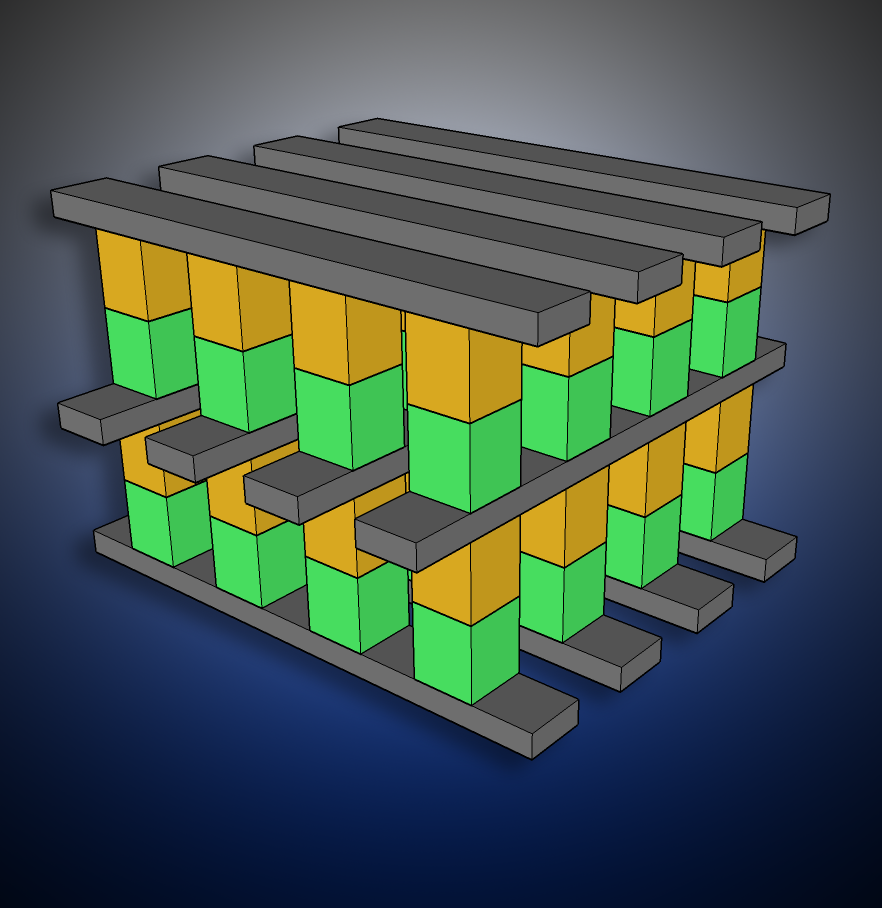 🇺🇸 United States3D XPoint
Non-volatile memory from Intel and Micron, sold as OptaneMemory · 2015