Consumer electronics
Calculators, TVs, cameras, set-top boxes and wearables. 351 chips on EveryChip so far.
Consumer electronics were the first mass market for chips. Pocket calculators drove early chip design: the Intel 4004 was built for a Busicom calculator, and Texas Instruments' TMS1000 went into calculators, toys and microwave ovens. Since then chips have filled TVs, cameras, music players, set-top boxes, projectors, smart speakers and watches, usually as SoCs designed for one kind of product.
Calculators to cameras
In 1969 the Japanese company Busicom asked Intel for a set of chips for a printing calculator; Intel's answer was the 4004, released in 1971. Calculator prices fell sharply in the 1970s as single-chip designs arrived. Digital cameras were made possible by image sensors and image processors, and Texas Instruments' DLP chips, with millions of tiny mirrors, went into projectors and cinema screens.
Smart devices
Today's TVs, streaming sticks and smart speakers run SoCs from MediaTek, Realtek, Amlogic, Broadcom and others, combining Arm cores with video decoders for formats such as HEVC and AV1. Wearables such as Apple's watch use tiny SoCs in system-in-package modules, in which many chips are sealed together into one small block.
Famous consumer electronics chips
 Intel 4004Built for the Busicom 141-PF calculator, 1971
 TMS1000Microcontroller of calculators and toys
 Texas Instruments LPC Speech ChipsSpeech chips of TI's Speak and Spell toy
 Digital micromirror deviceTI's DLP mirror chip for projectors
 Apple S1The first Apple Watch's system in package, 2015
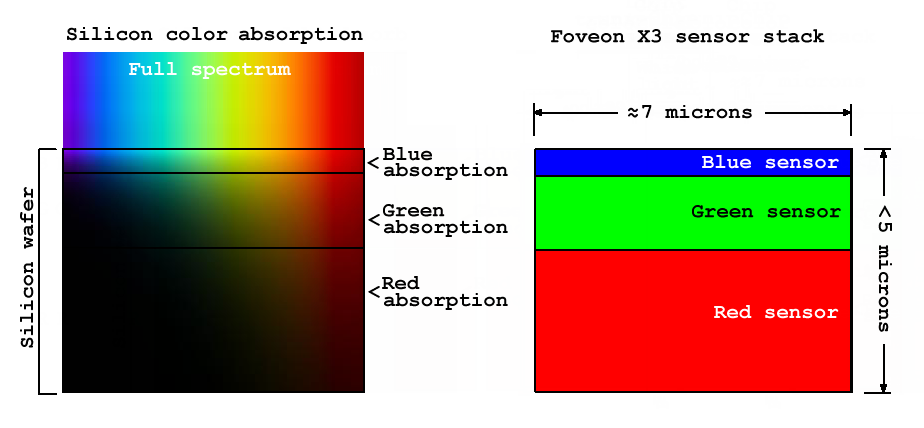 Foveon X3 sensorImage sensor of Sigma cameras
Further reading
 🇺🇸 United StatesApple A12X Bionic
ARM system on a chip for iPad Pro tabletsSoC · Arm · 2018
 🇺🇸 United StatesApple A15 Bionic
Six-core ARM system on a chip for Apple mobile devicesSoC · Arm · 2021
🇺🇸 United StatesApple S1
System in package for the first Apple WatchSoC · Arm · 2015
🇺🇸 United StatesApple A18
3 nm ARM system on a chip for iPhone 16 and MacBook NeoSoC · Arm · 2024
 🇺🇸 United StatesOMAP
Texas Instruments system on chip for mobile multimediaSoC · Arm
 🇨🇭 SwitzerlandNomadik
Multimedia application processors for mobile devicesSoC · Arm · 2003
🇺🇸 United StatesSitara
Texas Instruments family of ARM-based microprocessors for embedded systemsSoC · Arm
 🇨🇳 ChinaAllwinner A1X
Single-core ARM system on a chip for low-cost devicesSoC · Arm
🇺🇸 United StatesDaVinci
System on chip family for embedded video and vision tasksSoC · Arm · 2005
WorldSigmaTel STMP3700
Low-power SoC for portable media playersSoC · Arm · 2007
 🇬🇧 United KingdomVideoCore
Low-power mobile multimedia processor series by BroadcomGPU · Arm
🇺🇸 United StatesNeural Engine
Apple's on-device AI accelerator for machine learning tasksAI accelerator · Arm · 2017
 🇺🇸 United StatesPSoC
Configurable microcontroller with mixed-signal blocksMicrocontroller · Arm · 2002
 🇯🇵 JapanExpeed
Nikon media processor series for digital camerasSoC · Arm · 2007
 🇯🇵 JapanDIGIC
Canon image processor family for cameras and camcordersSoC · Arm · 2002
🇯🇵 JapanMilbeaut
Image and video processing system on a chip for camerasSoC · Arm · 2000
🇯🇵 JapanBionz
Sony image processing chips for digital camerasSoC · Arm · 2007
 🇺🇸 United StatesApple A13 Bionic
64-bit ARM system on a chip for mobile devicesSoC · Arm · 2019
 🇺🇸 United StatesApple A8
64-bit ARM system on a chip for Apple mobile devicesSoC · Arm · 2014
🇺🇸 United StatesOrion
Marvell system-on-a-chip for network storage devicesSoC · Arm
 🇺🇸 United StatesApple A11 Bionic
Six-core phone SoC with a Neural Engine, used in iPhone 8 and iPhone XSoC · Arm · 2017
 🇺🇸 United StatesApple A14 Bionic
Apple's 5 nm phone and tablet chip with six CPU cores and a 16-core Neural EngineSoC · Arm · 2020
🇺🇸 United StatesApple A19
64-bit ARM-based system on a chip for iPhone and Apple TV devices.SoC · Arm · 2025
 🇺🇸 United StatesApple A4
Apple's first in-house SoC: one Cortex-A8 core plus PowerVR graphics, built at 45 nm.SoC · Arm · 2010
 🇺🇸 United StatesI.MX
ARM-based system-on-chip family for multimedia and embedded systems by NXP Semiconductors.SoC · Arm
 🇺🇸 United StatesApple M2
Apple's second-generation ARM SoC family for Macs, iPads and Vision ProSoC · Arm · 2022
 EuropeSTM32
32-bit ARM microcontrollers and microprocessors from STMicroelectronicsMicrocontroller · Arm · 2007
 🇨🇳 ChinaESP32
A low-cost microcontroller system on a chip with Wi-Fi and Bluetooth support.Microcontroller · Arm · 2016
🇺🇸 United StatesApple M4
ARM-based system on a chip for Apple devicesSoC · Arm · 2024
 🇬🇧 United KingdomARM Cortex-A9
32-bit multi-core processor core for mobile and embedded systemsCPU · Arm · 2007
 🇺🇸 United StatesApple silicon
Arm-based chips designed by Apple for its devicesSoC · Arm · 2010
 🇺🇸 United StatesApple A5
32-bit dual-core system on a chip for early Apple mobile devicesSoC · Arm · 2011
 🇺🇸 United StatesApple A9X
64-bit ARM SoC for the first iPad Pro tabletsSoC · Arm · 2015
 🇺🇸 United StatesApple A10X Fusion
64-bit ARM system on a chip for iPad Pro and Apple TVSoC · Arm · 2017
 🇺🇸 United StatesApple A10 Fusion
Quad-core mobile SoC with heterogeneous computingSoC · Arm · 2016
🇨🇳 ChinaXiaomi XRING O1
Xiaomi's first in-house flagship smartphone system on a chipSoC · Arm
 🇳🇱 NetherlandsNexperia
Brand for NXP media and mobile system-on-chipsSoC · Arm · 1999
 🇺🇸 United StatesApple S2
Dual-core system in package for Apple Watch Series 2SoC · Arm · 2016
 🇺🇸 United StatesApple S3
System in a package for the Apple Watch Series 3SoC · Arm
🇺🇸 United StatesApple H1
Wireless connectivity system on a chip for Apple audio devicesSoC · Arm · 2019
🇺🇸 United StatesApple R1
Apple system on a chip for mixed reality devicesSoC · Arm
 🇨🇳 ChinaAllwinner A20
Dual-core ARM Cortex-A7 system on a chip for tablets and media devices.SoC · Arm · 2012
 🇺🇸 United StatesApple W1
Wireless connectivity system on a chip for Apple audio devicesSoC · Arm
 🇺🇸 United StatesApple W3
System on a chip for Apple Watch Series 4 and 5SoC · Arm
🇺🇸 United StatesApple H2
System on a chip for Apple audio and tracking devicesSoC · Arm
Photo credits on this page
The small pictures above come from Wikimedia Commons under free licences. Some are cropped to fit.
- Foveon X3 sensor: Anoneditor at English Wikipedia, CC BY-SA 3.0, source
- Apple S3: Henriok, CC0, source
- Allwinner A20: PersephoneII, CC BY-SA 3.0, source
- Apple U1: Henriok, CC0, source
- Apple A14 Bionic: Henriok, CC0, source
- Apple A4: Raimond Spekking, CC BY-SA 4.0, source
- I.MX: Raimond Spekking, CC BY-SA 4.0, source
- Apple M2: Henriok, CC0, source
- STM32: ZeptoBars, CC BY 3.0, source
- ESP32: Ubahnverleih, CC0, source
- ARM Cortex-A9: Raimond Spekking, CC BY-SA 4.0, source
- Apple A5: Henriok at English Wikipedia ., Public domain, source
- Apple A9X: Henriok, CC0, source
- Apple A10X Fusion: Henriok, CC0, source
- Apple A10 Fusion: Henriok, CC0, source
- Apple A12X Bionic: Henriok, CC0, source
- Apple A15 Bionic: Henriok, CC0, source
- Apple S1: Henriok, CC0, source
- OMAP: pandaboard.org, CC BY-SA 3.0, source
- Nomadik: Nixdorf, CC BY-SA 3.0, source
- Allwinner A1X: Blakegripling ph, CC BY-SA 3.0, source
- VideoCore: Evan-Amos, Public domain, source
- PSoC: NobbiP, CC BY-SA 3.0, source
- Expeed: Raimond Spekking, CC BY-SA 4.0, source
- DIGIC: Raimond Spekking, CC BY-SA 4.0, source
- Apple A11 Bionic: Henriok, CC0, source
- Texas Instruments LPC Speech Chips: Orginal photo © Bill Bertram 2006, editing by user:Tomhannen, CC BY-SA 2.5, source
- Apple A13 Bionic: Henriok, CC0, source
- Apple A8: Henriok, CC0, source
- Intel 4004: the Science Museum, CC BY 4.0, source
- Nexperia: Ikknmnmnm, CC BY-SA 4.0, source
- Apple S2: Henriok, CC0, source
- Apple W1: Henriok, CC0, source
- Digital micromirror device: mitopencourseware, CC BY-SA 4.0, source
- TMS1000: Pauli Rautakorpi, CC BY 3.0, source
- Apple W3: Henriok, CC0, source