
Allwinner A1X
Single-core ARM system on a chip for low-cost devices
The Allwinner A1X is a family of single-core systems on a chip designed by Allwinner Technology in Zhuhai, China. It combines an ARM Cortex-A8 processor with a Mali 400 graphics unit, enabling Linux and Android operation on affordable tablets and single-board computers.
- Integrates ARM Cortex-A8 CPU and Mali 400 GPU
- Boots Linux distributions from SD card
- Supports HD video decoding up to 4K resolution
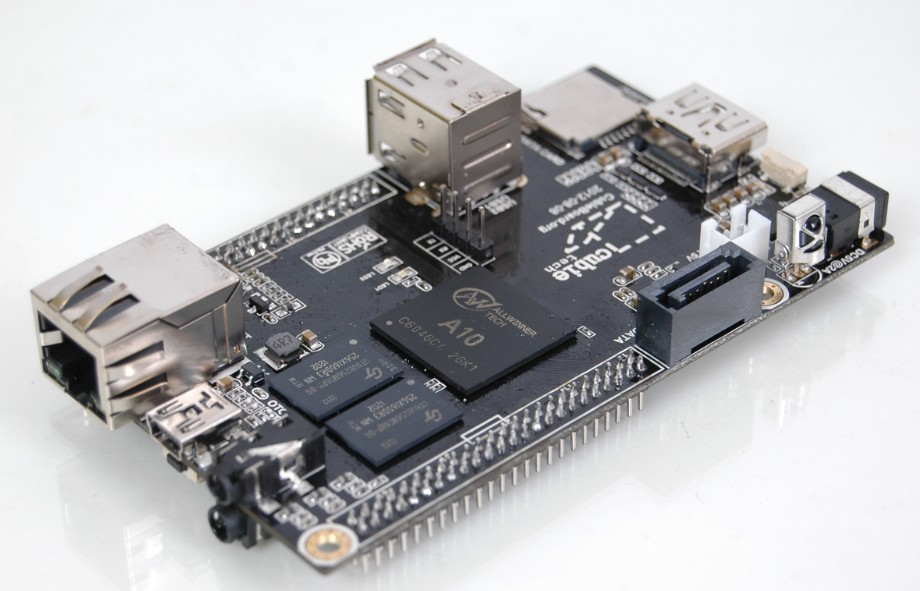
- Used in Cubieboard, CHIP, and PengPod devices
- Known as sunxi in the Linux kernel source
What it is
The Allwinner A1X represents a series of single-core systems on a chip created by Allwinner Technology. This family includes the A10, A13, A10s, and A12 models. Each chip integrates an ARM Cortex-A8 central processing unit alongside a Mali 400 graphics processor. These components allow the hardware to run Android operating systems from internal flash memory or boot various Linux distributions directly from an SD card. The architecture is widely recognised in the open-source community under the name sunxi within the Linux kernel source tree.
How it came about
Allwinner Technology, based in Zhuhai, China, developed this family to serve the market for affordable computing devices. The design focused on providing sufficient performance for media playback and basic computing tasks while keeping costs low. By supporting standard interfaces like SATA and USB, the chips became attractive for hobbyists and manufacturers alike. The release of these processors paved the way for later multi-core variants such as the dual-core A20 and quad-core A31, which maintained pin compatibility with the original A10 design.
Inside the chip
At the heart of the A1X is the ARM Cortex-A8 core, which handles general computing tasks. Graphics rendering is managed by the Mali 400 unit. The chip supports high-definition video decoding up to 3840x2160 resolution and handles codecs such as H.264, VP8, and MPEG. Memory controllers accommodate DDR2 or DDR3 SDRAM via a 32-bit interface. Connectivity options include USB 2.0, Ethernet, and SATA 2.0. Display outputs range from HDMI and VGA to LVDS interfaces, supporting full 1080p resolution on compatible screens.
How it was made
Specific details regarding the manufacturing process node, transistor count, and fabrication facility are not provided in the available records. The chips support various storage types, including NAND flash and SD cards. Packaging details are also absent from the current documentation.
Where it went
Manufacturers have integrated the A1X into a diverse range of consumer electronics. Common applications include tablet computers, set-top boxes, and mini-PCs. The chipset gained popularity in the single-board computer community, powering devices such as the Cubieboard, Gooseberry, and the CHIP computer. The PengPod tablets and Tinkerforge RED Brick also utilise variants of this family. Its ability to run Linux made it a favourite for educational and hobbyist projects requiring low-cost hardware.
Versions and family
The family comprises four main members: the A10, A13, A10s, and A12. The A10 is the most feature-rich, including a CAN bus interface. The A13 is often found in ultra-low-cost devices like the CHIP computer. Later successors in the broader A-Series include the A20, which offers dual Cortex-A7 cores, and the A31 with quad cores. These newer chips were designed to be pin-compatible with the A10, easing the transition for hardware designers.
Why it matters
The A1X series played a significant role in democratising access to ARM-based Linux development. By enabling full hardware support in early Linux kernels, it fostered a vibrant community around the sunxi project. This open-source effort provided drivers and tools that allowed users to repurpose Android tablets into Linux machines. The availability of these cheap, capable chips spurred innovation in the single-board computer market, offering alternatives to more expensive platforms during the early 2010s.
Problems and reception
Software support has evolved over time. Stable hardware support in the Linux kernel was initially limited to versions 3.0.x and 3.4.x. Newer mainline kernels can run on the hardware but may lack full NAND access or complete 3D acceleration. Documentation for some variants, such as the A10s, remains scarce, with no publicly available programmer's manual from the factory. Support for other operating systems like FreeBSD and OpenBSD has been partial or work-in-progress.

Questions people ask about Allwinner A1X
What operating systems can run on the Allwinner A1X?
The chip primarily runs Android from internal flash memory. It also supports booting Linux distributions like Debian, Ubuntu, and Fedora from an SD card. Limited support exists for FreeBSD, OpenBSD, and NetBSD, though peripheral functionality may vary.
Which specific chips belong to the A1X family?
The A1X family consists of four single-core models: the A10, A13, A10s, and A12. These are distinct from the later dual-core A20 and quad-core A31, which belong to the broader Allwinner A-Series but use different core architectures.
What is the sunxi project related to this chip?
Sunxi is the name used for the Allwinner A1X architecture within the Linux kernel source tree. It refers to the community-driven effort to provide open-source drivers and support for these chips, with code available on platforms like GitHub.
Good reading and sources
The facts on this page come from the Wikipedia article "Allwinner A1X", written by its contributors and used under the CC BY-SA 4.0 licence, and from its Wikidata record (CC0). EveryChip rewrote the text in its own words, with AI assistance, and compares every page with the article to make sure no passage is copied. It may be reused under the same CC BY-SA 4.0 licence with a link back.
It may contain mistakes, and figures change over time. Nothing here is investment or buying advice. If something is wrong, tell us. Last refreshed 2026-11-14.
Like Allwinner A1X
All systems on a chip 🇬🇧 United KingdomVideoCore
Low-power mobile multimedia processor series by BroadcomGPU · Arm
 🇺🇸 United StatesOMAP
Texas Instruments system on chip for mobile multimediaSoC · Arm
 🇳🇱 NetherlandsNexperia
Brand for NXP media and mobile system-on-chipsSoC · Arm · 1999
 🇺🇸 United StatesXScale
ARM-based microarchitecture for mobile and embedded processors designed by Intel and later Marvell.CPU · Arm · 2002