
Nomadik
Multimedia application processors for mobile devices
Nomadik is a family of microprocessors designed by STMicroelectronics for multimedia tasks in mobile phones and portable devices. Based on ARM architecture, these chips powered handsets like the Nokia N96 before the line was discontinued and merged into the NovaThor series.
- First presented at CEATEC Tokyo in October 2003
- Powered the Nokia N96 and Samsung SGH-L870
- Used ARM9 and ARM11 processor cores
- Manufactured on 130 nm, 90 nm, and 65 nm processes
- Superseded by the NovaThor U8500 family
What it is
Nomadik is a series of system-on-chip processors created for multimedia applications in portable electronics. STMicroelectronics developed the family to handle video, audio, and imaging tasks in mobile phones and personal digital assistants. The chips integrate central processing units with dedicated hardware for decoding video formats like H.263 and H.264. This design allowed manufacturers to build devices with advanced media capabilities without relying solely on software processing. The family supported various ARM architectures and evolved through several models between 2003 and 2008.
How it came about
The project began with an announcement in December 2002 regarding open interfaces for mobile application processors. STMicroelectronics presented the first Nomadik chip at the CEATEC show in Tokyo in October 2003. It quickly gained recognition, winning an industry award for application processors later that year. The development continued through partnerships, including a joint venture that became ST-NXP Wireless. As mobile technology advanced, the family expanded to include newer ARM cores and faster clock speeds, aiming to meet the demands of 3G networks and higher resolution cameras.
Inside the chip
Early models used the ARM926EJ-S core, while later versions adopted the ARM11 architecture. The STn8800 ran at 200 MHz and included hardware acceleration for H.263 video decoding. Subsequent chips like the STn8815 added SRAM and Level 2 cache to improve performance. The STn8820 introduced a dedicated 3D graphics accelerator from ATI, supporting OpenGL ES 2.0. These processors integrated memory options such as SDRAM and Flash in stacked packages. They supported camera inputs up to five megapixels and handled video encoding and decoding at VGA resolution.
How it was made
Manufacturing processes scaled down over the product life cycle. Initial chips like the STn8800 and STn8810 were built on 130 nanometer silicon. The STn8815 moved to 90 nanometer technology, offering better efficiency and performance. The STn8820 utilized a 65 nanometer process. A planned 45 nanometer model, the STn8830, was cancelled before release. The fabrication involved standard semiconductor techniques for integrating logic and memory components into single packages suitable for compact mobile devices.
Where it went
These processors powered a range of consumer electronics, most notably mobile phones. The Nokia N96 and Nokia 6788 used the STn8815 variant. Samsung devices such as the SGH-L870 and several Windows Mobile phones also featured Nomadik chips. Beyond phones, a derivative called Cartesio STA2062 served in GPS navigation systems from Garmin, including the Nüvi 205. The chips were also suitable for automotive multimedia applications, providing video and audio processing for in-car entertainment systems.
Versions and family
The family included the STn8800, STn8810, STn8811, STn8812, STn8815, and STn8820. The STn8812 and STn8830 never reached commercial release. The STn8811 faced delays, launching years after its initial announcement with a higher clock speed. A specialized version for navigation, the Cartesio STA2062, added GPS correlation hardware. The line ended when ST-NXP Wireless merged into ST-Ericsson, which replaced Nomadik with the NovaThor family, specifically the U8500 model.
Why it matters
Nomadik established a presence in the early smartphone market by enabling multimedia features in 2.5G and 3G devices. Its implementation of MIPI interconnect standards helped shape interface protocols for mobile processors. The lack of 3D graphics hardware in popular models like the STn8815 drew criticism as user expectations for gaming and interfaces grew. Despite this, it provided a foundation for integrated application processing in mobile devices before more powerful successors arrived.
Problems and reception
The processor won an Analysts' Choice Award in 2003, indicating strong initial industry approval. However, later reception was mixed due to hardware limitations. Users and reviewers noted the absence of a graphics processing unit in the STn8815, which affected the performance of the Nokia N96. The delay in releasing the STn8811 and the cancellation of other variants suggested challenges in keeping pace with rapid market changes. No devices are known to have used the final STn8820 model.
Questions people ask about Nomadik
What devices used the Nomadik processor?
The most notable device was the Nokia N96, which used the STn8815 chip. Other phones included the Nokia 6788, Samsung SGH-L870, and several Windows Mobile devices. A variant called Cartesio was used in Garmin GPS navigation units.
Did Nomadik chips have 3D graphics support?
Most models did not. The STn8815 lacked 3D hardware acceleration, which was criticized in the Nokia N96. Only the later STn8820 included a dedicated ATI Imageon Z460 accelerator for OpenGL ES 2.0, but no devices used this chip.
What happened to the Nomadik family?
The family was discontinued after ST-NXP Wireless merged into the ST-Ericsson joint venture. Development shifted to a successor called NovaThor, with the U8500 model replacing Nomadik in new designs.
Good reading and sources
The facts on this page come from the Wikipedia article "Nomadik", written by its contributors and used under the CC BY-SA 4.0 licence, and from its Wikidata record (CC0). EveryChip rewrote the text in its own words, with AI assistance, and compares every page with the article to make sure no passage is copied. It may be reused under the same CC BY-SA 4.0 licence with a link back.
It may contain mistakes, and figures change over time. Nothing here is investment or buying advice. If something is wrong, tell us. Last refreshed 2026-11-14.
Like Nomadik
All systems on a chip 🇳🇱 NetherlandsNexperia
Brand for NXP media and mobile system-on-chipsSoC · Arm · 1999
 🇺🇸 United StatesPSoC
Configurable microcontroller with mixed-signal blocksMicrocontroller · Arm · 2002
🇯🇵 JapanMilbeaut
Image and video processing system on a chip for camerasSoC · Arm · 2000
🇨🇳 ChinaXiaomi Surge and Xring
In-house system-on-chips and specialized silicon for Xiaomi devices.SoC · Arm · 2017
More from STMicroelectronics
All of them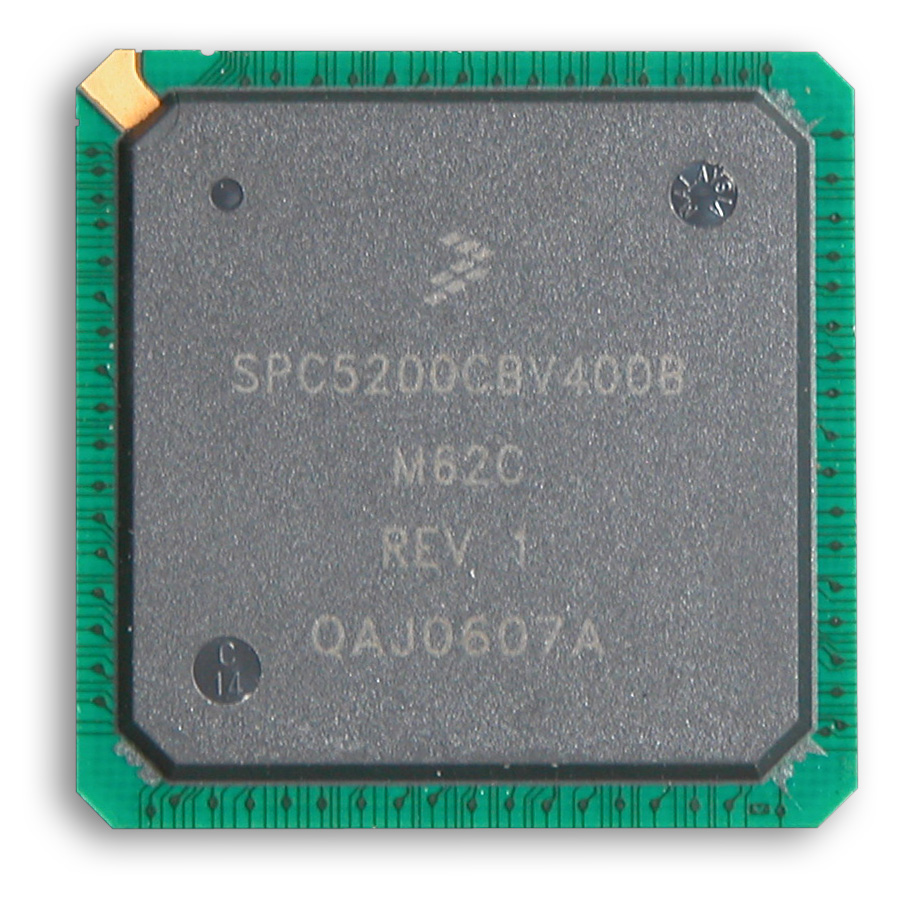 🇺🇸 United StatesPowerPC 5000
Automotive and industrial PowerPC microcontroller familyMicrocontroller · Power · 2002
 🇺🇸 United StatesRIVA TNT2
Nvidia graphics chip from 1999 with dual pipelinesGPU · GPU architecture · 1999
🇺🇸 United StatesPowerPC e200
32-bit Power ISA microprocessor cores for automotive and industrial controlMicrocontroller · Power · 2007
 EuropeSTM32
32-bit ARM microcontrollers and microprocessors from STMicroelectronicsMicrocontroller · Arm · 2007