Supercomputers
Chips built for or used in the TOP500 machines. 91 chips on EveryChip so far.
Supercomputers join thousands of chips to solve science and engineering problems: weather and climate, nuclear physics, drug discovery and, more and more, AI. The TOP500 list, published twice a year since 1993, ranks them by speed on a standard maths benchmark. Most top machines now pair server CPUs with GPU accelerators. Frontier, in 2022, was the first to pass one exaflop, a billion billion calculations a second.
From special chips to GPUs
Early supercomputers used custom processors. In 2008 IBM's Roadrunner, built with Cell-based chips and AMD Opterons, was the first to pass one petaflop. China's Tianhe-2 used Intel Xeon Phi accelerators, and the Sunway TaihuLight its own ShenWei chips. Japan's Fugaku, number one in 2020, used Fujitsu's Arm-based A64FX without separate accelerators.
The exascale machines
Frontier, at Oak Ridge National Laboratory in the United States, uses AMD Epyc CPUs and Instinct MI250X GPUs and reached first place in June 2022. El Capitan, at Lawrence Livermore, took first place in November 2024 with AMD's MI300A, which combines CPU and GPU chiplets in one package. India's AIRAWAT and PARAM machines use Nvidia GPUs and Intel or AMD CPUs.
Famous supercomputers chips
 Cell Broadband EngineIts PowerXCell variant powered Roadrunner, 2008
 Xeon PhiIntel's many-core accelerator of Tianhe-2SW26010Chinese chip of the Sunway TaihuLight
 POWER9IBM processor of Summit and SierraFujitsu A64FXArm chip of the Fugaku supercomputer
 AMD InstinctAccelerators of Frontier and El Capitan
 HopperNvidia GPUs in many recent systems
Further reading
🇺🇸 United StatesAMD Instinct
AMD's data centre GPU line for deep learning and HPCGPU · GPU architecture · 2017
 🇺🇸 United StatesPower10
IBM's 7 nm server CPU family for AI-heavy enterprise workloadsCPU · Power · 2021
🇺🇸 United StatesNvidia BlueField
Nvidia data processing units with their own CPU cores and memoryNetwork chip · Arm · 2020
WorldARM Neoverse
A family of 64-bit ARM processor cores for datacenter and edge computing.CPU · Arm
 🇺🇸 United StatesPentium Pro
Intel's first sixth-generation x86 CPU, built for servers and workstationsCPU · x86 · 1995
🇺🇸 United StatesCell Broadband Engine
A multi-core RISC processor pairing one PowerPC core with eight vector coprocessors.CPU · Power · 2007
🇺🇸 United StatesMontecito
Intel's first dual-core Itanium 2 processor, launched in July 2006CPU · Other · 2006
🇺🇸 United StatesItanium 9300 (Tukwila)
Intel's 2010 multi-core Itanium generation with SMT and a large on-die cacheCPU · Other · 2010
🇺🇸 United StatesPOWER9
IBM's Power ISA server microprocessor family, built on 14 nm FinFET siliconCPU · Power · 2016
WorldHybrid Memory Cube
Stacked DRAM with a serial link interface, built by Samsung and MicronMemory · Other · 2011
🇺🇸 United StatesTeraflops Research Chip
80-core research processor by Intel targeting 1 TFLOPSCPU · VLIW · 2007
 🇺🇸 United StatesIntel i860
First million-transistor RISC microprocessor by IntelCPU · RISC · 1989
🇯🇵 JapanFujitsu A64FX
48-core ARM supercomputer CPU with 512-bit SVE and HBM2, built for FugakuCPU · Arm · 2019
 WorldEpyc
AMD's server and embedded x86-64 CPUs built on Zen coresCPU · x86 · 2017
 🇺🇸 United StatesItanium
64-bit EPIC server microprocessor family from Intel and HPCPU · VLIW · 2001
 🇺🇸 United StatesSierra Forest
Intel Xeon 6 server CPU with up to 288 E-cores for cloud density.CPU · x86 · 2024
 WorldGeForce 700 series
Nvidia graphics card series from 2013 using Kepler and Maxwell chipsGPU · GPU architecture · 2013
 🇺🇸 United StatesRadeon Pro
Professional workstation graphics cards by AMDGPU · GPU architecture · 2016
🇺🇸 United StatesIBM Osprey
433-qubit quantum processor from IBMQuantum · Other · 2022
🇺🇸 United StatesIBM Condor
1,121-qubit quantum processor from IBM ResearchQuantum · Other · 2023
 🇺🇸 United StatesPOWER2
IBM RISC processor for RS/6000 workstationsCPU · Power · 1993
 🇺🇸 United StatesPOWER3
64-bit PowerPC microprocessor for IBM workstations and serversCPU · Power · 1998
 🇺🇸 United StatesPOWER8
IBM multi-core server processor with OpenPOWER licensingCPU · Power · 2014
 WorldPOWER6
Dual-core IBM server microprocessor with hardware decimal mathCPU · Power · 2007
🇨🇳 ChinaSW26010
260-core manycore processor for supercomputingCPU · RISC · 2016
🇨🇳 ChinaSunway
Chinese RISC microprocessor series for supercomputingCPU · RISC · 2006
 🇰🇷 South KoreaHigh Bandwidth Memory
Stacked memory interface for high-performance computing and graphics.Memory · 2013
🇷🇺 RussiaKOMDIV-64
Russian MIPS IV microprocessor family for industrial useCPU · MIPS · 2007
🇺🇸 United StatesSparcle
Experimental 32-bit microprocessor for large-scale multiprocessingCPU · RISC · 1992
🇺🇸 United StatesAlpha 21464
Unfinished Alpha CPU with simultaneous multithreadingCPU · Other
 🇺🇸 United StatesR4000
First 64-bit MIPS III microprocessor for workstations and serversCPU · MIPS · 1991
 🇺🇸 United StatesR8000
MIPS IV microprocessor chipset for scientific computing workstations and servers.CPU · MIPS · 1994
 🇺🇸 United StatesR10000
A superscalar MIPS IV microprocessor for workstations and servers.CPU · MIPS · 1995
 🇺🇸 United StatesUltraSPARC
First 64-bit SPARC V9 microprocessor from Sun MicrosystemsCPU · SPARC · 1995
🇺🇸 United StatesIBM A2
Open source 64-bit Power ISA processor core for embedded systemsCPU · Power · 2010
🇺🇸 United StatesRock
A cancelled 16-core SPARC microprocessor by Sun MicrosystemsCPU · SPARC
 🇺🇸 United StatesAlpha 21064
First commercial microprocessor implementing the Alpha instruction set architecture.CPU · Other · 1992
 🇺🇸 United StatesAlpha 21164
High-performance 64-bit microprocessor from Digital Equipment CorporationCPU · Other · 1995
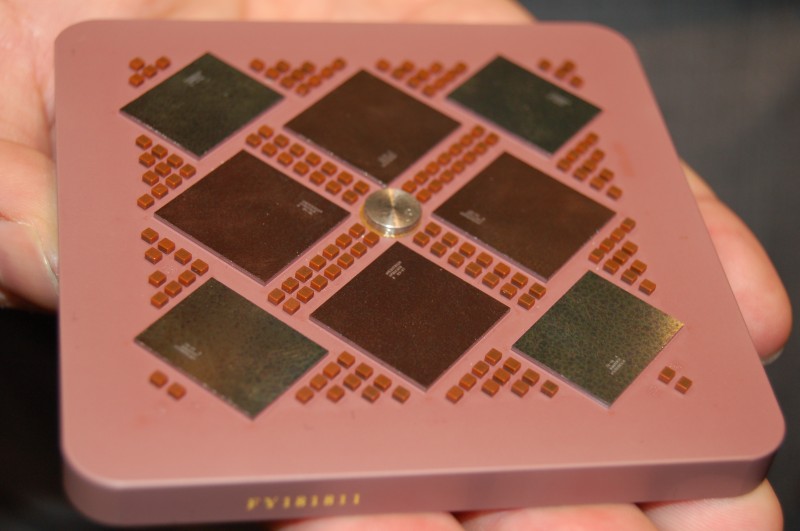 🇺🇸 United StatesPOWER5
Dual-core server microprocessor with simultaneous multithreadingCPU · Power · 2004
🇺🇸 United StatesIBM Eagle
127-qubit quantum processor from IBMQuantum · Other · 2021
 🇺🇸 United StatesLarrabee
Cancelled Intel x86-based GPGPU project that became the Xeon Phi lineGPU · x86 · 2009
🇺🇸 United StatesCDNA
AMD microarchitecture for data centre GPU acceleratorsGPU · GPU architecture · 2020
🇺🇸 United StatesHopper
Nvidia's datacentre GPU architecture, first shipping in the H100 acceleratorGPU · GPU architecture · 2022
🇺🇸 United StatesVolta
Nvidia's 2017 GPU architecture, first with Tensor Cores for deep learning.GPU · GPU architecture · 2017
 🇺🇸 United States and 1 morePOWER7
IBM multi-core server processor from 2010CPU · Power · 2010
 🇺🇸 United StatesPowerPC 400
Embedded 32-bit RISC processor cores for diverse applicationsCPU · Power · 1994
🇺🇸 United StatesXeon Phi
Intel's x86 manycore coprocessor family for supercomputers and HPCCPU · x86 · 2010
 🇺🇸 United StatesNvidia Tesla
Former brand for Nvidia general-purpose GPU computing cardsGPU · GPU architecture · 2007
Photo credits on this page
The small pictures above come from Wikimedia Commons under free licences. Some are cropped to fit.
- AMD Instinct: Мой Компьютер, CC BY 3.0, source
- Power10: Henriok, CC0, source
- Pentium Pro: Thomas Nguyen, CC BY-SA 4.0, source
- Cell Broadband Engine: Greenpro, CC BY-SA 3.0, source
- POWER9: IBM España, Public domain, source
- Intel i860: Konstantin Lanzet, CC BY-SA 3.0, source
- Epyc: Smial ( talk ), FAL, source
- Granite Rapids: Intel Corporation, Public domain, source
- Itanium: Konstantin Lanzet (with permission), CC BY-SA 3.0, source
- GeForce 700 series: Hyins, Public domain, source
- Radeon Pro: David290, CC BY-SA 4.0, source
- Xeon Phi: Capitalistcakes, CC0, source
- Nvidia Tesla: division, CSIRO, CC BY 3.0, source
- POWER2: Henriok, CC0, source
- POWER3: Henriok, CC0, source
- POWER8: Henriok, CC0, source
- POWER6: Henriok, CC0, source
- High Bandwidth Memory: Fritzchens Fritz, CC0, source
- R4000: Konstantin Lanzet, CC BY-SA 3.0, source
- R8000: Pauli Rautakorpi, CC BY 3.0, source
- R10000: Konstantin Lanzet, CC BY-SA 3.0, source
- UltraSPARC: Konstantin Lanzet (with permission), CC BY-SA 3.0, source
- Alpha 21064: Dirk Oppelt, CC BY-SA 3.0, source
- Alpha 21164: Appaloosa, CC BY-SA 3.0, source
- Hopper: 极客湾Geekerwan, CC BY 3.0, source
- POWER5: Unknown author, CC BY-SA 3.0, source
- Larrabee: Intel, CC BY-SA 3.0, source
- POWER7: Sonic8400, CC BY-SA 4.0, source
- PowerPC 400: Henriok, CC0, source