Cars
Engine controllers, driver assistance and self-driving computers such as Drive and FSD. 66 chips on EveryChip so far.
A modern car contains hundreds and often more than a thousand chips: microcontrollers for the engine, brakes, airbags and doors, power chips for the motors and battery of an electric car, sensors, radar and camera chips, and processors for the dashboard and driver assistance. Car chips must survive heat, cold and vibration for 15 years or more, and meet strict safety standards.
Built for safety
Automotive chips are tested to qualification standards such as AEC-Q100 and designed under the ISO 26262 functional safety standard, which requires that failures be detected and handled safely. Many car microcontrollers, such as Infineon's AURIX, run two cores in lockstep, doing the same work and comparing results to catch errors. Most car chips use mature, well-proven process nodes.
Shortage and new computers
In 2021 a shortage of chips, many of them cheap microcontrollers, halted car production around the world, showing how much the industry depended on a few fabs. Meanwhile cars have gained central computers for driver assistance and self-driving, such as Nvidia's Drive platform, Mobileye's EyeQ and Tesla's own FSD chips, and silicon carbide power chips for electric drive.
Famous cars chips


Still to be written: EyeQ.
Further reading
 🇺🇸 United States68HC12
16-bit microcontroller family from Motorola and FreescaleMicrocontroller · 68k · 1995
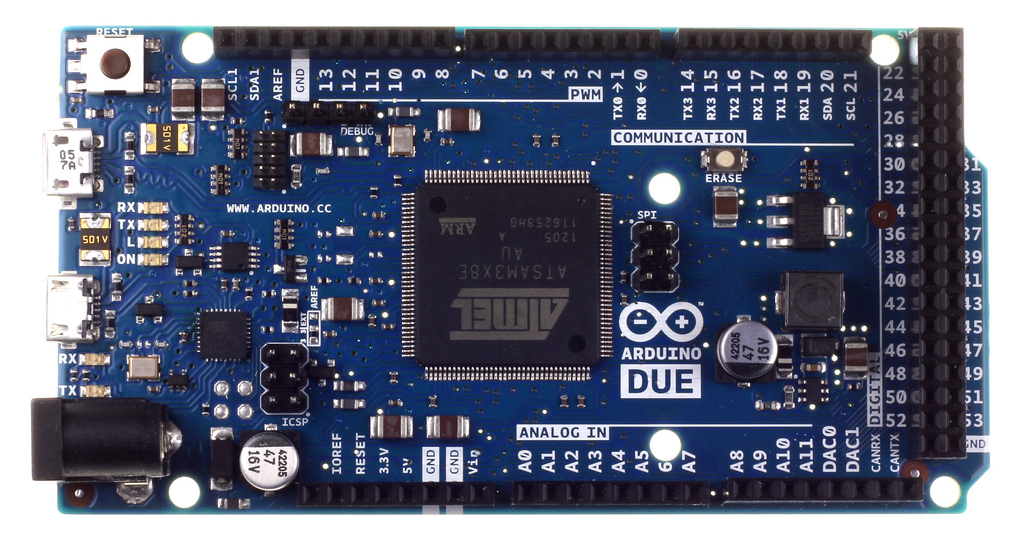 🇺🇸 United StatesAtmel ARM-based processors
32-bit ARM microcontrollers and microprocessors by MicrochipMicrocontroller · Arm · 1998
🇯🇵 JapanRL78
16-bit embedded microcontroller family by Renesas ElectronicsMicrocontroller · Other · 2010
🇩🇪 GermanyXMC4000
Industrial 32-bit ARM Cortex-M4 microcontroller family by InfineonMicrocontroller · Arm · 2012
🇺🇸 United StatesPowerPC e200
32-bit Power ISA microprocessor cores for automotive and industrial controlMicrocontroller · Power · 2007
 🇺🇸 United StatesBlackfin
Hybrid microprocessor and DSP family by Analog DevicesMicrocontroller · RISC · 2000
 🇺🇸 United StatesIntel i960
RISC microprocessor for embedded systems and military useCPU · RISC · 1988
 🇺🇸 United StatesPowerPC 5000
Automotive and industrial PowerPC microcontroller familyMicrocontroller · Power · 2002
🇩🇪 GermanyTriCore
A 32-bit microcontroller architecture from Infineon combining RISC and DSP features.Microcontroller · RISC · 1999
 🇺🇸 United StatesTMS1000
A 4-bit microcontroller family with on-chip ROM, RAM and I/O from 1974.Microcontroller · Other · 1974
 🇬🇧 United KingdomARM Cortex-R
Real-time ARM processor cores for safety-critical systemsCPU · Arm · 2020
 🇺🇸 United StatesI.MX
ARM-based system-on-chip family for multimedia and embedded systems by NXP Semiconductors.SoC · Arm
🇺🇸 United StatesHercules
ARM-based safety microcontrollers for critical systemsMicrocontroller · Arm
 🇨🇭 SwitzerlandNomadik
Multimedia application processors for mobile devicesSoC · Arm · 2003
WorldQorivva
Power ISA microcontrollers for functional safetyMicrocontroller · Power
 🇺🇸 United States and 1 moreMCS-96
A 16-bit microcontroller family for embedded control systems.Microcontroller · Other
🇺🇸 United StatesIntel 8061
Automotive microcontroller for Ford engine control unitsMicrocontroller · Other · 1983
 🇺🇸 United StatesMotorola 68HC11
8-bit microcontroller family for embedded systemsMicrocontroller · 68k · 1984
 WorldMPC5xx
32-bit PowerPC microcontrollers for automotive controlMicrocontroller · Power
 WorldSTM8
Low-cost 8-bit microcontroller family by STMicroelectronicsMicrocontroller · Other
 WorldELM327
Microcontroller for translating car diagnostic dataMicrocontroller · MCU family
🇩🇪 GermanyXC2000
16-bit automotive microcontroller from InfineonMicrocontroller · Other
 🇩🇪 GermanyXC800
Infineon 8-bit microcontroller family for automotive and industrial useMicrocontroller · MCU family · 2005
🇩🇪 GermanyAURIX
32-bit automotive microcontroller family by InfineonMicrocontroller · Other
 🇯🇵 JapanH8 Family
Hitachi and Renesas microcontroller family for embedded systemsMicrocontroller · Other · 1988
 🇯🇵 Japan78K
NEC and Renesas 8- and 16-bit microcontroller family for embedded control.Microcontroller · Other · 1986
 🇯🇵 JapanV850
32-bit RISC microcontroller architecture for embedded systemsMicrocontroller · RISC · 1994
 🇯🇵 JapanToshiba TLCS
Toshiba microcontroller families with CISC and RISC designsMicrocontroller · RISC · 1973
 🇺🇸 United StatesSiRFstarIII
High sensitivity GPS microcontroller chip range by SiRFMicrocontroller · 2004
 🇺🇸 United StatesPowerQUICC
Freescale PowerPC microcontrollers for networking and embedded systemsMicrocontroller · Power · 1995
🇯🇵 JapanR8C Tiny
Low-cost 16-bit microcontroller series by RenesasMicrocontroller · Other
 🇯🇵 JapanRX Microcontroller Family
32-bit microcontrollers for industrial and automotive controlMicrocontroller · Other · 2009
🇺🇸 United StatesLatticeMico8
8-bit RISC soft processor core for FPGAsMicrocontroller · RISC
🇩🇪 GermanyXC800
An 8-bit microcontroller series from Infineon for automotive and industrial control.Microcontroller · MCU family · 2005
WorldXC2000
16-bit automotive microcontroller with C166 core and 32-bit MAC unit.Microcontroller · Other
Photo credits on this page
The small pictures above come from Wikimedia Commons under free licences. Some are cropped to fit.
- ARM Cortex-R: Raimond Spekking, CC BY-SA 4.0, source
- 68HC12: Sumanch, CC BY-SA 3.0, source
- Atmel ARM-based processors: Arduino SA, CC BY-SA 3.0, source
- I.MX: Raimond Spekking, CC BY-SA 4.0, source
- Nomadik: Nixdorf, CC BY-SA 3.0, source
- MCS-96: Konstantin Lanzet, CC BY-SA 3.0, source
- Motorola 68HC11: Konstantin Lanzet, CC BY 3.0, source
- MPC5xx: GMPX, Public domain, source
- STM8: Raimond Spekking, CC BY-SA 4.0, source
- ELM327: Florian Schäffer, CC BY-SA 3.0, source
- XC800: MichaelFrey, CC BY 2.5, source
- H8 Family: Raimond Spekking, CC BY-SA 4.0, source
- 78K: NobbiP, CC BY-SA 3.0, source
- V850: photo: Qurren ( talk ), with IXY 10S compact digital camera., CC BY-SA 3.0, source
- Toshiba TLCS: NobbiP, CC BY-SA 3.0, source
- SiRFstarIII: Raimond Spekking, CC BY-SA 4.0, source
- Blackfin: Dave Jones, CC0, source
- Intel i960: Unknown author, CC BY-SA 3.0, source
- PowerPC 5000: Genesi, CC BY-SA 4.0, source
- Nvidia Drive: NVIDIA Taiwan, CC BY 2.0, source
- RX Microcontroller Family: Cristiano Tomás, CC BY-SA 4.0, source
- PowerQUICC: Henrik Wannheden, CC BY-SA 4.0, source
- Tegra: Raimond Spekking, CC BY-SA 4.0, source
- TMS1000: Pauli Rautakorpi, CC BY 3.0, source