Other in-house fabs
Motorola, AMD before 2009, NEC, Toshiba, Fujitsu, Hitachi, Zilog, MOS and others that made their own chips. 88 chips on EveryChip so far.
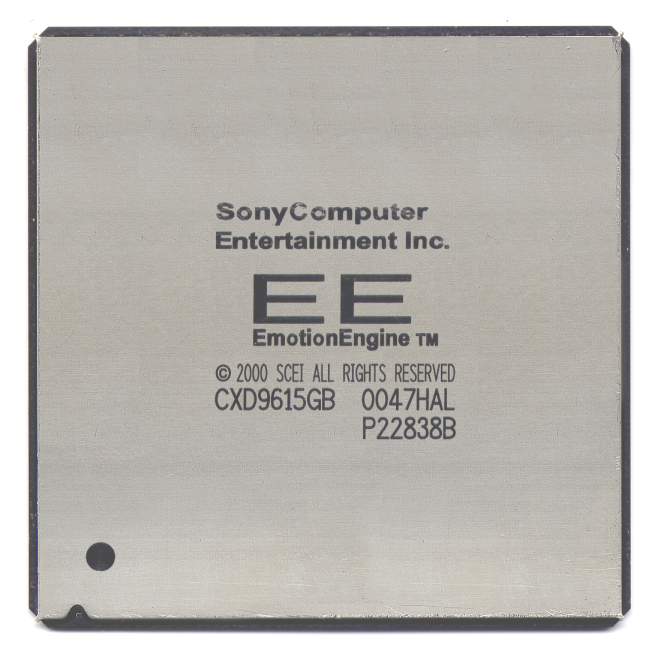
For most of chip history, companies that designed chips also made them. Motorola, AMD (until 2009), NEC, Toshiba, Fujitsu, Hitachi, DEC, National Semiconductor, Fairchild, Zilog, MOS Technology, Sony and many others ran their own fabs. Japanese firms led memory in the 1980s, and several of today's foundries and memory makers grew out of these in-house fabs.
The integrated era
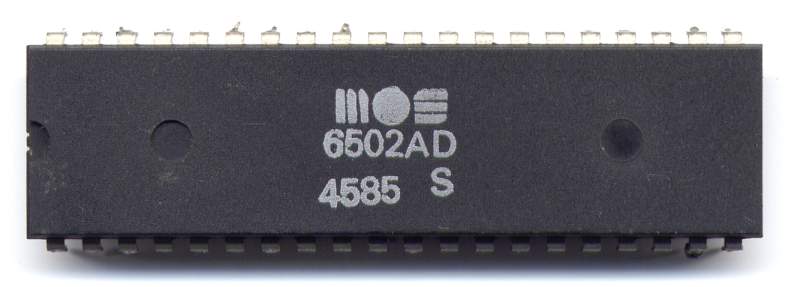
In the 1970s and 1980s, owning a fab was part of being a chip company, and process and design were developed together. MOS Technology's fab made the 6502 cheaply enough to start the home computer boom. DEC made its Alpha processors in Hudson, Massachusetts. In the 1980s Japanese firms such as NEC, Toshiba and Hitachi made most of the world's DRAM, which led to the US-Japan semiconductor agreement of 1986.
The move to foundries
As each new node cost more, most firms could no longer afford to keep up. Some merged their fabs, as Hitachi, NEC and Mitsubishi did to form Elpida and Renesas; others spun them off, as AMD did with GlobalFoundries; many closed them and turned fabless. Sony still makes image sensors in its own fabs, and Infineon, ST and NXP keep fabs for their power, car and analog chips.
Famous other in-house fabs chips



Further reading
 🇺🇸 United StatesTMS1000
A 4-bit microcontroller family with on-chip ROM, RAM and I/O from 1974.Microcontroller · Other · 1974
 🇺🇸 United StatesMotorola 6800
An 8-bit microprocessor from Motorola, launched in 1974 as the core of the M6800 family.CPU · Other · 1974
 🇺🇸 United StatesIntel 4040
Intel's second 4-bit microprocessor, a 1974 upgrade of the 4004CPU · Other · 1974
 WorldIntersil 6100
A 12-bit CMOS microprocessor that runs the PDP-8 instruction set on one chipCPU · Other · 1975
 WorldMOS 6507
A low-cost 8-bit 6502 variant in a 28-pin package with an 8 KB address rangeCPU · Other · 1975
🇺🇸 United StatesHP Saturn
HP's 4-bit calculator microprocessor family, introduced in 1984CPU · Other · 1984
 🇺🇸 United StatesWD16
A 16-bit CISC microprocessor from Western Digital, built from five DIP chips.CPU · Other · 1976
 🇺🇸 United States and 1 moreAMD Am2900
AMD's 1975 bipolar bit-slice IC family for building custom control unitsCPU · Other · 1975
 🇺🇸 United StatesHewlett-Packard Nanoprocessor
An 8-bit control microcontroller with no arithmetic unit, released by HP in 1974Microcontroller · Other · 1974
 🇺🇸 United StatesElectronic Arrays 9002
An 8-bit CPU with on-chip RAM, sold briefly in the mid-1970s.CPU · Other · 1976
 🇺🇸 United StatesNational Semiconductor PACE
First commercial single-chip 16-bit microprocessor, from National Semiconductor in 1974CPU · Other · 1974
 🇺🇸 United States and 1 moreSignetics 8X300
A 1976 bipolar microcontroller and signal processor from SigneticsCPU · Other · 1976
 🇯🇵 JapanH8 Family
Hitachi and Renesas microcontroller family for embedded systemsMicrocontroller · Other · 1988
 🇯🇵 JapanNEC μCOM series
NEC microprocessor and microcontroller family from the 1970s and 1980sCPU · x86 · 1973
 🇺🇸 United StatesOriginal Chip Set
Custom chipset for early Commodore Amiga computersGPU · Other · 1985
 🇺🇸 United StatesDigital micromirror device
MEMS chip of tiny tilting mirrors that forms images in DLP projectorsSensor · Other · 1990
 🇺🇸 United StatesTMS9900
A 16-bit single-chip microprocessor from Texas Instruments, launched in 1976.CPU · Other · 1976
 🇺🇸 United StatesTMS320
Texas Instruments' long-running family of digital signal processorsDSP · Other · 1983
 WorldCSG 65CE02
Enhanced 8-bit microprocessor with expanded memory featuresCPU · Other · 1988
WorldCSG 65CE02
Enhanced 8-bit microprocessor from Commodore Semiconductor GroupCPU · Other · 1988
 🇯🇵 JapanYamaha YM2164
FM synthesis sound chip for MIDI synthesizers and expansion cardsAnalog · Other
Photo credits on this page
The small pictures above come from Wikimedia Commons under free licences. Some are cropped to fit.
- TMS9900: Konstantin Lanzet, CC BY-SA 3.0, source
- Emotion Engine: Unknown author, CC BY-SA 3.0, source
- MOS Technology 6502: Dirk Oppelt, CC BY-SA 3.0, source
- Intel 4040: Thomas Nguyen, CC BY-SA 4.0, source
- Motorola 6800: Swtpc6800 en:User:Swtpc6800 Michael Holley, Public domain, source
- Intersil 6100: Christian Bassow, CC BY-SA 4.0, source
- MOS 6507: Konstantin Lanzet, CC BY 3.0, source
- WD16: RastaKins, CC BY-SA 4.0, source
- AMD Am2900: Konstantin Lanzet (with permission), CC BY-SA 3.0, source
- Hewlett-Packard Nanoprocessor: Pauli Rautakorpi, CC BY 3.0, source
- Electronic Arrays 9002: Electronics Arrays, Inc., Public domain, source
- National Semiconductor PACE: Pauli Rautakorpi, CC BY 3.0, source
- Signetics 8X300: Konstantin Lanzet, GFDL, source
- Motorola 68000: en:User:ArnoldReinhold, CC BY-SA 3.0, source
- AMD K9: The original uploader was Smial at German Wikipedia . ( Original text:, CC BY-SA 2.0 de, source
- H8 Family: Raimond Spekking, CC BY-SA 4.0, source
- NEC μCOM series: Konstantin Lanzet, CC BY-SA 3.0, source
- Agnus: Raimond Spekking, CC BY-SA 4.0, source
- Alpha 21064: Dirk Oppelt, CC BY-SA 3.0, source
- CSG 65CE02: Machine Later versions were uploaded by Chaddy ., CC BY-SA 3.0, source
- Yamaha YM2164: Metroplex, CC BY-SA 3.0, source
- Athlon 64: Astraera, CC BY-SA 4.0, source
- TMS320: Raimond Spekking, CC BY-SA 4.0, source
- Digital micromirror device: mitopencourseware, CC BY-SA 4.0, source
- TMS1000: Pauli Rautakorpi, CC BY 3.0, source