Other and custom
Transputers, Lisp machines, Soviet and Chinese designs and one-off architectures. 263 chips on EveryChip so far.
Not every processor fits a big family. This group holds one-off and national designs: the British transputer built for parallel computing, Intel's ambitious iAPX 432, machines built to run the Lisp language, the Linn Rekursiv, and the Chinese ShenWei chips of the Sunway supercomputers. Some failed commercially but left ideas that later designs reused.
Ambitious experiments
Intel's iAPX 432 of 1981 tried to build object protection and garbage collection into hardware; it was slow and was dropped, while the stopgap 8086 succeeded. Inmos's transputer put serial links on every chip so that processors could be wired into networks. The Rekursiv, designed for the hi-fi maker Linn in the late 1980s, ran object-oriented programs in microcode.
National designs
Countries cut off from Western chips have built their own. The Soviet Union cloned and extended Western designs. China's ShenWei SW26010, with 260 cores, powered the Sunway TaihuLight, the world's fastest supercomputer from June 2016 to June 2018, made entirely with Chinese-designed processors. Loongson's LoongArch, introduced in 2021, is another home-grown instruction set.
Famous other chips


Further reading
 🇺🇸 United StatesTMS9900
A 16-bit single-chip microprocessor from Texas Instruments, launched in 1976.CPU · Other · 1976
 🇺🇸 United States and 1 moreDEC J-11
Two-chip CMOS implementation of the PDP-11 ISA for high-end DEC machinesCPU · Other
WorldIMP-16
A 1973 bit-slice microprocessor built from five PMOS chipsCPU · Other · 1973
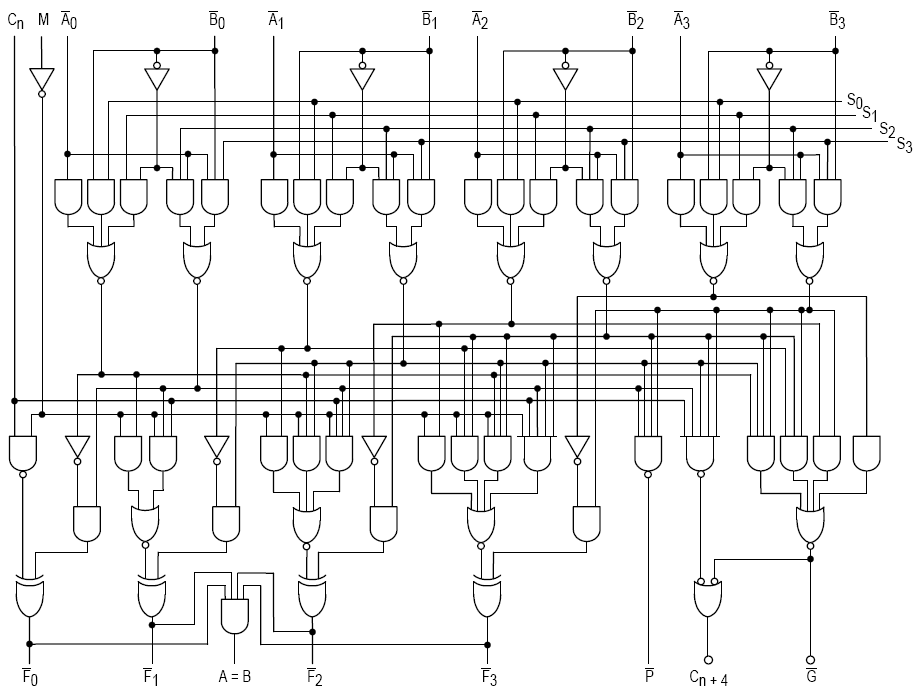 🇺🇸 United States74181
4-bit slice ALU, the first complete arithmetic logic unit on one chipCPU · Other · 1970
 🇯🇵 JapanSpursEngine
Toshiba media coprocessor for video and 3D tasksCPU · Other · 2007
 🇺🇸 United StatesZilog Z8000
16-bit microprocessor family from Zilog, launched in 1979CPU · Other · 1979
 🇺🇸 United StatesZilog Z80
An 8-bit microprocessor released in 1976 that became a staple of early personal computing and embedded systems.CPU · Other · 1976
🇺🇸 United StatesMAJC
Sun's multi-core VLIW microprocessor design built to run Java programsCPU · VLIW
 🇺🇸 United StatesRigel
DEC VAX microprocessor chipset from 1989CPU · Other · 1989
 🇺🇸 United StatesTMS34010
First programmable graphics processor integrated circuitGPU · Other · 1986
 🇩🇪 Germany and 3 moreU880
East German clone of the Zilog Z80 microprocessorCPU · Other · 1980
 🇺🇸 United StatesAlpha 21064
First commercial microprocessor implementing the Alpha instruction set architecture.CPU · Other · 1992
 🇺🇸 United StatesAlpha 21164
High-performance 64-bit microprocessor from Digital Equipment CorporationCPU · Other · 1995
 🇺🇸 United StatesFairchild 9440
16-bit single-chip microprocessor running the Data General Nova 2 instruction setCPU · Other · 1977
🇺🇸 United StatesWDC 65C816
16-bit microprocessor from the 6502 family with 24-bit addressingCPU · Other · 1985
 🇺🇸 United States and 1 moreNS32000
National Semiconductor's 32-bit CISC microprocessor family from the 1980sCPU · Other · 1982
 🇺🇸 United States and 1 moreMCP-1600
A 1975 multi-chip 16-bit microprocessor from Western DigitalCPU · Other · 1975
 🇺🇸 United States and 1 moreSignetics 8X300
A 1976 bipolar microcontroller and signal processor from SigneticsCPU · Other · 1976
 🇯🇵 JapanNEC µPD780C
Zilog Z80 compatible 8-bit microprocessor by NECCPU · Other
 🇺🇸 United StatesHP FOCUS
First commercial single-chip 32-bit microprocessor from 1982CPU · Other · 1982
🇺🇸 United StatesIBM PALM processor
16-bit CPU module used in early IBM portable computersCPU · Other · 1975
🇺🇸 United StatesZilog Z80
An 8-bit microprocessor that powered early personal computers and game consoles.CPU · Other · 1976
 🇺🇸 United StatesZilog Z80
An 8-bit microprocessor that powered early personal computers and game consoles.CPU · Other · 1976
 🇺🇸 United StatesSuperCPU
Processor upgrade cartridge for Commodore 64 and 128 systemsCPU · Other · 1997
WorldIAPX
A short-lived Intel marketing prefix for 8086-family and iAPX 432 chips.CPU · x86
 🇺🇸 United StatesZilog Z8000
A 16-bit microprocessor architecture from Zilog launched in 1979.CPU · Other · 1979
🇺🇸 United StatesZilog Z8001
A 16-bit microprocessor from Zilog, released in 1979 with a 23-bit address bus.CPU · Other · 1979
Photo credits on this page
The small pictures above come from Wikimedia Commons under free licences. Some are cropped to fit.
- TMS9900: Konstantin Lanzet, CC BY-SA 3.0, source
- Transputer: NobbiP, CC BY-SA 3.0, source
- DEC J-11: Konstantin Lanzet, CC BY-SA 3.0, source
- 74181: Unknown author, CC BY-SA 3.0, source
- WD16: RastaKins, CC BY-SA 4.0, source
- SpursEngine: Henriok, CC0, source
- HP FOCUS: Thomas Schanz, CC BY-SA 3.0, source
- Zilog Z8000: Tiziano Garuti ( 1000Bit, Public domain, source
- NS32000: Konstantin Lanzet, CC BY-SA 3.0, source
- Signetics 8X300: Konstantin Lanzet, GFDL, source
- Zilog Z8000: Myself User:ZyMOS, CC BY-SA 4.0, source
- Intel iAPX 432: _brouhaha_, CC BY-SA 2.0, source
- Zilog Z80: Zilog Inc., Public domain, source
- Rigel: Pauli Rautakorpi, CC BY 3.0, source
- TMS34010: Konstantin Lanzet, CC BY 3.0, source
- U880: Konstantin Lanzet (with permission), CC BY-SA 3.0, source
- Alpha 21064: Dirk Oppelt, CC BY-SA 3.0, source
- Alpha 21164: Appaloosa, CC BY-SA 3.0, source
- NEC µPD780C: Konstantin Lanzet, CC BY-SA 4.0, source
- SuperCPU: Thomas Conté, CC BY-SA 2.0, source
- Fairchild 9440: Pauli Rautakorpi, CC BY 3.0, source
- Zilog Z80: User Baz1521 on ja.wikipedia, CC BY-SA 3.0, source