Consumer electronics
Calculators, TVs, cameras, set-top boxes and wearables. 352 chips on EveryChip so far.
Consumer electronics were the first mass market for chips. Pocket calculators drove early chip design: the Intel 4004 was built for a Busicom calculator, and Texas Instruments' TMS1000 went into calculators, toys and microwave ovens. Since then chips have filled TVs, cameras, music players, set-top boxes, projectors, smart speakers and watches, usually as SoCs designed for one kind of product.
Calculators to cameras
In 1969 the Japanese company Busicom asked Intel for a set of chips for a printing calculator; Intel's answer was the 4004, released in 1971. Calculator prices fell sharply in the 1970s as single-chip designs arrived. Digital cameras were made possible by image sensors and image processors, and Texas Instruments' DLP chips, with millions of tiny mirrors, went into projectors and cinema screens.
Smart devices
Today's TVs, streaming sticks and smart speakers run SoCs from MediaTek, Realtek, Amlogic, Broadcom and others, combining Arm cores with video decoders for formats such as HEVC and AV1. Wearables such as Apple's watch use tiny SoCs in system-in-package modules, in which many chips are sealed together into one small block.
Famous consumer electronics chips
 Intel 4004Built for the Busicom 141-PF calculator, 1971
 TMS1000Microcontroller of calculators and toys
 Texas Instruments LPC Speech ChipsSpeech chips of TI's Speak and Spell toy
 Digital micromirror deviceTI's DLP mirror chip for projectors
 Apple S1The first Apple Watch's system in package, 2015
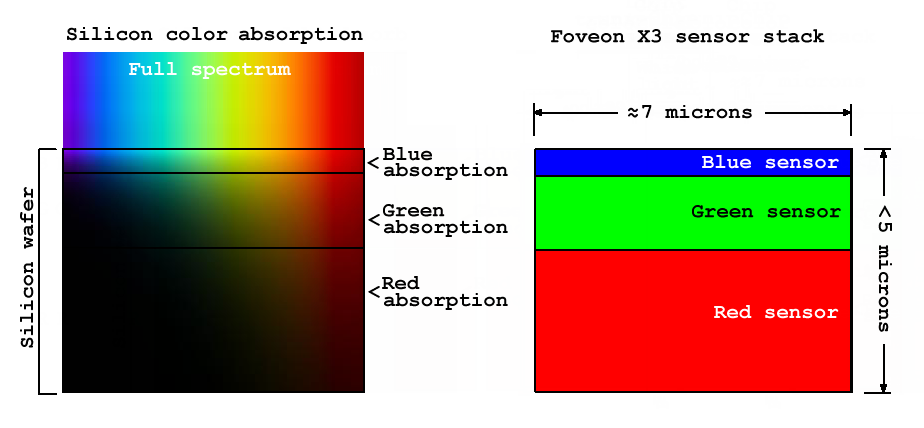 Foveon X3 sensorImage sensor of Sigma cameras
Further reading
 🇺🇸 United StatesIntel 8085
An 8-bit Intel microprocessor from 1976, the last of its lineCPU · 8-bit · 1976
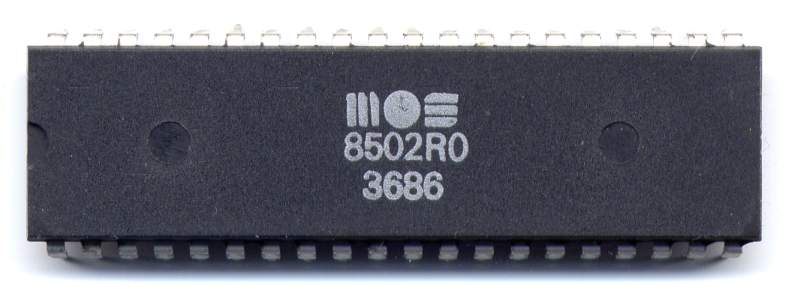 WorldMOS Technology 8502
An 8-bit CPU from MOS Technology that powered the Commodore 128CPU · 8-bit
 🇯🇵 JapanHitachi 6309
Hitachi's CMOS 8-bit microprocessor, a faster and richer 6809CPU · 8-bit · 1985
WorldZilog eZ80
8-bit Z80-compatible microprocessor with 24-bit addressing, up to 50 MHzCPU · 8-bit · 2001
 🇺🇸 United StatesCapricorn
HP's 8-bit microprogrammed CPU for the Series 80 scientific microcomputersCPU · 8-bit · 1980
🇺🇸 United StatesRockwell PPS-8
An early 8-bit microprocessor from Rockwell with unusual code-saving featuresCPU · 8-bit · 1974
 🇯🇵 JapanHD64180
A Z80-based embedded microprocessor with on-chip MMU and peripheralsCPU · 8-bit · 1985
 🇺🇸 United StatesIntel 8008
Early 8-bit microprocessor from Intel, launched April 1972CPU · 8-bit · 1972
 🇺🇸 United StatesSignetics 2650
8-bit microprocessor from 1975 modelled on the IBM 1130 minicomputerCPU · 8-bit · 1975
 🇷🇴 RomaniaMMN80CPU
Romanian Z80A clone for industrial and home computersCPU · 8-bit · 1988
 WorldMOS Technology 6510
8-bit 6502-derived CPU with a built-in I/O port, used in the Commodore 64CPU · 8-bit
 🇺🇸 United StatesWDC 65C02
CMOS rework of the 6502 with lower power and extra instructionsCPU · 8-bit · 1983
 🇺🇸 United StatesFairchild F8
An early 8-bit microprocessor family built for small controller jobsCPU · 8-bit · 1974
 🇺🇸 United StatesMotorola 6800 family
An 8-bit microprocessor line from Motorola, starting with the 6800 CPUCPU · 8-bit
Photo credits on this page
The small pictures above come from Wikimedia Commons under free licences. Some are cropped to fit.
- Intel 8085: Stefan506 ( dewiki userpage ), CC BY-SA 3.0, source
- MOS Technology 8502: Unknown author, CC BY-SA 3.0, source
- Hitachi 6309: No machine-readable author provided. Lamune~commonswiki assumed (based, Public domain, source
- Capricorn: Thomas Schanz, CC BY-SA 3.0, source
- Intel 4004: the Science Museum, CC BY 4.0, source
- Foveon X3 sensor: Anoneditor at English Wikipedia, CC BY-SA 3.0, source
- HD64180: User:Fuwuyuan, Public domain, source
- Intel 8008: Konstantin Lanzet, CC BY-SA 4.0, source
- Signetics 2650: Konstantin Lanzet, GFDL, source
- Apple S1: Henriok, CC0, source
- Texas Instruments LPC Speech Chips: Orginal photo © Bill Bertram 2006, editing by user:Tomhannen, CC BY-SA 2.5, source
- MMN80CPU: Mister rf, CC BY-SA 4.0, source
- MOS Technology 6510: Konstantin Lanzet, CC BY 3.0, source
- WDC 65C02: Antoinebercovici, CC BY-SA 4.0, source
- Fairchild F8: Konstantin Lanzet (with permission), CC BY-SA 3.0, source
- Digital micromirror device: mitopencourseware, CC BY-SA 4.0, source
- TMS1000: Pauli Rautakorpi, CC BY 3.0, source
- Motorola 6800 family: Motorola Semiconductor Products Inc. Advertising agency, E.B. Lane and, Public domain, source