Systems on a chip
Apple A and M, Snapdragon, Exynos, Dimensity, Tensor, Tegra and Kirin: a whole computer on one die. 209 chips on EveryChip so far.
A system on a chip (SoC) puts most of a computer on one piece of silicon: CPU cores, a GPU, memory controllers, an image processor, video engines, an AI unit and often the modem. Phones and tablets are built around SoCs, and since Apple's M1 of 2020 many laptops are too. Putting everything close together saves power and space, which matters most in a battery-powered device.
What goes on the die
A phone SoC usually combines a cluster of Arm CPU cores of different sizes, a GPU, a digital signal processor for sound and sensors, an image signal processor that turns the camera sensor's raw data into a photo, a neural processing unit for AI tasks, video encoders and decoders, and security hardware. The main memory usually sits in a separate chip stacked on top or placed beside it.
Who makes them
Apple designs its A-series for iPhones and M-series for Macs. Qualcomm's Snapdragon, MediaTek's Dimensity, Samsung's Exynos, Google's Tensor and Huawei's Kirin power most Android phones. Nvidia's Tegra went into tablets, cars and the Nintendo Switch. Almost all are made by TSMC or Samsung Foundry, and each new generation is often among the first chips on a new process node.
Famous soC chips
 Apple A4Apple's first in-house SoC, 2010
 Apple A7The first 64-bit phone processor, 2013
 Apple M1 UltraApple's first Mac SoC, 16 billion transistors, 2020
 Qualcomm SnapdragonSoC family in many Android phones
 ExynosSamsung's own phone SoCs
 TegraNvidia's SoC line, used in the Nintendo SwitchGoogle TensorGoogle's Pixel phone chips, from 2021
 OMAPTexas Instruments' early smartphone SoCs
Further reading
 🇨🇳 ChinaESP8266
Low-cost Wi-Fi microcontroller chip by Espressif SystemsMicrocontroller · RISC · 2014
 🇺🇸 United StatesPSoC
Configurable microcontroller with mixed-signal blocksMicrocontroller · Arm · 2002
 🇷🇺 RussiaNeuroMatrix
DSP series with VLIW architecture for neural networks and radiosDSP · Arm · 1999
 🇯🇵 JapanExpeed
Nikon media processor series for digital camerasSoC · Arm · 2007
 🇯🇵 JapanDIGIC
Canon image processor family for cameras and camcordersSoC · Arm · 2002
🇯🇵 JapanMilbeaut
Image and video processing system on a chip for camerasSoC · Arm · 2000
🇯🇵 JapanBionz
Sony image processing chips for digital camerasSoC · Arm · 2007
 🇯🇵 JapanVenus Engine
Panasonic image processing chip for Lumix camerasSoC · Other · 2002
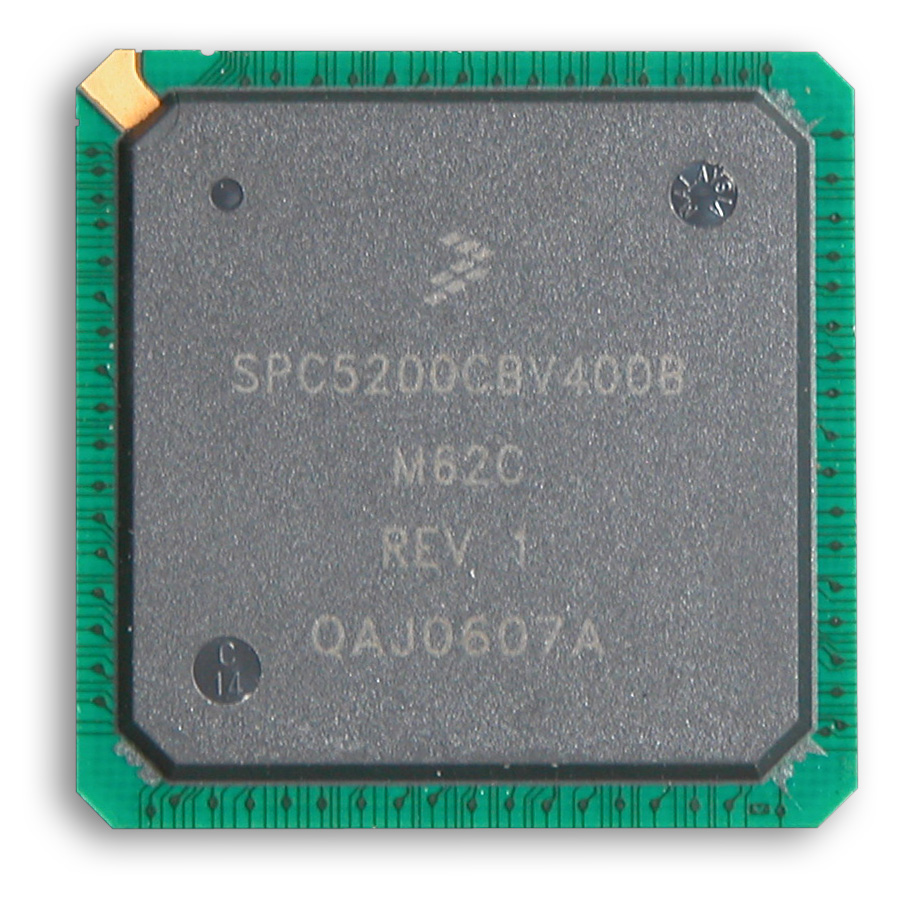 🇺🇸 United StatesPowerPC e300
32-bit embedded microprocessor core by FreescaleCPU · Power · 2004
 WorldAgnus
Address generator and DMA controller for Amiga computersSoC · Other
WorldAmiga Hombre
Unreleased RISC-based graphics and system chipset for Amiga computers.GPU · RISC
 🇺🇸 United StatesCTIA and GTIA
Video display controllers for Atari 8-bit computers and the 5200 console.SoC · Other · 1979
 🇺🇸 United StatesAY-3-8500
First dedicated video game chip for home consolesSoC · Other · 1976
 🇯🇵 JapanRicoh 2A03
8-bit CPU and sound chip for the Nintendo Entertainment SystemCPU · 68k · 1983
🇺🇸 United StatesMotorola X8 Mobile Computing System
Motorola custom chipset for Android smartphonesSoC · Arm
 🇯🇵 JapanFR-V
Fujitsu VLIW and vector processor for imagingCPU · VLIW · 1999
 🇺🇸 United StatesPowerPC e600
32-bit PowerPC microprocessor core for high-performance SoCsCPU · Power · 2004
 🇺🇸 United StatesTensor Processing Unit
Google custom chip for neural network machine learningAI accelerator · Other · 2015
 🇺🇸 United StatesGeode
Low-power x86 system-on-chip for embedded devicesSoC · x86 · 1999
 🇺🇸 United StatesMediaGX
Integrated x86 system on a chip for low-cost PCsSoC · x86 · 1997
🇺🇸 United StatesApple A17 Pro
First 3 nm mobile system on a chipSoC · Arm · 2023
 🇺🇸 United StatesRAD750
Radiation-hardened PowerPC processor for spacecraft and satellitesCPU · Power · 2001
 🇺🇸 United StatesApple A13 Bionic
64-bit ARM system on a chip for mobile devicesSoC · Arm · 2019
 WorldIntel 810
Budget chipset with integrated graphics for Socket 370 CPUsSoC · x86 · 1999
 🇺🇸 United StatesApple A8
64-bit ARM system on a chip for Apple mobile devicesSoC · Arm · 2014
🇺🇸 United StatesOrion
Marvell system-on-a-chip for network storage devicesSoC · Arm
🇺🇸 United StatesPowerPC 5000
Automotive and industrial PowerPC microcontroller familyMicrocontroller · Power · 2002
 🇺🇸 United StatesIntel Quark
Low-power 32-bit x86 system on a chip for wearables and IoT.SoC · x86 · 2013
🇮🇳 India and 1 moreVEGA Microprocessors
RISC-V microprocessor family from India for IoT and edge computingCPU · RISC-V
🇷🇺 RussiaBaikal CPU
Russian microprocessor line using MIPS, ARM and RISC-V coresCPU · MIPS · 2016
 🇺🇸 United StatesNvidia Drive
System on a chip family for autonomous vehiclesSoC · Arm · 2015
🇺🇸 United StatesQualcomm Cloud AI 100
AI inference accelerator for data centres and edge devicesAI accelerator · VLIW · 2021
🇺🇸 United StatesGB10 Grace Blackwell Superchip
AI superchip for desktop workstationsSoC · Arm
🇨🇳 ChinaKirin 9000S
Huawei mobile system on a chip with custom Taishan coresSoC · Arm · 2023
🇨🇳 ChinaXiaomi XRING O1
Xiaomi's first in-house flagship smartphone system on a chipSoC · Arm
🇹🇼 TaiwanDimensity 9300
All-Big-Core 5G smartphone system on a chipSoC · Arm · 2023
🇹🇼 TaiwanDimensity 9500
Flagship 5G mobile system on a chip with AI and gaming focusSoC · Arm · 2025
🇰🇷 South KoreaATOM
AI inference system on a chip by RebellionsAI accelerator · Other
🇺🇸 United StatesGB200 Grace Blackwell Superchip
Nvidia AI superchip linking Grace CPUs and Blackwell GPUsSoC · Arm
🇺🇸 United StatesGB300 Grace Blackwell Ultra Superchip
AI superchip combining Grace CPUs and Blackwell Ultra GPUsSoC · Arm
🇺🇸 United StatesMicrosoft Cobalt 200
132-core Arm server CPU for Microsoft Azure cloud workloadsCPU · Arm · 2025
🇺🇸 United StatesMaia 200
AI inference accelerator on TSMC 3nm processAI accelerator · Tensor design · 2026
🇺🇸 United StatesDRIVE Thor
System-on-chip for autonomous vehicles and robotaxisSoC · Arm
🇺🇸 United StatesAMD Instinct MI300A
Modular APU combining CPU and GPU tiles for high-performance computing.SoC · x86 · 2023
🇮🇳 IndiaMindgrove Secure IoT
28 nm RISC-V SoC for secure IoT devicesSoC · RISC-V
🇰🇷 South KoreaExynos 2400
Mobile system on a chip with hardware ray tracing and AISoC · Arm
🇰🇷 South KoreaExynos 2500
3nm mobile system on a chip with satellite connectivitySoC · Arm
Photo credits on this page
The small pictures above come from Wikimedia Commons under free licences. Some are cropped to fit.
- Apple A7: Henriok, Public domain, source
- Apple A4: Raimond Spekking, CC BY-SA 4.0, source
- Exynos: Köf3, CC BY-SA 3.0, source
- Qualcomm Snapdragon: Raimond Spekking, CC BY-SA 4.0, source
- OMAP: pandaboard.org, CC BY-SA 3.0, source
- ESP8266: Laserlicht, CC BY-SA 4.0, source
- PSoC: NobbiP, CC BY-SA 3.0, source
- NeuroMatrix: Dkos, CC BY-SA 3.0, source
- Expeed: Raimond Spekking, CC BY-SA 4.0, source
- DIGIC: Raimond Spekking, CC BY-SA 4.0, source
- Venus Engine: Solomon203, CC BY-SA 3.0, source
- Agnus: Raimond Spekking, CC BY-SA 4.0, source
- CTIA and GTIA: Rodrigo Castro, CC BY-SA 3.0, source
- AY-3-8500: Raimond Spekking, CC BY-SA 4.0, source
- Ricoh 2A03: PantheraLeo1359531, CC BY 4.0, source
- FR-V: Picty, CC BY-SA 4.0, source
- Tensor Processing Unit: Norman P. Jouppi, George Kurian, Sheng Li, Peter Ma, Rahul Nagarajan,, CC BY 4.0, source
- Geode: Appaloosa, CC BY-SA 3.0, source
- MediaGX: Appaloosa, CC BY-SA 3.0, source
- Apple A13 Bionic: Henriok, CC0, source
- Intel 810: “Jonathan Zander ( Digon3 )”, CC BY-SA 3.0, source
- Apple A8: Henriok, CC0, source
- PowerPC 5000: Genesi, CC BY-SA 4.0, source
- Intel Quark: Embedded_World_2014_Intel_Galileo.jpg : Ordercrazy derivative work: Re, CC0, source
- RAD750: Henriok, CC0, source
- PowerPC e600: Henriok, CC0, source
- Nvidia Drive: NVIDIA Taiwan, CC BY 2.0, source
- Apple M1 Ultra: Henriok, CC0, source
- Tegra: Raimond Spekking, CC BY-SA 4.0, source