
Agnus
Address generator and DMA controller for Amiga computers
Agnus is a custom integrated circuit designed for the Commodore Amiga computer family. It manages memory access, direct memory access channels, and graphics co-processing tasks. The chip evolved through several versions to support increased memory capacities in later Amiga models.
- Contains 25 DMA channels for low-CPU overhead
- Integrates Blitter and Copper co-processors
- Supports up to 2 MB of Chip RAM in later versions
- Fabricated using a 5 micrometre process node
- Replaced by Alice chip in AGA chipset models
What it is
Agnus serves as the central address generator for the Amiga computer system. This custom chip handles all direct memory access operations, allowing graphics, sound, and input-output devices to function with minimal processor intervention. It integrates several key subsystems, including a bitmap manipulator known as the Blitter and a display-synchronised co-processor called the Copper. The component also manages dynamic random-access memory refresh cycles and generates system timing signals from a base oscillator.
How it came about
MOS Technology developed Agnus as part of the original custom chipset for the Amiga platform. Early versions used a five-micrometre manufacturing process consistent with other chips in the Original Chip Set. As the architecture evolved into the Enhanced Chip Set, newer iterations of the device supported larger memory addresses. The design was eventually superseded by the Alice chip when the Advanced Graphics Architecture launched in 1992 for newer Amiga models.
Inside the chip
The chip contains approximately twenty-one thousand transistors in its initial form. It features twenty-five direct memory access channels that offload data transfer tasks from the central processor. The Blitter unit copies blocks of data and draws geometric shapes at high speed using raster operations. The Copper co-processor executes instructions synchronised with the video beam position. A memory controller manages access to Chip RAM, which both the processor and custom chips can use simultaneously.
How it was made
Early Agnus variants were fabricated using a five-micrometre process node. The initial models came in a forty-eight-pin dual in-line package. Later versions adopted an eighty-four-contact plastic leaded chip carrier format, often referred to as Fat Agnus on circuit boards. These larger packages accommodated the enhanced capabilities of the Enhanced Chip Set revisions. Transistor counts remained around twenty-one thousand for the base design.
Where it went
This integrated circuit appeared in numerous Commodore Amiga computers. Early versions powered the Amiga 1000 and Amiga 2000. Subsequent revisions supported the Amiga 500, Amiga 600, and Amiga 3000. The chip also featured in the Commodore CDTV multimedia device. Different model numbers corresponded to specific regional video standards such as NTSC or PAL, and varying memory addressing capabilities ranging from five hundred and twelve kilobytes to two megabytes.
Versions and family
The Original Chip Set included the 8361 and 8367 models in dual in-line packages. Plastic leaded chip carrier versions like the 8370 and 8371 addressed up to five hundred and twelve kilobytes of memory. Enhanced Chip Set variants such as the 8372A and 8375 supported one or two megabytes of Chip RAM. These later models were sometimes called Super Agnus or Fat Agnus. The 8372AB and 8372B served the Amiga 3000 specifically.
Why it matters
Agnus enabled the Amiga to perform advanced multimedia tasks without burdening the main processor. Its direct memory access architecture allowed smooth animation and audio playback simultaneously. The integration of the Blitter and Copper provided hardware acceleration for graphics operations that were software-intensive on other contemporary systems. This design influenced later custom chipsets in home computing.

Questions people ask about Agnus
What is the primary function of the Agnus chip?
Agnus acts as the address generator and memory controller for the Amiga. It manages direct memory access for graphics, sound, and input-output operations, allowing these subsystems to work without constant central processor involvement.
How much memory can different Agnus versions address?
Original Chip Set versions address up to 512 KB of Chip RAM. Enhanced Chip Set models increased this limit to 1 MB or 2 MB, depending on the specific variant such as the 8372A or 8372B used in later Amiga computers.
What are the Blitter and Copper units inside Agnus?
The Blitter is a bitmap manipulator that copies data and draws shapes quickly. The Copper is a co-processor that executes instructions in sync with the video display beam, enabling precise timing for graphics effects without CPU usage.
Good reading and sources
The facts on this page come from the Wikipedia article "MOS Technology Agnus", written by its contributors and used under the CC BY-SA 4.0 licence, and from its Wikidata record (CC0). EveryChip rewrote the text in its own words, with AI assistance, and compares every page with the article to make sure no passage is copied. It may be reused under the same CC BY-SA 4.0 licence with a link back.
It may contain mistakes, and figures change over time. Nothing here is investment or buying advice. If something is wrong, tell us. Last refreshed 2026-11-14.
Like Agnus
All systems on a chip 🇯🇵 JapanMSX-Engine
Integrated circuit combining MSX computer functions into one chip.SoC · Other
 🇺🇸 United StatesAY-3-8500
First dedicated video game chip for home consolesSoC · Other · 1976
 🇺🇸 United StatesANTIC
Video display controller for Atari 8-bit computers and the 5200 consoleSoC · Other · 1978
 🇺🇸 United StatesCTIA and GTIA
Video display controllers for Atari 8-bit computers and the 5200 console.SoC · Other · 1979
More from MOS Technology
All of them 🇺🇸 United StatesMOS Technology 6522
I/O controller chip for 6502 microprocessorsMicrocontroller · Other
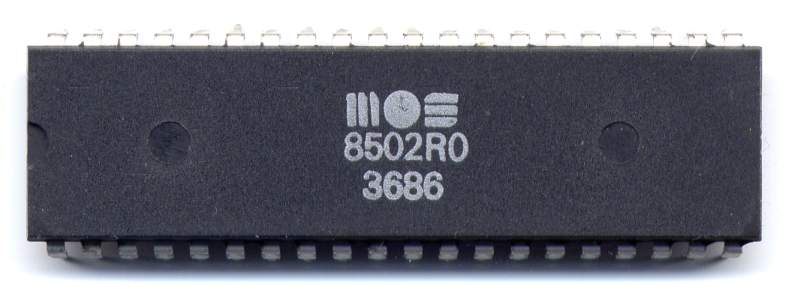 WorldMOS Technology 8502
An 8-bit CPU from MOS Technology that powered the Commodore 128CPU · 8-bit
🇺🇸 United StatesMOS Technology 6551
UART companion chip for the 6502 microprocessorAnalog