Systems on a chip
Apple A and M, Snapdragon, Exynos, Dimensity, Tensor, Tegra and Kirin: a whole computer on one die. 209 chips on EveryChip so far.
A system on a chip (SoC) puts most of a computer on one piece of silicon: CPU cores, a GPU, memory controllers, an image processor, video engines, an AI unit and often the modem. Phones and tablets are built around SoCs, and since Apple's M1 of 2020 many laptops are too. Putting everything close together saves power and space, which matters most in a battery-powered device.
What goes on the die
A phone SoC usually combines a cluster of Arm CPU cores of different sizes, a GPU, a digital signal processor for sound and sensors, an image signal processor that turns the camera sensor's raw data into a photo, a neural processing unit for AI tasks, video encoders and decoders, and security hardware. The main memory usually sits in a separate chip stacked on top or placed beside it.
Who makes them
Apple designs its A-series for iPhones and M-series for Macs. Qualcomm's Snapdragon, MediaTek's Dimensity, Samsung's Exynos, Google's Tensor and Huawei's Kirin power most Android phones. Nvidia's Tegra went into tablets, cars and the Nintendo Switch. Almost all are made by TSMC or Samsung Foundry, and each new generation is often among the first chips on a new process node.
Famous soC chips
 Apple A4Apple's first in-house SoC, 2010
 Apple A7The first 64-bit phone processor, 2013
 Apple M1 UltraApple's first Mac SoC, 16 billion transistors, 2020
 Qualcomm SnapdragonSoC family in many Android phones
 ExynosSamsung's own phone SoCs
 TegraNvidia's SoC line, used in the Nintendo SwitchGoogle TensorGoogle's Pixel phone chips, from 2021
 OMAPTexas Instruments' early smartphone SoCs
Further reading
🇰🇷 South KoreaExynos
Samsung's Arm-based system-on-chip series for phones, wearables, cars and IoTSoC · Arm · 2009
🇺🇸 United StatesQualcomm Snapdragon
Qualcomm's brand of ARM-based systems on chip, modems and wireless controllersSoC · Arm · 2007
 🇺🇸 United StatesApple M2
Apple's second-generation ARM SoC family for Macs, iPads and Vision ProSoC · Arm · 2022
🇷🇺 RussiaKOMDIV-32
Radiation-hardened MIPS microprocessors for spacecraftCPU · MIPS · 1999
 🇺🇸 United StatesBonnell
Intel's low-power x86 microarchitecture behind early Atom chipsCPU · x86 · 2008
🇺🇸 United States and 1 moreGoldmont
Low-power Atom microarchitecture for entry-level SoCs, up to four cores.CPU · x86 · 2016
 🇺🇸 United StatesAthlon
AMD's x86 desktop processor brand, from the first 1 GHz chip to entry-level Zen APUsCPU · x86 · 1999
🇺🇸 United StatesTolapai
Intel embedded SoC with Pentium M core and security accelerationSoC · x86
🇺🇸 United StatesApple M4
ARM-based system on a chip for Apple devicesSoC · Arm · 2024
 WorldAMD Élan
x86 system on a chip for embedded devicesSoC · x86 · 1993
 🇬🇧 United KingdomARM Cortex-A9
32-bit multi-core processor core for mobile and embedded systemsCPU · Arm · 2007
 🇺🇸 United StatesXScale
ARM-based microarchitecture for mobile and embedded systemsCPU · Arm · 2002
🇺🇸 United StatesScorpion
Qualcomm ARM CPU core for mobile SoCsCPU · Arm · 2008
🇺🇸 United StatesKrait
Qualcomm in-house ARM CPU core for mobile SoCsCPU · Arm · 2012
WorldKryo
ARM-based CPU cores for Snapdragon SoCsCPU · Arm · 2015
🇺🇸 United StatesCentriq
ARM-based server system on a chip by QualcommSoC · Arm · 2017
 🇺🇸 United StatesNvidia RTX Spark
ARM system on chip for Windows laptops and desktopsSoC · Arm · 2026
🇺🇸 United StatesProject Denver
Nvidia ARM CPU with binary translationCPU · Arm · 2014
🇺🇸 United StatesApple M5
ARM-based system on a chip series by Apple using 3 nm processSoC · Arm · 2025
 🇺🇸 United StatesApple A6
32-bit mobile system on a chip for iPhone 5SoC · Arm · 2012
 🇺🇸 United StatesApple A5X
32-bit SoC for the third-generation iPad with quad-core graphicsSoC · Arm · 2012
 🇺🇸 United StatesApple silicon
Arm-based chips designed by Apple for its devicesSoC · Arm · 2010
 🇺🇸 United StatesApple A5
32-bit dual-core system on a chip for early Apple mobile devicesSoC · Arm · 2011
 🇺🇸 United StatesApple A6X
32-bit SoC for the 4th generation iPadSoC · Arm · 2012
 🇺🇸 United StatesApple A9X
64-bit ARM SoC for the first iPad Pro tabletsSoC · Arm · 2015
 🇺🇸 United StatesApple A10X Fusion
64-bit ARM system on a chip for iPad Pro and Apple TVSoC · Arm · 2017
 🇺🇸 United StatesApple A10 Fusion
Quad-core mobile SoC with heterogeneous computingSoC · Arm · 2016
 🇺🇸 United StatesApple A12X Bionic
ARM system on a chip for iPad Pro tabletsSoC · Arm · 2018
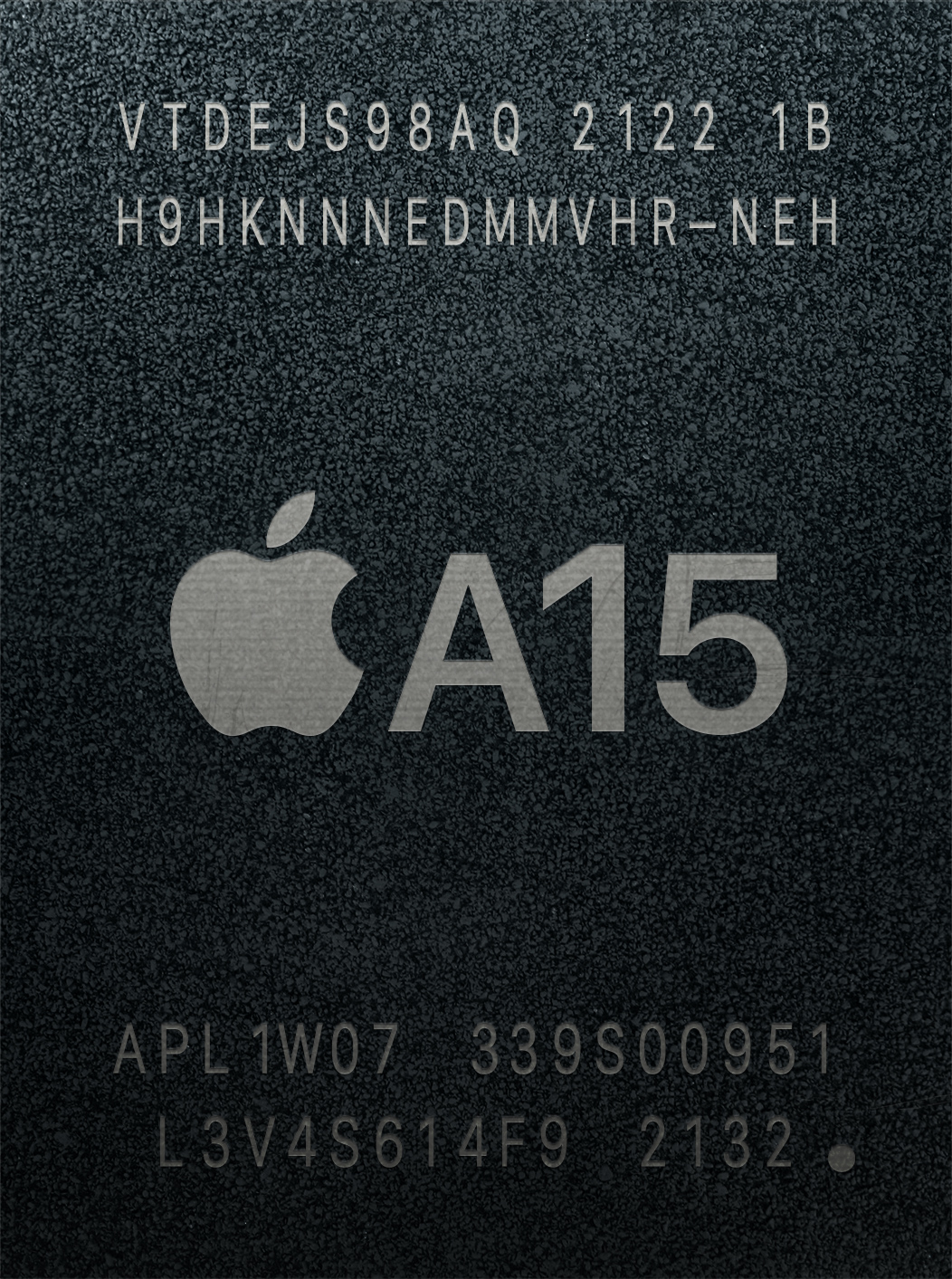 🇺🇸 United StatesApple A15 Bionic
Six-core ARM system on a chip for Apple mobile devicesSoC · Arm · 2021
 🇺🇸 United StatesApple S1
System in package for the first Apple WatchSoC · Arm · 2015
🇺🇸 United States and 1 moreApple A16 Bionic
ARM-based system on a chip for iPhone and iPadSoC · Arm · 2022
🇺🇸 United StatesApple A18
3 nm ARM system on a chip for iPhone 16 and MacBook NeoSoC · Arm · 2024
 🇺🇸 United StatesMSM7000
System-on-chip series for early smartphones by QualcommSoC · Arm
🇺🇸 United StatesOMAP
Texas Instruments system on chip for mobile multimediaSoC · Arm
 🇸🇪 SwedenNovaThor
Smartphone system on chip and modem platform by ST-EricssonSoC · Arm · 2009
🇺🇸 United StatesAtom
Low-power x86 system on a chip for mobile and embedded devices.SoC · x86 · 2012
 🇨🇭 SwitzerlandNomadik
Multimedia application processors for mobile devicesSoC · Arm · 2003
🇺🇸 United StatesSitara
Texas Instruments family of ARM-based microprocessors for embedded systemsSoC · Arm
 🇨🇳 ChinaAllwinner A1X
Single-core ARM system on a chip for low-cost devicesSoC · Arm
🇺🇸 United StatesDaVinci
System on chip family for embedded video and vision tasksSoC · Arm · 2005
 WorldRockchip RK3288
Quad-core ARM Cortex-A17 system on a chip for low-power devicesSoC · Arm · 2014
WorldSigmaTel STMP3700
Low-power SoC for portable media playersSoC · Arm · 2007
🇨🇳 ChinaFeiTeng
Chinese supercomputing CPUs by Phytium and NUDTCPU · SPARC
 🇯🇵 JapanHollywood
ATI system-on-a-chip for the Nintendo Wii consoleSoC · Arm
 🇺🇸 United StatesXilleon
System on chip family for digital television and set-top boxesSoC · MIPS
 🇬🇧 United KingdomVideoCore
Low-power mobile multimedia processor series by BroadcomGPU · Arm
🇺🇸 United StatesNeural Engine
Apple's on-device AI accelerator for machine learning tasksAI accelerator · Arm · 2017
🇺🇸 United StatesPixel Visual Core
Google’s programmable image and vision processor for Pixel phonesSoC · Arm · 2017
Photo credits on this page
The small pictures above come from Wikimedia Commons under free licences. Some are cropped to fit.
- Intel Atom: Raimond Spekking, CC BY-SA 4.0, source
- Apple U1: Henriok, CC0, source
- Apple A7: Henriok, Public domain, source
- Apple A4: Raimond Spekking, CC BY-SA 4.0, source
- Exynos: Köf3, CC BY-SA 3.0, source
- Qualcomm Snapdragon: Raimond Spekking, CC BY-SA 4.0, source
- Apple M2: Henriok, CC0, source
- Athlon: Unknown author, CC BY-SA 2.5, source
- AMD Élan: Phiarc, CC BY-SA 4.0, source
- ARM Cortex-A9: Raimond Spekking, CC BY-SA 4.0, source
- XScale: Raimond Spekking, CC BY-SA 4.0, source
- Nvidia RTX Spark: Daniel Lu ( User:dllu ), CC BY-SA 4.0, source
- Apple A6: Henriok, Public domain, source
- Apple A5X: Apple, Public domain, source
- Apple A5: Henriok at English Wikipedia ., Public domain, source
- Apple A6X: Raimond Spekking, CC BY-SA 4.0, source
- Apple A9X: Henriok, CC0, source
- Apple A10X Fusion: Henriok, CC0, source
- Apple A10 Fusion: Henriok, CC0, source
- Apple A12X Bionic: Henriok, CC0, source
- Apple A15 Bionic: Henriok, CC0, source
- Apple S1: Henriok, CC0, source
- MSM7000: Raimond Spekking, CC BY-SA 4.0, source
- OMAP: pandaboard.org, CC BY-SA 3.0, source
- NovaThor: Nixdorf, CC BY-SA 3.0, source
- Nomadik: Nixdorf, CC BY-SA 3.0, source
- Allwinner A1X: Blakegripling ph, CC BY-SA 3.0, source
- Rockchip RK3288: Les Pounder, CC BY-SA 2.0, source
- Hollywood: ZyMOS, CC BY-SA 4.0, source
- Xilleon: Peter Howkins (wikipedia ID: flibble), CC BY-SA 3.0, source
- VideoCore: Evan-Amos, Public domain, source
- Apple M1 Ultra: Henriok, CC0, source
- Tegra: Raimond Spekking, CC BY-SA 4.0, source