Phones and tablets
Application processors, modems and the camera and power chips of a phone. 201 chips on EveryChip so far.
Phones and tablets are built around a system on a chip (SoC) that combines processor cores, graphics, an AI engine, camera and video processing, and often the modem. Around it sit memory, storage, power management, radio and sensor chips, many dozens in all. Nearly all phone processors use the Arm instruction set. Apple, Qualcomm, MediaTek, Samsung, Google and Huawei's HiSilicon design them.
Power is the limit
A phone has no fan and a small battery, so its chips must do as much as possible within a few watts. Phone SoCs mix big, fast cores for bursts of work with small, efficient cores for background tasks, a scheme Arm called big.LITTLE. They switch parts of the chip off when not needed. Each new phone chip is usually among the first on a new process node.
Milestones
Texas Instruments' OMAP chips ran many early smartphones. Apple's A4 of 2010 was its first in-house design, and its A7 of 2013 was the first 64-bit phone chip. Qualcomm's Snapdragon became the main chip of Android flagships, while MediaTek grew from low-cost phones to high-end ones. Google's Tensor chips, from 2021, focused on on-device AI.
Famous phones and tablets chips
 Apple A4Apple's first in-house SoC, 2010
 Apple A7First 64-bit phone chip, 2013Apple A18iPhone 16 chip, 2024
 Qualcomm SnapdragonChips of many Android flagships
 ExynosSamsung's phone SoCsGoogle TensorGoogle's Pixel chips, from 2021
 ARM Cortex-A53Efficiency core in billions of phones
 OMAPTI's early smartphone chips
Further reading
 🇺🇸 United StatesAlder Lake
Intel's 12th-gen hybrid x86 CPUs mixing performance and efficiency coresCPU · x86 · 2021
 🇺🇸 United StatesPanther Lake
Intel's Core Ultra Series 3 mobile CPU line with tiled CPU, GPU and I/O diesCPU · x86 · 2026
 🇺🇸 United StatesIvy Bridge
Intel's 22 nm tick microarchitecture featuring FinFET transistors and integrated graphics.CPU · x86 · 2012
 🇺🇸 United StatesAMD APU
AMD chips combining CPU and GPU on one dieCPU · x86 · 2011
 🇺🇸 United States and 1 moreLunar Lake
Ultra-low power mobile SoC with on-package memory and an NPU for AI workCPU · x86 · 2024
 🇺🇸 United StatesZen 3
AMD microarchitecture released in 2020 with unified core complexes.CPU · x86 · 2020
🇺🇸 United StatesZen 6
AMD microarchitecture for Ryzen and Epyc chipsCPU · x86
 🇺🇸 United StatesAMD K8
First x86 microarchitecture with integrated 64-bit support and on-chip memory control.CPU · x86 · 2003
 🇺🇸 United StatesPiledriver
Second-generation AMD x86 microarchitecture for desktops and serversCPU · x86 · 2012
🇺🇸 United StatesPuma
Low-power AMD microarchitecture for notebooks and tabletsCPU · x86 · 2014
 🇺🇸 United StatesJaguar
Low-power x86 microarchitecture for consoles and embedded systemsCPU · x86 · 2013
 🇺🇸 United StatesAMD Turion
Low-power x86-64 mobile processors from AMDCPU · x86 · 2005
 🇺🇸 United StatesPentium Dual-Core
Intel's entry-level dual-core x86 CPUs for desktops and notebooks, 2007 to 2010CPU · x86 · 2007
 🇮🇱 IsraelRaptor Lake
Hybrid x86 desktop and mobile processors from IntelCPU · x86 · 2022
🇺🇸 United StatesNova Lake
Upcoming Intel desktop and mobile processor seriesCPU · x86 · 2026
 🇺🇸 United StatesSilvermont
Intel's 22 nm low-power Atom core design, used across four SoC familiesCPU · x86 · 2013
 🇺🇸 United StatesHaswell
Intel's 2013 x86-64 CPU microarchitecture on 22 nm FinFETCPU · x86 · 2013
 🇺🇸 United StatesPentium
Intel's long-running x86 processor brand, from the 1993 P5 to 2023 budget partsCPU · x86 · 1993
 🇺🇸 United StatesCeleron
Intel's budget x86 desktop and mobile CPU line, sold from 1998 to 2023CPU · x86 · 1998
🇺🇸 United StatesWhiskey Lake
Intel's third-generation 14 nm Skylake low-power mobile processors, announced 2018.CPU · x86 · 2018
 🇺🇸 United StatesBonnell
Intel's low-power x86 microarchitecture behind early Atom chipsCPU · x86 · 2008
🇺🇸 United StatesWillow Cove
Intel CPU core design behind 11th-gen Core mobile chipsCPU · x86 · 2020
 🇺🇸 United States and 1 moreSkylake
Intel's 2015 sixth-generation Core microarchitecture, built on 14 nmCPU · x86 · 2015
 🇺🇸 United StatesYonah
Intel's first 65 nm mobile CPU cores, sold as Core Duo and Core SoloCPU · x86 · 2006
 🇮🇱 IsraelMerom
Intel's first mobile Core microarchitecture processor, sold as Core 2 Duo and CeleronCPU · x86 · 2006
🇺🇸 United StatesStealey
Low-power x86 processor for mobile internet devices and ultralight laptops.CPU · x86 · 2007
 🇺🇸 United StatesZen
AMD's first-generation x86-64 microarchitecture launched in 2017CPU · x86 · 2017
 🇺🇸 United StatesZen 4
AMD microarchitecture using TSMC 5 nm processCPU · x86 · 2022
🇺🇸 United StatesSteamroller
Third-generation AMD microarchitecture for APUsCPU · x86 · 2014
🇺🇸 United StatesExcavator
AMD's final Bulldozer-derived x86-64 microarchitectureCPU · x86 · 2015
 🇺🇸 United StatesBroadwell
Intel's 14 nm shrink of the Haswell CPU microarchitectureCPU · x86 · 2014
 🇺🇸 United States and 2 moreMeteor Lake
Intel's first chiplet-based mobile Core Ultra processors, launched December 2023CPU · x86 · 2023
 🇺🇸 United StatesArrow Lake
Intel Core Ultra Series 2 desktop and mobile processorsCPU · x86 · 2024
🇺🇸 United StatesAtom
Low-power x86 system on a chip for mobile and embedded devices.SoC · x86 · 2012
 🇺🇸 United StatesPenryn
45 nm mobile processor family from IntelCPU · x86 · 2007
 🇺🇸 United StatesMediaGX
Integrated x86 system on a chip for low-cost PCsSoC · x86 · 1997
 WorldVIA C7
Low-power x86 processor for compact and mobile devicesCPU · x86 · 2005
 🇺🇸 United StatesAthlon 64
A single-core x86-64 microprocessor by AMD for desktops and laptops.CPU · x86 · 2003
 🇺🇸 United StatesIntel Core 5
Mid-range processor series from IntelCPU · x86 · 2024
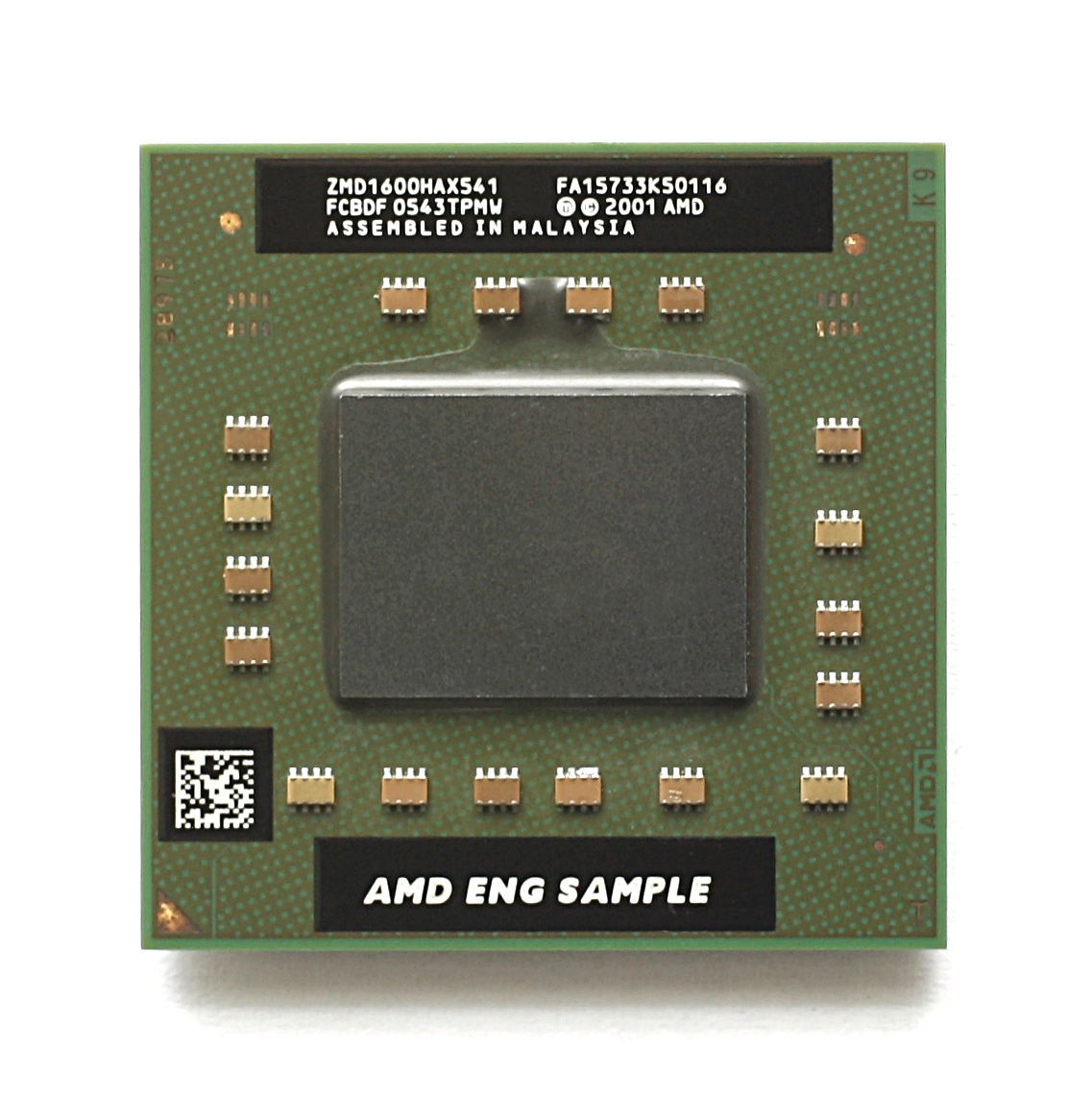 WorldTurion 64 X2
Dual-core mobile processor from AMD for laptopsCPU · x86 · 2006
 WorldIBM 386SLC
IBM’s low-power 386SX-compatible processor for portable systems.CPU · x86 · 1991
 🇺🇸 United StatesRyzen
AMD's multi-core x86-64 processor brand launched in 2017.CPU · x86 · 2024
Photo credits on this page
The small pictures above come from Wikimedia Commons under free licences. Some are cropped to fit.
- Meteor Lake: Fritzchens Fritz, CC0, source
- Alder Lake: Jacek Halicki, CC BY-SA 4.0, source
- Panther Lake: 极客湾Geekerwan, CC BY 3.0, source
- Ivy Bridge: IrisChronomia, CC BY-SA 4.0, source
- AMD APU: Wikiinger, CC0, source
- Lunar Lake: LaptopMedia, CC BY 3.0, source
- Zen 3: Fritzchens Fritz, CC BY 2.0, source
- AMD K8: Redfox, Public domain, source
- Piledriver: D-Kuru, CC BY-SA 4.0, source
- Jaguar: Fritzchens Fritz, CC0, source
- AMD Turion: cole8888, CC BY-SA 2.0, source
- Pentium Dual-Core: Smial, CC BY-SA 2.0 de, source
- Intel Atom: Raimond Spekking, CC BY-SA 4.0, source
- Raptor Lake: Fritzchens Fritz, CC0, source
- Silvermont: Raimond Spekking, CC BY-SA 4.0, source
- Apple A7: Henriok, Public domain, source
- Apple A4: Raimond Spekking, CC BY-SA 4.0, source
- Exynos: Köf3, CC BY-SA 3.0, source
- Qualcomm Snapdragon: Raimond Spekking, CC BY-SA 4.0, source
- Haswell: Intel Free Press, CC BY 2.0, source
- Pentium: Konstantin Lanzet, GFDL, source
- Celeron: Qurren, CC BY-SA 3.0, source
- ARM Cortex-A53: Raimond Spekking, CC BY-SA 4.0, source
- Skylake: Eric Gaba ( Sting - fr:Sting ), CC BY-SA 4.0, source
- Yonah: Rjluna2, CC BY-SA 4.0, source
- Merom: Raimond Spekking, CC BY-SA 4.0, source
- Zen: Fritzchens Fritz, CC0, source
- Zen 4: FritzchensFritz, CC0, source
- Broadwell: Asimzb, CC BY-SA 4.0, source
- Arrow Lake: ZMASLO, CC BY 3.0, source
- OMAP: pandaboard.org, CC BY-SA 3.0, source
- Penryn: 4300streetcar, CC BY 4.0, source
- MediaGX: Appaloosa, CC BY-SA 3.0, source
- Intel Core 5: Photo: Qurren ( talk ), with IXY Digital 10 compact digital camera., CC BY-SA 3.0, source
- Turion 64 X2: Konstantin Lanzet, CC BY 3.0, source
- IBM 386SLC: Raymangold22, CC0, source
- VIA C7: Konstantin Lanzet, CC BY-SA 3.0, source
- Ryzen: ICCTsHeY, CC BY-SA 4.0, source
- Athlon 64: Astraera, CC BY-SA 4.0, source