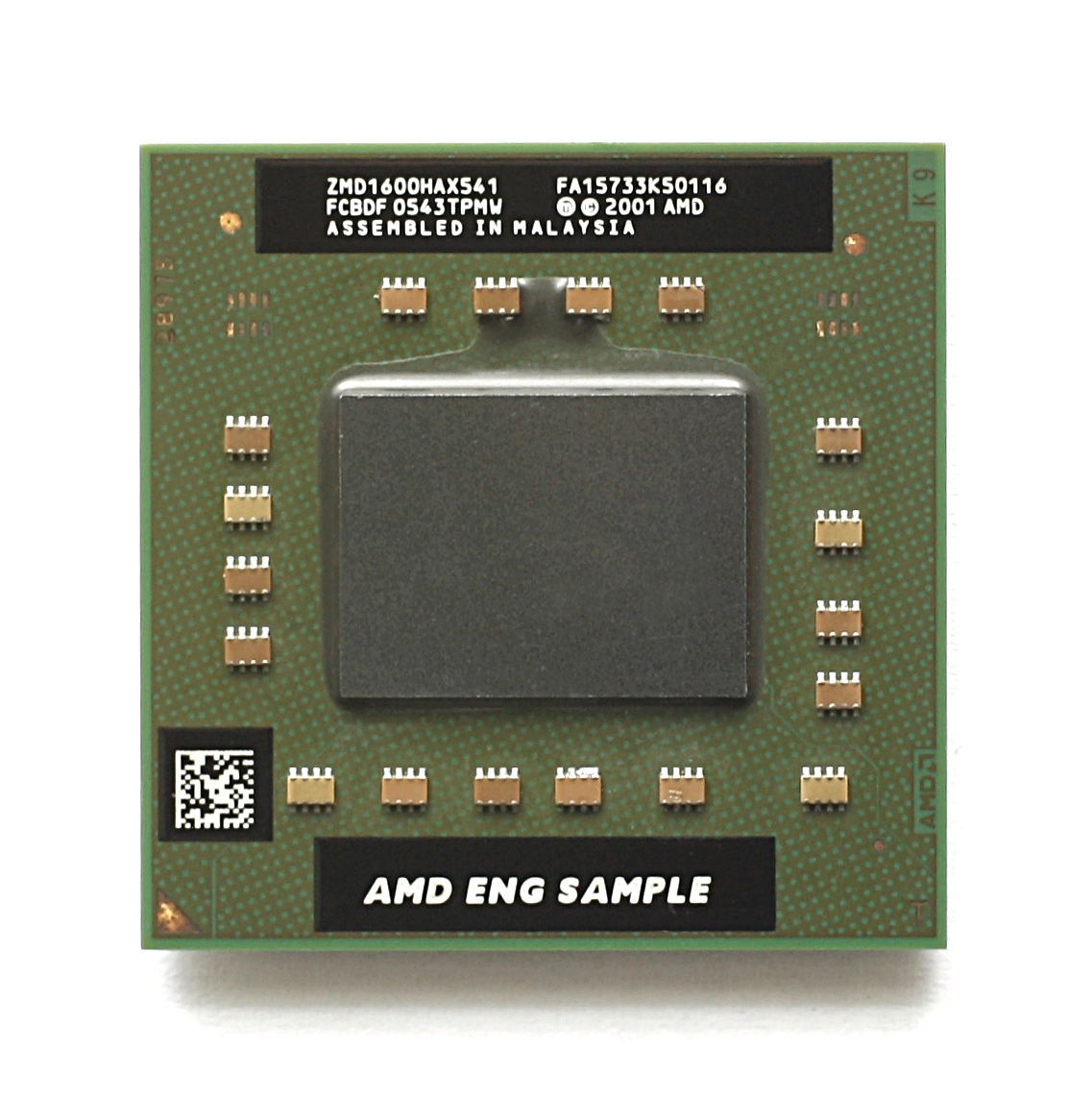
Turion 64 X2
Dual-core mobile processor from AMD for laptops
The Turion 64 X2 is a dual-core mobile central processing unit designed by AMD. Launched in May 2006, it targets the laptop market with 64-bit performance and power efficiency. It competes directly with Intel Core and Core 2 mobile chips, offering virtualization support and DDR2 memory integration.
- Launched on May 17, 2006 after delays
- Features dual AMD64 cores on Socket S1
- Supports dual-channel DDR2-667 memory
- Includes AMD Virtualization Technology
- TDP ranges from 31 to 35 watts
What it is
The Turion 64 X2 is a 64-bit dual-core mobile processor developed by AMD. It belongs to the broader Turion brand, which focuses on low-power consumption for laptops. This chip was introduced to compete with Intel’s Core and Core 2 mobile lines. It integrates two processing cores on a single die, allowing for better multitasking than its single-core predecessors. The design emphasizes battery life through features like PowerNow! and AMD Virtualization Technology.
How it came about
AMD launched the Turion 64 X2 on May 17, 2006, following several delays. The initial models used the Taylor and Trinidad core designs, fabricated on a 90 nanometre process. These early versions were followed by the Tyler core in 2007, which moved to a 65 nanometre process. The launch aimed to provide a competitive alternative to Intel’s dominant mobile offerings at the time, bringing dual-core performance to mainstream notebooks.
Inside the chip
The processor uses Socket S1 and supports dual-channel DDR2 memory. Each core contains 64 KiB of L1 cache for data and instructions. L2 cache varies by model, with Taylor having 256 KiB per core and Trinidad offering 512 KiB per core. The Tyler revision maintains 512 KiB per core but improves power management with dynamic frequency transitions. It includes MMX, SSE3, and AMD64 instruction sets, along with NX bit security features.
How it was made
Early Turion 64 X2 chips were made using a 90 nanometre silicon-on-insulator (SOI) process. Later Tyler models shifted to a 65 nanometre SOI process. This reduction in node size helped lower power consumption and heat output. The chips are packaged for Socket S1 motherboards, which replaced the older Socket 754 used by single-core Turions. Thermal design power ranges from 31 watts to 35 watts depending on the specific model and clock speed.
Where it went
These processors are found in laptops and notebooks requiring balanced performance and battery life. They handle everyday computing tasks, web browsing, and office applications efficiently. The inclusion of AMD Virtualization Technology allows these machines to run virtual machines for testing or development. They were common in mid-range mobile computers during the mid-to-late 2000s before being succeeded by newer architectures.
Versions and family
The family includes Taylor and Trinidad cores on 90 nm, and Tyler on 65 nm. Taylor models have 256 KiB L2 cache per core, while Trinidad and Tyler have 512 KiB. Clock speeds range from 1.6 GHz to 2.4 GHz. Model names like TL-50 or TL-64 indicate performance ratings. The TK series, such as TK-53, shares the same hardware but is branded as Athlon 64 X2 for notebooks. All variants use Socket S1.
Why it matters
The Turion 64 X2 established AMD as a viable competitor in the mobile dual-core market. It forced Intel to respond with more efficient Core 2 Duo models. By integrating memory controllers and virtualization support, it offered features previously reserved for desktop chips. Its power-saving technologies helped extend laptop battery life, setting a standard for future mobile processor designs from AMD.


Questions people ask about Turion 64 X2
What socket does the Turion 64 X2 use?
The Turion 64 X2 uses Socket S1. This socket replaced the earlier Socket 754 used by single-core Turion 64 processors. It supports dual-channel DDR2 memory and was used for both the 90 nm and 65 nm versions of the chip.
How much cache does the Turion 64 X2 have?
L2 cache depends on the core variant. Taylor cores have 256 KiB per core, while Trinidad and Tyler cores have 512 KiB per core. Each core also has 64 KiB of L1 data cache and 64 KiB of L1 instruction cache.
What is the power consumption of this chip?
The thermal design power (TDP) ranges from 31 watts to 35 watts. Specific models like the TL-50 have a 31 W TDP, while higher-clocked models like the TL-64 have a 35 W TDP. PowerNow! technology helps reduce consumption during light loads.
Good reading and sources
The facts on this page come from the Wikipedia article "AMD Turion", written by its contributors and used under the CC BY-SA 4.0 licence, and from its Wikidata record (CC0). EveryChip rewrote the text in its own words, with AI assistance, and compares every page with the article to make sure no passage is copied. It may be reused under the same CC BY-SA 4.0 licence with a link back.
It may contain mistakes, and figures change over time. Nothing here is investment or buying advice. If something is wrong, tell us. Last refreshed 2026-11-14.
Like Turion 64 X2
All CPUs and microprocessors 🇮🇱 IsraelMerom
Intel's first mobile Core microarchitecture processor, sold as Core 2 Duo and CeleronCPU · x86 · 2006
 🇺🇸 United StatesYonah
Intel's first 65 nm mobile CPU cores, sold as Core Duo and Core SoloCPU · x86 · 2006
 🇺🇸 United StatesAMD Turion
Low-power x86-64 mobile processors from AMDCPU · x86 · 2005
 🇺🇸 United StatesPentium Dual-Core
Intel's entry-level dual-core x86 CPUs for desktops and notebooks, 2007 to 2010CPU · x86 · 2007
More from AMD
All of them 🇺🇸 United StatesPhenom
AMD desktop processors based on the K10 microarchitectureCPU · x86 · 2007
 🇺🇸 United StatesAthlon 64 X2
First native dual-core desktop CPU from AMDCPU · x86 · 2005
🇺🇸 United StatesTeraScale
ATI and AMD graphics microarchitecture using VLIW designGPU · GPU architecture · 2007