
Athlon 64 X2
First native dual-core desktop CPU from AMD
Advanced Micro Devices launched the Athlon 64 X2 in May 2005 as the first native dual-core desktop processor. It placed two cores on a single die to double thread handling capacity for multitasking and media work.
- First native dual-core desktop CPU released in May 2005
- Features two cores on a single die with shared memory controller
- Manufactured on 90 nm and 65 nm Silicon on Insulator processes
- Clock speeds range from 1.9 GHz to 3.2 GHz
- Successor to Athlon 64 and predecessor to Phenom series
What it is
The Athlon 64 X2 is a desktop central processing unit developed by Advanced Micro Devices. It arrived in May 2005 as the industry first native dual-core chip for personal computers. Instead of linking two separate chips, engineers placed two functional cores on one silicon die. This design allowed the processor to handle multiple software threads simultaneously, improving performance for multitasking and media encoding compared to single-core predecessors.
How it came about
AMD designed the chip from scratch to support dual cores natively. They adapted the existing multi-CPU capable Athlon 64 architecture by adding a second core and shared control logic. The launch coincided with Intel release of the Pentium D in the same month. Initial models used the E stepping of the Athlon 64. In June 2007, the company introduced low-voltage variants under the Athlon X2 name, dropping the 64 moniker as 64-bit computing became standard.
Inside the chip
The processor features two cores sharing a dual-channel memory controller. Each core includes 64 KB of L1 cache for data and instructions. L2 cache sizes vary between 256 KB, 512 KB, and 1024 KB per core depending on the model. It supports instruction sets including MMX, SSE3, and AMD64. Later Kuma based models added SSE4a and a shared 2 MB L3 cache. The design enables thread-level parallelism, allowing applications to execute tasks across both cores at once.
How it was made
Manufacturing used Silicon on Insulator technology at 90 nm and later 65 nm nodes. GlobalFoundries, formerly AMD Fab 36, produced the chips. The 90 nm version with 1 MB cache contained 154 million transistors on a 147 mm2 die. Shrinking to 65 nm reduced the die size but increased transistor density to 221 million for certain models. Larger defect-free areas were required for dual cores, which lowered yields and raised production costs compared to single-core units.
Where it went
This CPU targeted desktop computers requiring improved multitasking and professional rendering capabilities. Software such as video encoders and music production tools benefited from the extra core. While some single-threaded programs saw no gain, heavy multitasking environments showed significant speed improvements. The chip served general consumer PCs and workstations before being succeeded by the Phenom and Athlon II families.
Versions and family
Early cores included Manchester and Toledo on Socket 939. Windsor and Brisbane cores moved to Socket AM2 with lower power options. Brisbane models introduced 65 nm efficiency. The Athlon X2 brand covered low-power 45 W parts and later Kuma chips based on the K10 architecture with disabled cores. Kuma variants used Socket AM2+ and included L3 cache, bridging the gap to the Phenom series.
Why it matters
As the first native dual-core desktop processor, it established a new standard for consumer computing performance. It forced competitors to accelerate their own multi-core roadmaps. The shift to dual cores on a single die became the norm for subsequent generations, influencing how operating systems schedule tasks and how software developers write multi-threaded applications.


Questions people ask about Athlon 64 X2
What makes the Athlon 64 X2 different from earlier processors?
It was the first desktop CPU to place two functional cores on a single silicon die. This native dual-core design allowed it to process multiple software threads simultaneously, doubling thread-level parallelism compared to single-core Athlon 64 models.
Which sockets are compatible with this processor?
Early models used Socket 939. Later versions moved to Socket AM2 and Socket AM2+. The Kuma based models specifically required Socket AM2+ due to changes in the HyperTransport interface and power management features.
How much cache does each core have?
L1 cache is fixed at 64 KB for data and 64 KB for instructions per core. L2 cache varies by model, offering either 256 KB, 512 KB, or 1024 KB per core. Later Kuma models also included a shared 2 MB L3 cache.
Did AMD make low-power versions of this chip?
Yes. In June 2007, AMD released Athlon X2 variants with a thermal design power of just 45 Watts. These used the 65 nm Brisbane core and operated at lower voltages, making them suitable for energy-efficient desktop systems.
Good reading and sources
The facts on this page come from the Wikipedia article "Athlon 64 X2", written by its contributors and used under the CC BY-SA 4.0 licence, and from its Wikidata record (CC0). EveryChip rewrote the text in its own words, with AI assistance, and compares every page with the article to make sure no passage is copied. It may be reused under the same CC BY-SA 4.0 licence with a link back.
It may contain mistakes, and figures change over time. Nothing here is investment or buying advice. If something is wrong, tell us. Last refreshed 2026-11-14.
Like Athlon 64 X2
All CPUs and microprocessors 🇺🇸 United StatesPhenom II
AMD multi-core desktop processors on the K10 microarchitectureCPU · x86 · 2008
 WorldPhenom II
A family of multi-core desktop processors using the K10 microarchitecture and 45 nm process.CPU · x86 · 2008
 🇺🇸 United StatesAthlon II
Budget multi-core CPUs from AMD based on K10 architectureCPU · x86 · 2009
 🇺🇸 United StatesAMD FX
High-end desktop CPUs with unlocked multi-core designs from AMD.CPU · x86 · 2011
More from AMD
All of them 🇺🇸 United StatesAMD Turion
Low-power x86-64 mobile processors from AMDCPU · x86 · 2005
 🇺🇸 United StatesSempron
Budget desktop and mobile CPUs from AMDCPU · x86 · 2004
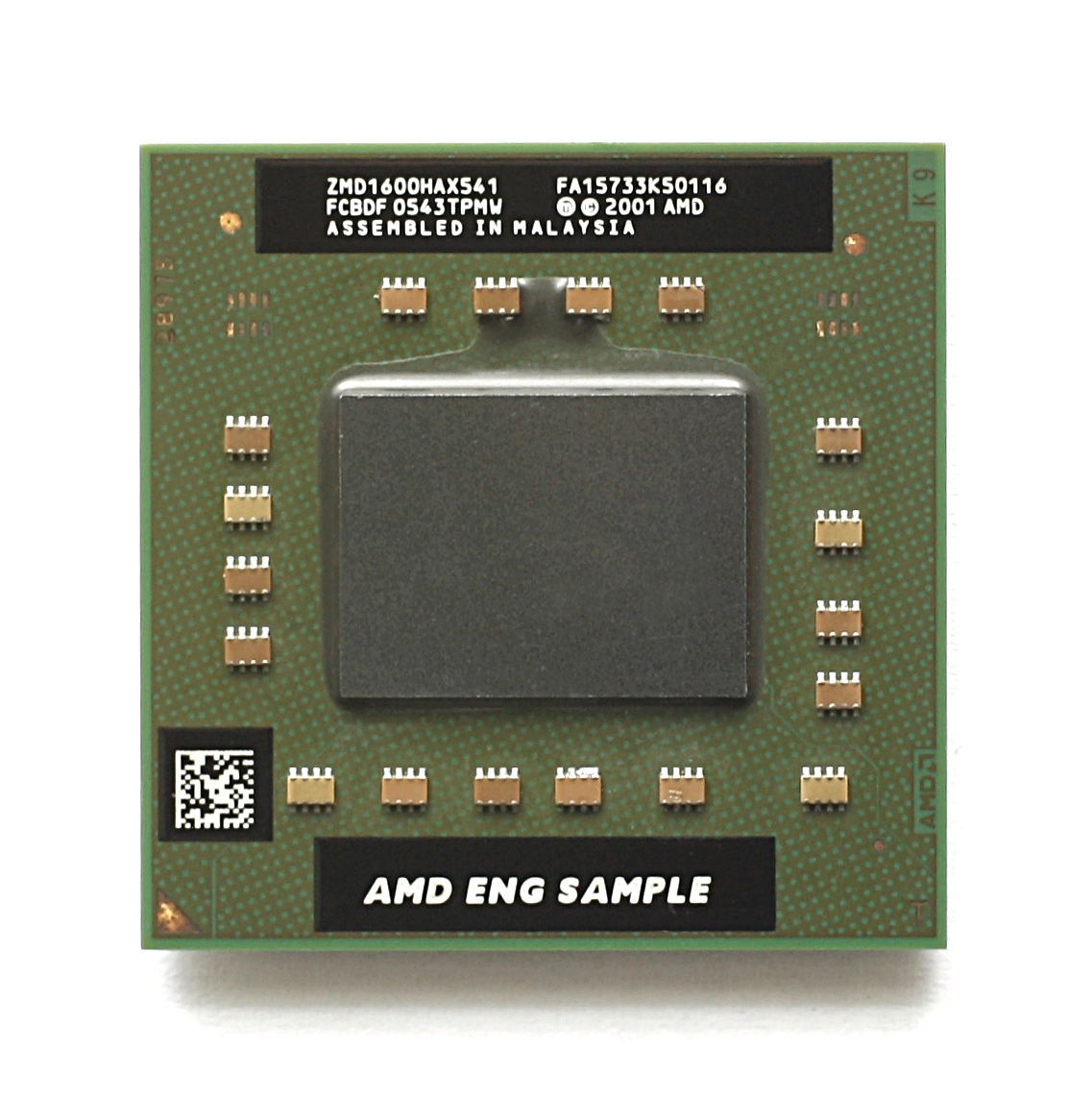 WorldTurion 64 X2
Dual-core mobile processor from AMD for laptopsCPU · x86 · 2006
🇺🇸 United StatesAMD FireStream
GPGPU co-processor cards for supercomputing and stream processing.GPU · GPU architecture · 2006