
AMD Turion
Low-power x86-64 mobile processors from AMD
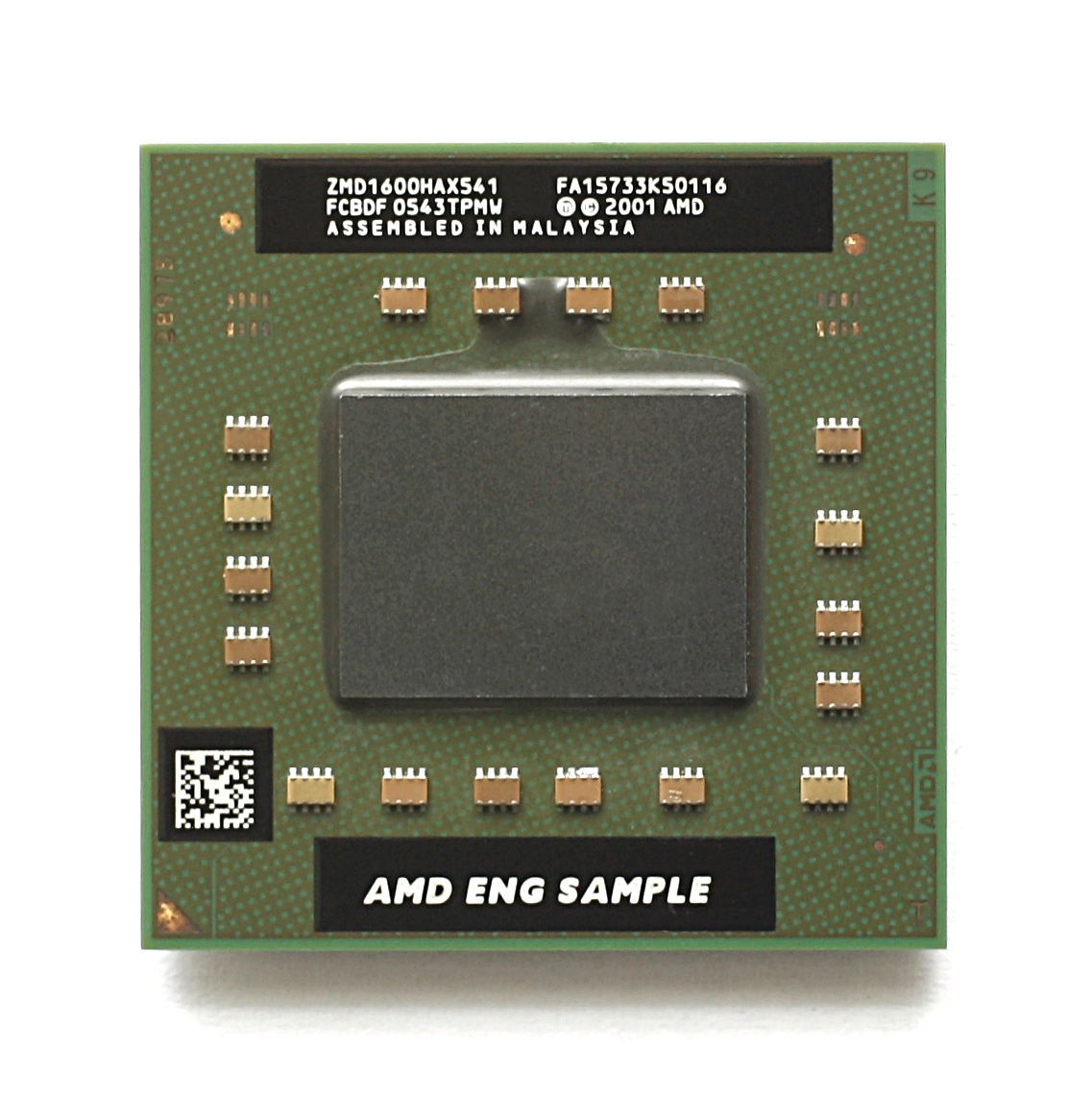
AMD Turion is a brand of x86-64 mobile processors designed for low power consumption in laptops. Launched in 2005, it competed with Intel’s Pentium M and Core series by offering 64-bit computing and dual-core options in portable devices.
- Launched in March 2005 with Socket 754
- Features independent core voltage and frequency control
- Fabricated on 90 nm, 65 nm, and 45 nm processes
- Supports DDR, DDR2, and DDR3 memory types
- Thermal design power ranges from 25 W to 35 W
What it is
AMD Turion is a brand name for a series of x86-64 mobile processors developed by AMD. These chips are designed for low power consumption, making them suitable for laptops and portable computers. The brand covers several generations, starting with the single-core Turion 64 and evolving into dual-core models like the Turion 64 X2 and Turion X2 Ultra. They compete directly with Intel’s mobile offerings, such as the Pentium M and Core series, by providing 64-bit performance in energy-efficient packages.
How it came about
The first Turion 64 processors launched in March 2005 using Socket 754. AMD later introduced the Turion 64 X2 in May 2006, bringing dual-core technology to its mobile line after several delays. This was followed by the Turion X2 Ultra in June 2008, which was part of the Puma mobile platform. The Turion II series arrived later, based on the K10.5 architecture, continuing the focus on mobile efficiency and performance.
Inside the chip
Early Turion chips used the K8 architecture with features like PowerNow! for battery saving. The Turion 64 X2 introduced dual cores and AMD Virtualization Technology. The Turion X2 Ultra, codenamed Griffin, added independent voltage and frequency control for each core and the northbridge. This allowed dynamic adjustment to workloads, reducing power use during light tasks. Later models like the Turion II used the K10.5 architecture with improved instruction sets like SSE4a and support for DDR3 memory.
How it was made
Turion processors were fabricated using silicon-on-insulator (SOI) wafers. The process nodes ranged from 90 nm for early models like Lancaster and Taylor to 65 nm for Tyler and Griffin, and finally 45 nm for the Caspian-based Turion II. Manufacturing involved 300 mm wafers. The chips were packaged for Socket 754 in early versions and Socket S1 for later dual-core and Ultra variants.
Where it went
These processors are found in laptops and notebooks. They target users who need portable computing with reasonable performance and good battery life. The Turion brand was positioned against Intel’s mobile CPUs, aiming to provide a viable alternative for mainstream and business laptops. Models varied in performance ratings, allowing manufacturers to choose chips based on desired speed and power limits.
Versions and family
The family includes Turion 64 (single-core), Turion 64 X2 (dual-core), Turion X2 Ultra (enhanced dual-core), and Turion II (K10.5 based). Codenames include Lancaster, Richmond, Taylor, Trinidad, Tyler, Lion, Griffin, and Caspian. Naming schemes evolved from letter-number combinations indicating core count and mobility to simpler numeric ratings in the Turion II line. Predecessors and successors within the brand reflect architectural shifts from K8 to K10.5.
Why it matters
Turion established AMD’s presence in the 64-bit mobile market. It offered consumers an alternative to Intel’s dominance in laptops during the mid-2000s. The introduction of dual-core and advanced power management features helped extend battery life and improve multitasking capabilities in portable devices. The brand demonstrated AMD’s ability to adapt desktop architectures for mobile constraints.


Questions people ask about AMD Turion
What is the AMD Turion?
AMD Turion is a brand of x86-64 mobile processors designed for laptops. It focuses on low power consumption and includes single-core and dual-core models that compete with Intel’s mobile CPU lines.
When was the first Turion released?
The first Turion 64 processors were released in March 2005. They used Socket 754 and featured single-core designs with power-saving technologies like PowerNow!.
What architectures do Turion chips use?
Early Turion models are based on the K8 microarchitecture. Later versions, such as the Turion II, use the K10.5 architecture. All support the x86-64 instruction set.
How much power do Turion processors use?
Turion processors have a thermal design power (TDP) ranging from 25 watts to 35 watts. Features like independent voltage scaling help reduce power usage during light workloads.
Good reading and sources
The facts on this page come from the Wikipedia article "AMD Turion", written by its contributors and used under the CC BY-SA 4.0 licence, and from its Wikidata record (CC0). EveryChip rewrote the text in its own words, with AI assistance, and compares every page with the article to make sure no passage is copied. It may be reused under the same CC BY-SA 4.0 licence with a link back.
It may contain mistakes, and figures change over time. Nothing here is investment or buying advice. If something is wrong, tell us. Last refreshed 2026-11-14.
Like AMD Turion
All CPUs and microprocessors WorldVIA C7
Low-power x86 processor for compact and mobile devicesCPU · x86 · 2005
 🇺🇸 United StatesAMD APU
AMD chips combining CPU and GPU on one dieCPU · x86 · 2011
 🇺🇸 United StatesMediaGX
Integrated x86 system on a chip for low-cost PCsSoC · x86 · 1997
🇺🇸 United StatesSteamroller
Third-generation AMD microarchitecture for APUsCPU · x86 · 2014
More from AMD
All of them 🇺🇸 United StatesAthlon 64 X2
First native dual-core desktop CPU from AMDCPU · x86 · 2005
 🇺🇸 United StatesSempron
Budget desktop and mobile CPUs from AMDCPU · x86 · 2004
WorldTurion 64 X2
Dual-core mobile processor from AMD for laptopsCPU · x86 · 2006
🇺🇸 United StatesAMD FireStream
GPGPU co-processor cards for supercomputing and stream processing.GPU · GPU architecture · 2006