Other foundries
Tower, VIS, Hua Hong, X-FAB, SkyWater and others. 305 chips on EveryChip so far.
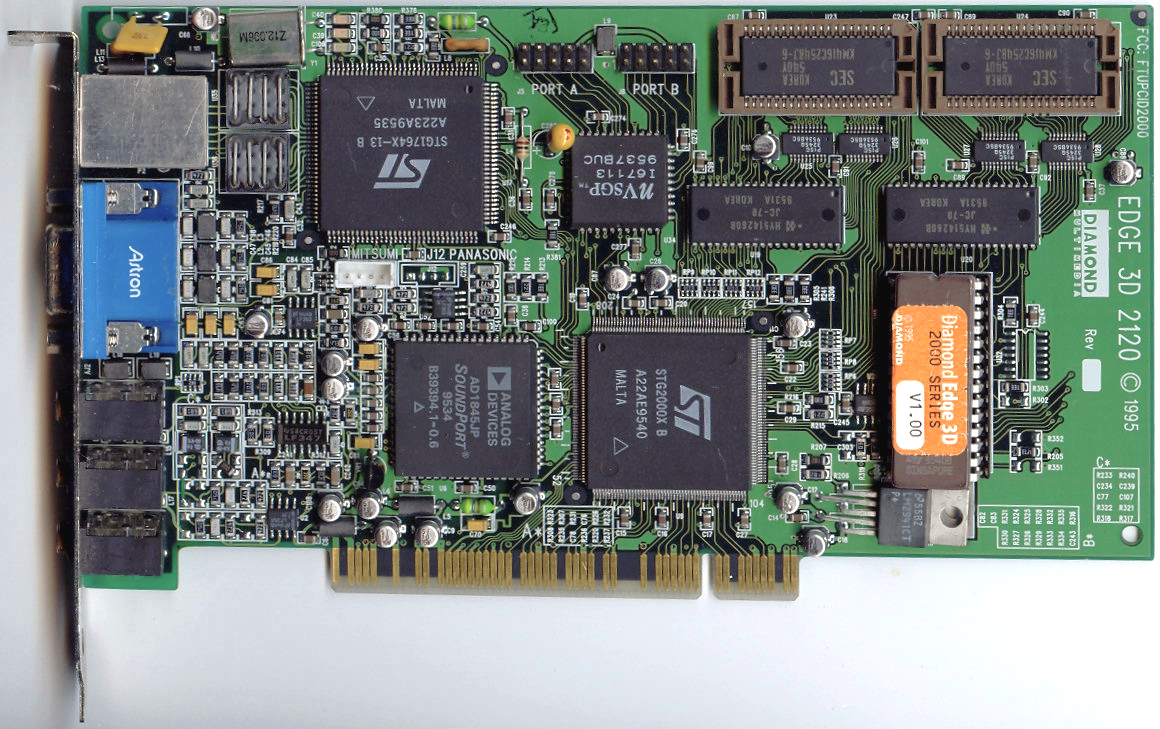
Beyond the giants, many foundries make specialised or mature-node chips: Tower Semiconductor in Israel, Vanguard International (VIS) and PSMC in Taiwan, Hua Hong in China, X-FAB in Germany and SkyWater in the United States, among others. In earlier years Chartered of Singapore and the European firm SGS-Thomson made chips for designers without fabs, including early Nvidia graphics chips.
Specialty foundries
These foundries focus on analog, power, image sensors, radio, MEMS and embedded memory, often on 200 mm wafers and older nodes. Tower, founded in 1993, was to be bought by Intel, but the deal was dropped in August 2023 after it did not receive Chinese regulatory approval in time. SkyWater, in Minnesota, released an open-source 130 nm process design kit with Google in 2020.
Early foundry partners
Before TSMC dominated, chip start-ups often used spare capacity in established firms' fabs. Nvidia's first chips, the NV1 and the RIVA 128, were made by SGS-Thomson. Chartered made some of AMD's Athlon 64 processors and helped make the Xbox 360's processor. PSMC is the technology partner for India's first commercial fab, at Dholera.
Famous other foundries chips


Further reading
 🇹🇼 TaiwanVortex86
x86-compatible system-on-chip for embedded systemsSoC · x86
 🇺🇸 United StatesANTIC
Video display controller for Atari 8-bit computers and the 5200 consoleSoC · Other · 1978
WorldAmiga Hombre
Unreleased RISC-based graphics and system chipset for Amiga computers.GPU · RISC
 🇺🇸 United StatesCTIA and GTIA
Video display controllers for Atari 8-bit computers and the 5200 console.SoC · Other · 1979
 🇺🇸 United StatesAY-3-8500
First dedicated video game chip for home consolesSoC · Other · 1976
 🇯🇵 JapanRicoh 2A03
8-bit CPU and sound chip for the Nintendo Entertainment SystemCPU · 68k · 1983
 🇺🇸 United StatesGeode
Low-power x86 system-on-chip for embedded devicesSoC · x86 · 1999
🇺🇸 United StatesHP Saturn
HP's 4-bit calculator microprocessor family, introduced in 1984CPU · Other · 1984
 🇺🇸 United StatesOMAP
Texas Instruments system on chip for mobile multimediaSoC · Arm
 🇨🇭 SwitzerlandNomadik
Multimedia application processors for mobile devicesSoC · Arm · 2003
 🇺🇸 United StatesPSoC
Configurable microcontroller with mixed-signal blocksMicrocontroller · Arm · 2002
 🇯🇵 JapanExpeed
Nikon media processor series for digital camerasSoC · Arm · 2007
 🇯🇵 JapanDIGIC
Canon image processor family for cameras and camcordersSoC · Arm · 2002
🇯🇵 JapanMilbeaut
Image and video processing system on a chip for camerasSoC · Arm · 2000
🇯🇵 JapanBionz
Sony image processing chips for digital camerasSoC · Arm · 2007
 🇯🇵 JapanVenus Engine
Panasonic image processing chip for Lumix camerasSoC · Other · 2002
 WorldAgnus
Address generator and DMA controller for Amiga computersSoC · Other
 WorldOpenRISC
Open-source RISC processor architecture and reference implementationsCPU · RISC · 2000
 🇹🇼 TaiwanVIA CoreFusion
Low-power x86 system-on-chip line by VIA TechnologiesSoC · x86 · 2003
 🇳🇱 NetherlandsNexperia
Brand for NXP media and mobile system-on-chipsSoC · Arm · 1999
 WorldMilkymist SoC
Open-source system-on-chip for video synthesis and reconfigurable computingSoC · RISC · 2010
 🇯🇵 JapanMSX-Engine
Integrated circuit combining MSX computer functions into one chip.SoC · Other
 🇺🇸 United StatesTI-AR7
Single-chip ADSL router solution with MIPS processor and DSPSoC · MIPS
Photo credits on this page
The small pictures above come from Wikimedia Commons under free licences. Some are cropped to fit.
- Microsoft XCPU (Xenon): Konstantin Lanzet, CC BY 3.0, source
- ANTIC: Rod Castler, CC BY-SA 3.0, source
- OpenRISC: Lampret, Damjan, CC BY-SA 4.0, source
- OMAP: pandaboard.org, CC BY-SA 3.0, source
- Nomadik: Nixdorf, CC BY-SA 3.0, source
- NV1: Swaaye at English Wikipedia, CC BY-SA 3.0, source
- RIVA 128: Raimond Spekking, CC BY-SA 4.0, source
- PSoC: NobbiP, CC BY-SA 3.0, source
- Expeed: Raimond Spekking, CC BY-SA 4.0, source
- DIGIC: Raimond Spekking, CC BY-SA 4.0, source
- Venus Engine: Solomon203, CC BY-SA 3.0, source
- Agnus: Raimond Spekking, CC BY-SA 4.0, source
- CTIA and GTIA: Rodrigo Castro, CC BY-SA 3.0, source
- AY-3-8500: Raimond Spekking, CC BY-SA 4.0, source
- Ricoh 2A03: PantheraLeo1359531, CC BY 4.0, source
- Milkymist SoC: Originally uploaded by Nerd bzh (Transferred by clusternote ), CC BY-SA 3.0, source
- Geode: Appaloosa, CC BY-SA 3.0, source
- VIA CoreFusion: Konstantin Lanzet, CC BY-SA 3.0, source
- Nexperia: Ikknmnmnm, CC BY-SA 4.0, source
- MSX-Engine: Yaca2671, CC BY-SA 3.0, source
- TI-AR7: Raimond Spekking, CC BY-SA 4.0, source
- Athlon 64: Astraera, CC BY-SA 4.0, source
- Vortex86: 2008Computex_DMnP_Vortex86DX.jpg : Rico Shen derivative work: Mewtu (, CC BY-SA 3.0, source