
Milkymist SoC
Open-source system-on-chip for video synthesis and reconfigurable computing
The Milkymist SoC is an open-hardware system-on-chip designed by M-Labs and manufactured by Qi Hardware. Released in 2010, it features a custom RISC processor and dedicated video units to power the Flickernoise visual synthesizer.
- Uses LatticeMico32 RISC core with MMU
- Released as open hardware at CCC 2010
- Powers Flickernoise video synthesis software
- Implemented on Xilinx Spartan-6 FPGA
- NASA used its memory controller design
What it is
The Milkymist SoC is a commercialised system-on-chip with freely available hardware description language sources. M-Labs developed the design, while Qi Hardware handled manufacturing. It serves as the heart of the Milkymist One, a device built for real-time video synthesis and reconfigurable computing tasks. The chip integrates a general-purpose processor with specialised units for graphics and floating-point maths.
How it came about
Former Openmoko employees founded Qi Hardware to produce the device. The project debuted at the Chaos Communication Congress in 2010 as an early kit for developers and open-source advocates. Later versions included enclosures and accessories. The design files for the circuit board and case were shared under Creative Commons licenses, encouraging community modification and study.
Inside the chip
At its core lies the LatticeMico32, a 32-bit big-endian RISC processor with a memory management unit. This CPU works alongside a texture mapping unit and a programmable VLIW coprocessor for floating-point operations. These components enable the Flickernoise software to render complex visuals. The chip connects peripherals via three bridged buses, mixing the Wishbone protocol with custom links for high-speed memory access.
How it was made
The SoC runs on a Xilinx XC6SLX45 Spartan-6 field-programmable gate array. This approach allows the hardware logic to be defined in code rather than fixed silicon. The board includes 128 MB of DDR333 SDRAM and 32 MB of parallel flash storage. Most custom components, excluding the LM32 core, are licensed under the GNU General Public License.
Where it went
The primary application is the Milkymist One video synthesizer. It accepts multi-standard video inputs and outputs SVGA signals. Musicians and visual artists use it for live performances, controlling effects via MIDI, DMX512, or OpenSoundControl. NASA also utilised the memory controller design in its Connect experiment, demonstrating its reliability in space-related testing environments.
Versions and family
The initial release was a bare board for hackers. A refined version followed with a case and extra peripherals. The architecture supports RTEMS and micro-Linux operating systems. An experimental LLVM backend exists for the processor. The QEMU emulator allows developers to test software binaries on standard computers without needing the physical hardware.
Why it matters
The project promoted open hardware principles within the embedded systems community. It was featured in Make magazine’s gift guide and presented at major free software conferences like FOSDEM. By releasing design files openly, it enabled others to study and adapt the technology. The memory controller component saw adoption in external scientific projects, extending its influence beyond its original niche.
Problems and reception
Early adopters tolerated software and FPGA design limitations inherent in the first developer kits. The device offered lower latency than PC-based setups for live visual performance, appealing to pioneers in interactive media who required precise timing and responsiveness.

Questions people ask about Milkymist SoC
What processor does the Milkymist SoC use?
It uses the LatticeMico32, a 32-bit big-endian RISC core. M-Labs contributors later added a memory management unit to this processor, which supports GCC compilation and can run real-time operating systems.
Who manufactured the Milkymist One board?
Qi Hardware, a startup formed by former Openmoko employees, manufactured the device. They sold the initial early developer kits at the Chaos Communication Congress in 2010 before releasing refined versions.
What is the main software application for this chip?
Flickernoise is the primary video synthesis software. It runs on the RTEMS operating system and uses the chip’s texture mapping and floating-point units to create interactive visuals for live performances.
Good reading and sources
- Milkymist SoC on WikipediaEncyclopedia
- More photos on Wikimedia CommonsPhotos
- Wikidata recordOpen data
The facts on this page come from the Wikipedia article "Milkymist SoC", written by its contributors and used under the CC BY-SA 4.0 licence, and from its Wikidata record (CC0). EveryChip rewrote the text in its own words, with AI assistance, and compares every page with the article to make sure no passage is copied. It may be reused under the same CC BY-SA 4.0 licence with a link back.
It may contain mistakes, and figures change over time. Nothing here is investment or buying advice. If something is wrong, tell us. Last refreshed 2026-11-14.
Like Milkymist SoC
All systems on a chip WorldOpenRISC
Open-source RISC processor architecture and reference implementationsCPU · RISC · 2000
 🇨🇳 ChinaESP8266
Low-cost Wi-Fi microcontroller chip by Espressif SystemsMicrocontroller · RISC · 2014
 🇨🇳 ChinaESP32
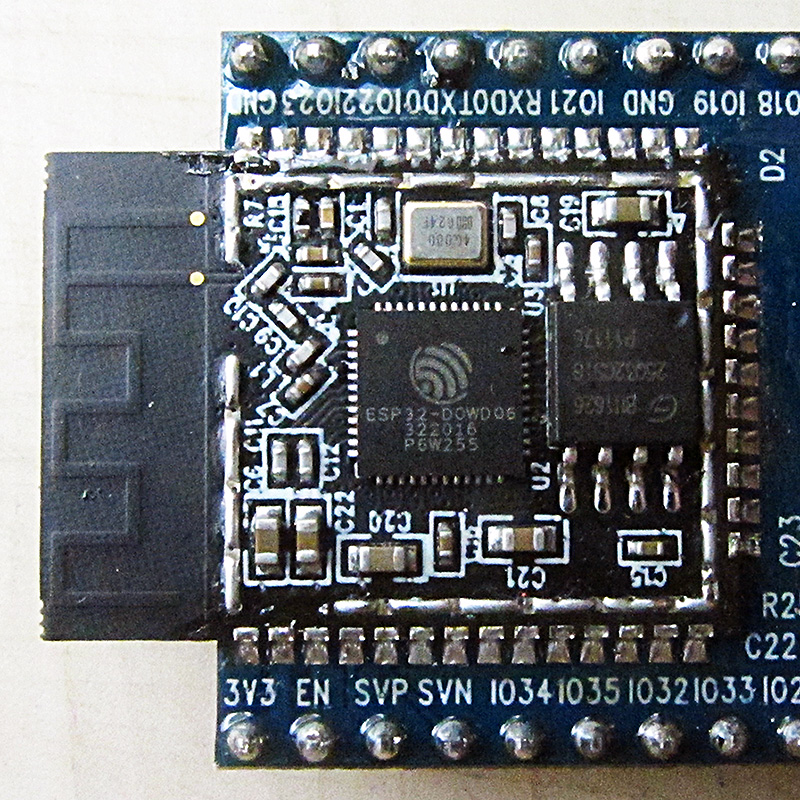
Low-cost Wi-Fi and Bluetooth microcontroller family from Espressif SystemsMicrocontroller · RISC · 2016
 🇨🇳 ChinaESP32
Low-cost Wi-Fi and Bluetooth microcontroller familyMicrocontroller · RISC · 2016