Graphics processors
GeForce, Radeon, Mali, Adreno and the graphics chips of consoles and arcades. 176 chips on EveryChip so far.
A graphics processing unit (GPU) is a chip built to draw images: it works out the colour of millions of pixels many times a second. Because each pixel can be worked on at the same time as the others, a GPU has thousands of small arithmetic units running in parallel. Nvidia marketed its GeForce 256 of 1999 as the first GPU, and since the late 2000s GPUs have also been used for science and AI.
How a GPU differs from a CPU
A CPU has a few powerful cores tuned to finish one task quickly. A GPU has many simpler cores grouped into blocks, which Nvidia calls streaming multiprocessors and AMD calls compute units. They run the same instruction on many pieces of data at once. GPUs also have very fast memory, such as GDDR or HBM, because they must feed all those units at the same time.
From games to general computing
Early graphics chips had fixed stages for transforming shapes and filling in pixels. From the early 2000s these became programmable shaders, small programs written by game developers. In 2006 Nvidia's Tesla architecture merged them into one unified design, and its CUDA platform let programmers use the GPU for any parallel work. That opened the way to GPU supercomputers and, after 2012, to deep learning.
Famous GPU chips
 GeForce 256Nvidia's 1999 chip, sold as the first GPU
 RIVA 128Nvidia's first big success, 1997
 TeslaNvidia's 2006 unified shader design that brought CUDA
 Graphics Core NextAMD's GPU architecture from 2012
 RDNAAMD's gaming GPU architecture from 2019Ada LovelaceNvidia's 2022 GeForce RTX 40 series
 MaliArm's GPUs, in many Android phonesAdrenoQualcomm's phone GPUs
Further reading
 WorldSiS 300
Mainstream graphics processor from Silicon Integrated SystemsGPU · GPU architecture · 2000
🇳🇴 NorwayMali
A family of graphics processing unit cores licensed by Arm for mobile and embedded chips.GPU · Other · 2005
 🇨🇦 CanadaATI Rage
Graphics chipset series by ATI with 2D, video and 3D accelerationGPU · GPU architecture · 1996
🇺🇸 United StatesRDNA 2
AMD GPU microarchitecture for gaming and consolesGPU · GPU architecture · 2020
🇯🇵 JapanPICA200
Low-power GPU core for embedded devices and handheld consolesGPU · GPU architecture · 2005
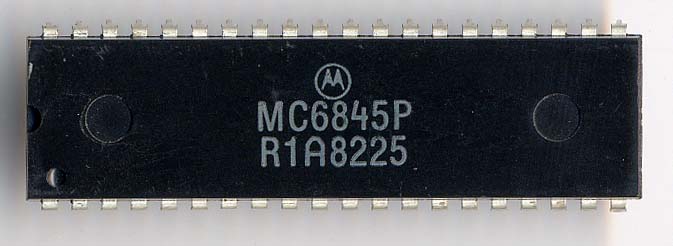 🇺🇸 United StatesMotorola 6845
Display controller for 1980s home computers and early PC graphics cardsGPU
 WorldAmiga Enhanced Chip Set
Second-generation graphics and audio chipset for Amiga computersGPU · 1990
 🇺🇸 United StatesMotorola 6847
Simple video chip for 1980s home computersGPU · Other · 1978
🇺🇸 United StatesAmiga Advanced Graphics Architecture
Third-generation graphics chipset for Commodore Amiga computersGPU · Other · 1992
 🇺🇸 United StatesOriginal Chip Set
Custom chipset for early Commodore Amiga computersGPU · Other · 1985
🇺🇸 United StatesAdreno
Qualcomm's in-house GPU cores for Snapdragon mobile chipsGPU · GPU architecture · 2009
 🇺🇸 United StatesKelvin
Nvidia GPU microarchitecture for GeForce 3 and 4 seriesGPU · GPU architecture · 2001
 🇺🇸 United StatesGeForce RTX 40 series
Nvidia consumer graphics cards using Ada Lovelace architectureGPU · GPU architecture · 2022
WorldGraphics Core Next
AMD graphics processor architecture introduced in 2012GPU · GPU architecture · 2012
 🇺🇸 United StatesRadeon RX 7000 series
AMD RDNA 3 graphics cards with chiplet designGPU · GPU architecture · 2022
 🇬🇧 United KingdomVideoCore
Low-power mobile multimedia processor series by BroadcomGPU · Arm
WorldMpact 2
Vector-processing media co-processor for graphics and audioGPU · Other · 1996
 🇫🇷 FranceThomson EF936x
Graphic Display Processor by Thomson-EFCIS from the late 1970sGPU · 1977
 🇯🇵 JapanYamaha V9958
Video display processor for MSX2+ and turbo R computersGPU
 🇺🇸 United StatesMOS Technology VIC
Video and sound chip for the Commodore VIC-20 computerGPU · Other · 1979
 🇺🇸 United StatesVIC-II
Video and graphics chip for the Commodore 64 home computer.GPU · Other · 1982
WorldAmiga Hombre
Unreleased RISC-based graphics and system chipset for Amiga computers.GPU · RISC
 🇯🇵 JapanYamaha V9938
Video display processor for MSX2 home computersGPU · Other · 1985
WorldNVENC
Dedicated video encoding hardware in Nvidia GPUsGPU · GPU architecture · 2012
WorldAAA chipset
Unreleased next-generation multimedia chipset for the Amiga computerGPU · 1992
🇺🇸 United StatesIntel i750
Two-chip video processor for early digital video captureGPU · Other · 1991
🇯🇵 JapanULTRAY2000
Concept GPU by DMP with MAESTRO lighting techGPU · GPU architecture · 2005
Photo credits on this page
The small pictures above come from Wikimedia Commons under free licences. Some are cropped to fit.
- GeForce 256: Hyins, Public domain, source
- Mali: Open Grid Scheduler / Grid Engine, CC0, source
- ATI Rage: Trio3D, CC BY-SA 3.0, source
- Motorola 6845: Unknown author, Public domain, source
- Amiga Enhanced Chip Set: Augiasz, CC BY 2.5, source
- Tesla: Hyins, Public domain, source
- Kelvin: Russell & Sons, London., No restrictions, source
- RIVA 128: Raimond Spekking, CC BY-SA 4.0, source
- GeForce RTX 40 series: 极客湾Geekerwan, CC BY 3.0, source
- Graphics Core Next: AMD, Public domain, source
- RDNA: Fritzchens Fritz, CC0, source
- Radeon RX 7000 series: Shinobara, CC BY 4.0, source
- VideoCore: Evan-Amos, Public domain, source
- Thomson EF936x: VintageChipUser, CC BY-SA 4.0, source
- Yamaha V9958: Yaca2671, CC BY-SA 3.0, source
- MOS Technology VIC: user:idrougge / sv:Användare:Jonas_H, Public domain, source
- VIC-II: Christian Taube, CC BY-SA 2.5, source
- Agnus: Raimond Spekking, CC BY-SA 4.0, source
- Yamaha V9938: Yaca2671, CC BY-SA 3.0, source
- Motorola 6847: Darklanlan, CC BY 4.0, source
- SiS 300: futase_tdkr, Public domain, source