AAA chipset
Unreleased next-generation multimedia chipset for the Amiga computer
Commodore International designed the AAA chipset to replace the AGA system in Amiga computers. Work began in 1988 with silicon prototypes appearing in 1992. Financial issues halted the project in 1993 before mass production. It featured advanced graphics and audio capabilities that never reached consumers.
- Project started in 1988 and halted in 1993
- Supported resolutions up to 1280 x 1024 pixels
- Featured up to 1 million transistors in total
- Three Nyx prototypes were built for testing
- Never released due to Commodore bankruptcy
What it is
The AAA chipset was a planned upgrade for the Amiga home computer line. Commodore International started this secret project in 1988 to succeed the Advanced Graphics Architecture. Engineers created silicon versions between 1992 and 1993. The design aimed to boost graphics and sound performance significantly. It included support for higher resolutions and better colour depth. Lack of funding stopped the project in 1993. No commercial products used these chips.
How it came about
Design discussions began in 1988 as a confidential initiative. The team revised the plans many times over several years. First silicon prototypes were fabricated in 1992 and 1993. Three prototype boards named Nyx served as test beds. These boards helped debug the new chips. Commodore faced financial trouble during this period. The company declared bankruptcy before finishing the designs. This ended the AAA project permanently.
Inside the chip
The architecture used three main custom chips. Andrea managed memory and direct memory access channels. Linda handled line buffering and pixel decompression. Mary controlled audio inputs and outputs. The system supported 24-bit hybrid graphics modes. It could display up to 1280 by 1024 pixels. Audio features included eight voices with 16-bit resolution. The design allowed asynchronous operation independent of the CPU clock. This flexibility meant it could work with various processors.
How it was made
Silicon versions were produced in 1992 and 1993. The total transistor count reached one million in dual-system configurations. Early chips had several bugs. The look-up table was scrambled and required software fixes. Memory controller errors locked the die into specific modes. Bus control logic faults prevented proper testing of other components. These issues remained unresolved when funding ran out.
Where it went
No consumer devices ever shipped with AAA hardware. The chips existed only in prototype form. Engineers used Nyx boards to test functionality. These demonstrators validated ideas like chunky pixel modes. The technology aimed to improve animations and video capture. Plans for raw floppy disk support were included. Direct interfaces for CD-ROM drives were also part of the specification.
Versions and family
The Nyx prototypes were the only physical implementations. They were not intended for sale. The Acutiator architecture was meant for final systems. After AAA failed, focus shifted to the Hombre project. Hombre proposed a clean slate design with a different CPU. It included a custom 3D instruction set. AAA remains the immediate predecessor to Hombre in Amiga history.
Why it matters
The chipset generated significant interest in trade press. It represented a major leap forward for Amiga graphics. Its cancellation marked the end of Commodore's internal chip development. Later attempts to save the Amiga brand often cited AAA or Hombre as necessary steps. The unreleased technology influenced future discussions about computer multimedia standards.
Problems and reception
Developers noted early silicon problems during testing. Scrambled colour tables required workarounds. Memory and bus bugs limited full validation. Despite these flaws, the potential was clear. The industry watched closely as Commodore struggled. Bankruptcy prevented any public release or review.
Questions people ask about AAA chipset
Was the AAA chipset ever sold to the public?
No, the AAA chipset was never commercially released. Commodore International ran out of funds in 1993 before completing the design. Only a few prototype boards were built for internal testing purposes.
What were the main chips in the AAA design?
The design relied on three custom chips. Andrea handled memory and data transfer. Linda managed display buffering and pixel decompression. Mary controlled audio processing and peripheral interfaces for the system.
Why was the AAA project cancelled?
Commodore International faced severe financial difficulties. The company lacked the money needed for further chip revisions and mass production. This led to bankruptcy in 1994, ending all internal hardware development projects.
Good reading and sources
The facts on this page come from the Wikipedia article "Advanced Amiga Architecture chipset", written by its contributors and used under the CC BY-SA 4.0 licence, and from its Wikidata record (CC0). EveryChip rewrote the text in its own words, with AI assistance, and compares every page with the article to make sure no passage is copied. It may be reused under the same CC BY-SA 4.0 licence with a link back.
It may contain mistakes, and figures change over time. Nothing here is investment or buying advice. If something is wrong, tell us. Last refreshed 2026-11-14.
Like AAA chipset
All graphics processors WorldAmiga Enhanced Chip Set
Second-generation graphics and audio chipset for Amiga computersGPU · 1990
 🇨🇦 CanadaATI Rage
Graphics chipset series by ATI with 2D, video and 3D accelerationGPU · GPU architecture · 1996
More from Commodore International
All of them 🇺🇸 United StatesCommodore REU
External RAM expansion modules for Commodore home computersMemory · 1986
 🇺🇸 United StatesOriginal Chip Set
Custom chipset for early Commodore Amiga computersGPU · Other · 1985
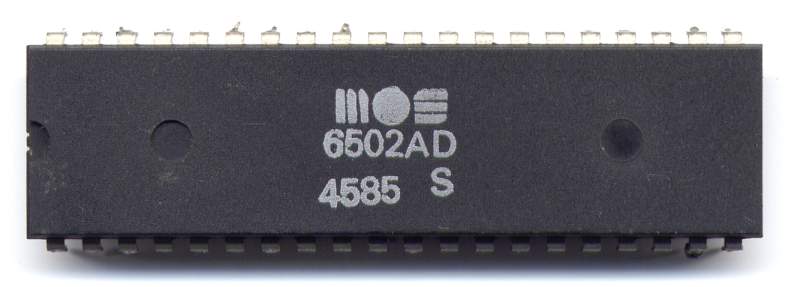 🇺🇸 United StatesMOS Technology 6502
An 8-bit microprocessor from 1975 that made cheap home computing possibleCPU · 8-bit · 1975