
Super FX
SNES cartridge coprocessor for 3D polygon rendering
The Super FX is a custom RISC coprocessor designed by Argonaut Games for Nintendo SNES cartridges. Released in 1992, it enabled advanced 2D and 3D graphics by rendering polygons to a frame buffer, powering titles like Star Fox.
- Designed by Argonaut Games for Nintendo SNES cartridges
- First version clocked at 10.7 MHz effective speed
- Enabled 3D polygon rendering in Star Fox
- Codename MARIO stands for Mathematical Argonaut Rotation Input/Output
- GSU-2 variant uses 112-pin package for more memory
What it is
The Super FX is a specialized coprocessor added to select Super Nintendo Entertainment System game cartridges. Designed by Argonaut Games and introduced in 1992, it serves as a graphics support unit. Its primary function is to facilitate advanced two-dimensional and three-dimensional graphics that the base console could not handle alone. By acting as a dedicated accelerator, it allows games to render complex visual effects and polygon-based models directly on older hardware.
How it came about
Argonaut Games engineers Ben Cheese, Rob Macaulay, and James Hakewill led the design team. The project began with an intent to bring the flight simulator Starglider to the Nintendo Entertainment System. After demonstrating a prototype in 1990, Nintendo suggested targeting the newer Super Famicom instead. The chip was codenamed MARIO during development, leading to urban legends about a cancelled game. High manufacturing costs and extended development times limited the number of titles produced using this technology.
Inside the chip
This custom RISC processor functions as a graphics accelerator. It draws polygons into a frame buffer located in adjacent RAM. Data transfers periodically to the main video memory via direct memory access for display. The initial version runs at an effective 10.7 MHz, while the revised GSU model reaches 21 MHz. All versions share the same instruction set but differ in packaging and pin counts. The GSU-2 uses a 112-pin package, allowing access to larger external memory compared to the original 100-pin design.
How it was made
Specific manufacturing details such as the fabrication plant or transistor count are not provided in the available records. The chip was produced with different physical packages over its lifespan. The original design utilized a 100-pin configuration. Later revisions expanded this to 112 pins to support additional addressing capabilities. These physical changes enabled the connection of more external read-only or random-access memory within the game cartridge.
Where it went
The chip powered Star Fox, which rendered hundreds of simultaneous three-dimensional polygons for ships and obstacles. Yoshi's Island employed it for sprite scaling and stretching effects rather than full 3D models. Cartridges containing the chip feature extra contacts at the bottom. These connect to unused slots in the console port, meaning these games do not work with older adapters like the Game Genie. An emulated version called Super FX 3 appeared in a 2025 Doom re-release.
Versions and family
The first iteration is commonly known simply as Super FX. It was later updated to the Super FX GSU, which offered higher clock speeds. The GSU-2 variant introduced a new pin layout to support larger memory addresses. An unofficial software implementation named Super FX 3 runs on modern hardware inside specialty cartridges. Several planned titles, including Star Fox 2 and FX Fighter, were either delayed or cancelled during the original era.
Why it matters
The Super FX demonstrated that cartridge-based systems could handle real-time polygon rendering. It allowed Nintendo to compete with emerging 3D capabilities without redesigning the core console. However, the increased cost of production meant these games retailed at higher prices. This economic factor restricted the library size compared to standard titles. The technology remains notable for enabling early 3D experiences on sixteen-bit hardware.
Problems and reception
High development times and manufacturing expenses limited the adoption of the chip. Fewer games were made using Super FX compared to the rest of the system library. The higher retail price point for these titles may have affected consumer uptake. Despite these commercial constraints, the chip is remembered for its technical achievement in bringing three-dimensional graphics to the Super Nintendo platform.
Questions people ask about Super FX
What does the Super FX chip do?
It acts as a graphics support unit within SNES cartridges. The chip renders three-dimensional polygons and assists with advanced two-dimensional effects. It writes data to a frame buffer in RAM, which then transfers to the console video memory for display on television screens.
Why do Super FX games have extra pins on the cartridge?
The chip requires additional connections to communicate with the console. Cartridges featuring this hardware include extra contacts at the bottom. These plug into slots in the SNES port that are otherwise unused, preventing compatibility with older adapters like the Game Genie.
What is the difference between Super FX and GSU?
The original Super FX runs at an effective 10.7 MHz. The revised GSU model operates at 21 MHz. Both share the same instruction set, but the GSU-2 variant uses a 112-pin package instead of 100 pins, allowing access to larger external memory sizes.
Good reading and sources
The facts on this page come from the Wikipedia article "Super FX", written by its contributors and used under the CC BY-SA 4.0 licence, and from its Wikidata record (CC0). EveryChip rewrote the text in its own words, with AI assistance, and compares every page with the article to make sure no passage is copied. It may be reused under the same CC BY-SA 4.0 licence with a link back.
It may contain mistakes, and figures change over time. Nothing here is investment or buying advice. If something is wrong, tell us. Last refreshed 2026-11-14.
Like Super FX
All console and arcade chips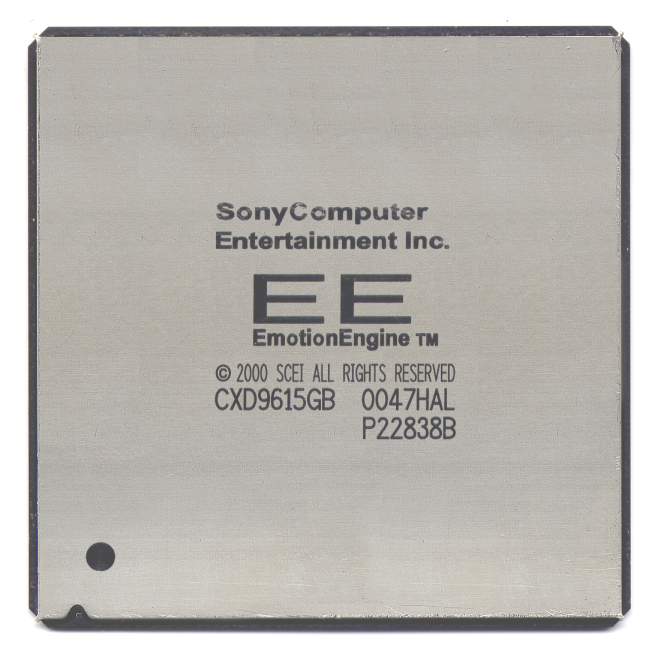 🇯🇵 JapanEmotion Engine
Sony and Toshiba's CPU for the PlayStation 2 consoleCPU · MIPS · 1999
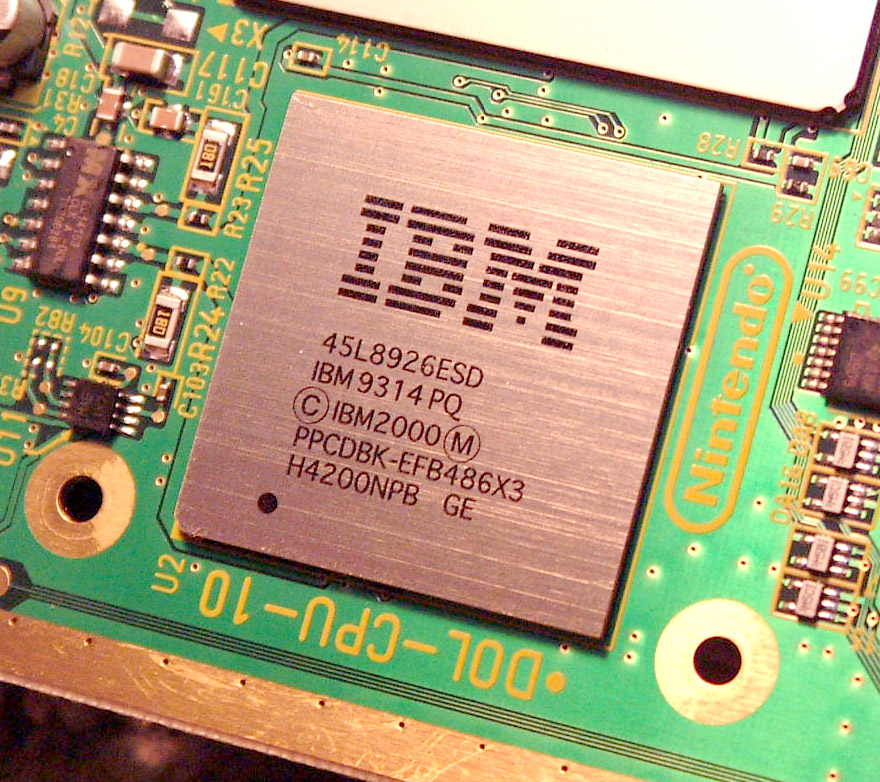 🇺🇸 United StatesGekko
Custom PowerPC CPU for the Nintendo GameCubeCPU · Power · 2000
 WorldGeForce 3 series
Third-generation Nvidia GPU with programmable shadersGPU · GPU architecture · 2001
 🇺🇸 United States and 1 moreMicrosoft XCPU (Xenon)
Three-core PowerPC CPU at the heart of the Xbox 360 consoleCPU · Power · 2003
More from Argonaut Games
All of them 🇺🇸 United StatesRDRAM
High-bandwidth serial memory developed by Rambus for PCs and consoles.Memory · 1996
 🇯🇵 Japan10NES
Nintendo's authentication chip for the NES consoleMicrocontroller · MCU family · 1985
 🇯🇵 JapanMemory Management Controller
Special chips in NES cartridges that expand console memory limitsMicrocontroller · Other · 1985
 🇯🇵 JapanRicoh 2A03
8-bit CPU and sound chip for the Nintendo Entertainment SystemCPU · 68k · 1983