
10NES
Nintendo's authentication chip for the NES console
The 10NES is a lockout chip designed by Nintendo in 1985 for the NES. It prevents unlicensed games from running by checking a digital key in each cartridge. This system aimed to control software quality after the 1983 video game crash.
- Designed by Nintendo in 1985 for the NES
- Uses a Sharp 4-bit SM590 microcontroller
- Resets CPU at 1 Hz if authentication fails
- Patent expired on January 24, 2006
- Tengen cloned the chip leading to a lawsuit
What it is
The Checking Integrated Circuit, known as 10NES, is a security chip built into the Nintendo Entertainment System. Nintendo created it in 1985 to stop unapproved games from playing on the console. The system uses a lock in the console and a key in the game cartridge. If the codes do not match, the chip resets the processor repeatedly. This causes the power light to blink and stops the game from loading. It was a response to market saturation and poor quality controls in the early 1980s.
How it came about
Nintendo developed the chip after the North American video game crash of 1983. Company president Hiroshi Yamauchi blamed Atari for allowing too many low-quality games into the market. The original Family Computer in Japan did not have this chip, leading to many unlicensed titles there. For international releases, Nintendo added the 10NES to enforce licensing fees and quality checks. The patent for the system expired in 2006, but copyright protections remain for exact copies of the code.
Inside the chip
The system relies on two parts working together. A Sharp 4-bit SM590 microcontroller sits inside the console as the lock. A matching chip resides in every licensed game cartridge as the key. When a game starts, the console asks for a code. If the cartridge fails to provide the correct authentication, the CIC resets the central processing unit once per second. This rapid resetting makes the television screen and power LED blink, rendering the software unplayable. Only Nintendo could produce the authorized chips due to copyright laws.
How it was made
Sharp manufactured the 4-bit microcontroller used in the console. Nintendo held the patent and copyright for the 10NES program. The specific manufacturing process node and transistor count are not detailed in available records. The chip was integrated into the motherboard of the NES-001 model. Later consoles like the Super Nintendo and Nintendo 64 used improved versions of this security hardware with updated programs.
Where it went
This chip appeared in North American and European versions of the NES. It ensured that only approved third-party developers could sell games for the platform. The top-loading NES model did not include the lockout chip. Later Nintendo consoles used evolved versions of the technology. Unlicensed publishers found ways to bypass the check, such as using voltage spikes or dongles connected to licensed cartridges. The Ciclone chip later allowed multi-region play on older hardware.
Versions and family
Tengen, a subsidiary of Atari Games, created a clone called the Rabbit chip. They obtained the code from the Copyright Office under false pretenses. Nintendo sued them for infringement and won, though the case settled before full enforcement. After the patent expired, RetroZone released the Ciclone chip. This new version supports NTSC, PAL A, and PAL B regions. Open source implementations now allow users to build multi-region CICs on AVR microcontrollers.
Why it matters
The 10NES system gave Nintendo tight control over the NES library. It helped restore consumer confidence after the industry crash by reducing shovelware. However, it also sparked legal battles and controversy among developers. The requirement for approval and licensing fees became a standard business model for console makers. The eventual expiration of the patent opened the door for homebrew and multi-region solutions.
Problems and reception
Developers criticized the chip for restricting market access. Some viewed it as an anti-competitive measure. Tengen’s legal challenge highlighted tensions between copyright protection and interoperability. Users sometimes faced issues when legitimate cartridges failed to authenticate. A common fix involved cutting pin 4 on the internal chip to disable the lockout function entirely.

Questions people ask about 10NES
What does the 10NES chip do?
It acts as a digital lock that checks if a game cartridge is authentic. If the key in the cartridge does not match the lock in the console, the chip resets the system repeatedly to prevent play.
Why did Nintendo add this chip to the NES?
Nintendo wanted to prevent low-quality games from flooding the market, which had caused the 1983 video game crash. It also allowed them to collect licensing fees from third-party developers.
Can the 10NES chip be disabled?
Yes. A common modification involves cutting pin 4 on the internal lockout chip of the NES-001 model. This stops the authentication checks and allows any cartridge to run.
Good reading and sources
- CIC (Nintendo) on WikipediaEncyclopedia
- More photos on Wikimedia CommonsPhotos
- Wikidata recordOpen data
The facts on this page come from the Wikipedia article "CIC (Nintendo)", written by its contributors and used under the CC BY-SA 4.0 licence, and from its Wikidata record (CC0). EveryChip rewrote the text in its own words, with AI assistance, and compares every page with the article to make sure no passage is copied. It may be reused under the same CC BY-SA 4.0 licence with a link back.
It may contain mistakes, and figures change over time. Nothing here is investment or buying advice. If something is wrong, tell us. Last refreshed 2026-11-14.
Like 10NES
All microcontrollers 🇯🇵 JapanMemory Management Controller
Special chips in NES cartridges that expand console memory limitsMicrocontroller · Other · 1985
WorldBASIC Stamp
Microcontroller module with built-in BASIC interpreter for hobbyistsMicrocontroller · MCU family · 1992
 WorldARM7
A family of 32-bit RISC cores licensed by ARM for microcontroller useCPU · Arm · 1993
 🇺🇸 United States and 1 moreCOP400
4-bit microcontroller family for embedded control tasksMicrocontroller · Other · 1977
More from Nintendo
All of them 🇯🇵 JapanRicoh 2A03
8-bit CPU and sound chip for the Nintendo Entertainment SystemCPU · 68k · 1983
 WorldSuper FX
SNES cartridge coprocessor for 3D polygon renderingConsole chip · RISC · 1992
 🇺🇸 United StatesRDRAM
High-bandwidth serial memory developed by Rambus for PCs and consoles.Memory · 1996
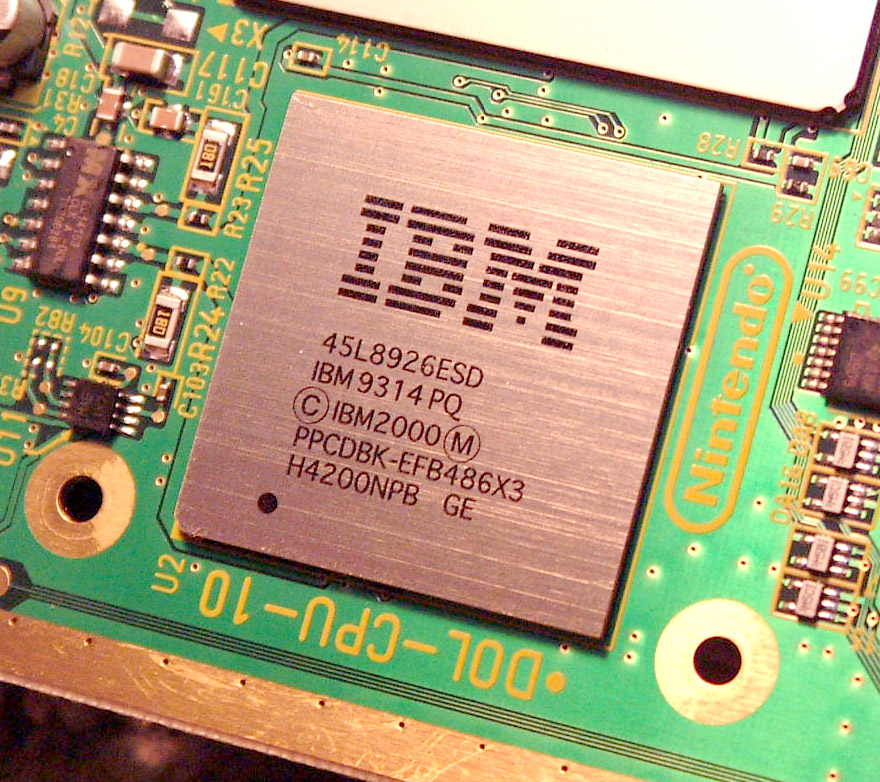 🇺🇸 United StatesGekko
Custom PowerPC CPU for the Nintendo GameCubeCPU · Power · 2000