🇺🇸 Chips of the United States
733 chips from the United States, best known first.
The United States has launched a major federal programme to rebuild its domestic semiconductor supply chain. New legislation directs tens of billions of dollars toward building fabrication plants, funding research centres, and training engineers. These measures aim to reduce reliance on foreign suppliers while restricting advanced chip production in rival nations.
- Legislation allocates $52.7 billion in direct appropriations for chip manufacturing.
- Subsidy recipients cannot produce transistors smaller than 28 nanometres in China or Russia.
- Tax credits cover 25% of approved fabrication equipment purchases.
- Programmes aim to create between 25,000 and 45,000 new technical jobs.
- Empty factory construction allows firms to secure funding before installing heavy machinery.
Chips in the United States
American semiconductor manufacturing relies on a mix of domestic design houses and international partners. To secure this supply chain, the federal government introduced a sweeping industrial policy focused on local production. The strategy centres on financial incentives for constructing new fabrication facilities, known as foundries, where raw silicon wafers are etched into complex circuit patterns. It also channels money into academic research and technical education. By tying public funds to national security goals, the programme seeks to keep critical hardware development within American borders. This approach reshapes how the nation approaches microelectronics, moving from passive market dependence to active state sponsorship.
History
The legislative framework emerged from two separate proposals merged in early 2022. Lawmakers combined a technology research bill with a manufacturing incentive plan to address growing supply vulnerabilities. Key senators drafted the initial versions after diplomatic efforts encouraged overseas producers to consider American sites. The final package cleared both chambers with cross party backing before receiving presidential approval. Earlier drafts had proposed larger funding pools and broader regional innovation networks, but the enacted version narrowed its scope to focus primarily on microelectronics and allied scientific fields.
Companies
Major manufacturers have adjusted their expansion plans to align with the new funding rules. Some firms are constructing empty factory shells before purchasing heavy machinery, a tactic designed to avoid future market oversupply. International producers previously discussed relocating assembly lines to American soil to access these incentives. Domestic leaders have welcomed the financial support while expressing caution about the restrictions placed on overseas operations. Industry representatives generally back the initiative, though they worry that compliance requirements might slow down rapid facility upgrades.
Fabs and places
New fabrication plants, or foundries, will concentrate on producing logic chips and memory devices. The legislation encourages construction across multiple states, with several existing industrial zones selected for redevelopment. Recipients must commit to maintaining these facilities for a decade and cannot expand advanced node production in certain Asian markets. Advanced nodes refer to transistor sizes smaller than 28 nanometres, which require precise lithography equipment. The rules also mandate that funded sites hire local workers and partner with technical colleges to build a steady talent pipeline.
Policy and support
Federal agencies distribute grants and loan guarantees through a structured application process. Companies receive tax credits covering 25% of their equipment costs, alongside direct cash awards for facility construction. A portion of the budget supports university programmes, public research institutes, and workforce development initiatives. The law also establishes ethics guidelines and security protocols for all funded laboratories. Recipients face strict export controls, including a 10-year prohibition on developing cutting edge processors for restricted countries. Bureaucratic processing times remain lengthy, and some research allocations have faced congressional reductions.
Today
Recent assessments indicate that the programme has triggered dozens of proposed manufacturing and research ventures. Analysts project hundreds of billions in private capital will follow the initial public commitments. Employment forecasts suggest 25,000–45,000 new technical roles will emerge across engineering and plant operations. Implementation continues to navigate administrative bottlenecks and labour market gaps. Despite these friction points, the funding architecture remains active, guiding capital toward domestic semiconductor infrastructure and sustaining long term investment cycles in the national electronics sector.
The facts in this overview come from the Wikipedia article "CHIPS and Science Act", written by its contributors and used under the CC BY-SA 4.0 licence. EveryChip rewrote the text in its own words, with AI assistance, and compares every page with the article to make sure no passage is copied. It may be reused under the same CC BY-SA 4.0 licence with a link back.
 🇺🇸 United StatesAlpha 21064
First commercial microprocessor implementing the Alpha instruction set architecture.CPU · Other · 1992
 🇺🇸 United StatesAlpha 21164
High-performance 64-bit microprocessor from Digital Equipment CorporationCPU · Other · 1995
 🇺🇸 United StatesIntel 4004
The first commercial microprocessor, a 4-bit chip released by Intel in 1971.CPU · Other · 1971
 🇺🇸 United StatesZilog Z80
An 8-bit microprocessor released in 1976 that became a staple of early personal computing and embedded systems.CPU · Other · 1976
🇺🇸 United States and 1 moreGaudi 2
AI training accelerator chip by IntelAI accelerator · Other · 2022
🇺🇸 United StatesAWS Inferentia
AI inference chip designed by Amazon Web ServicesAI accelerator · Other
🇺🇸 United StatesIntel Gaudi 3
AI accelerator chip using Ethernet for scalingAI accelerator · Other · 2024
🇺🇸 United StatesTrainium2
AWS second-generation AI training accelerator chipAI accelerator · Other · 2024
🇺🇸 United StatesTrainium3
Fourth-generation AI accelerator chip from AWSAI accelerator · Other · 2025
🇺🇸 United StatesLoihi 2
Second-generation neuromorphic research processor from Intel LabsAI accelerator · Other
🇺🇸 United StatesMaia 100
Microsoft's first in-house AI accelerator chip for Azure cloud.AI accelerator · Other · 2023
🇺🇸 United StatesCerebras WSE-3 Turbo
Wafer-scale AI processor with 4 trillion transistorsAI accelerator · Other · 2026
🇺🇸 United StatesSambaNova SN40L
AI inference chip with three-tier memory architectureAI accelerator · Other · 2023
🇺🇸 United StatesCerebras WSE-2
AI accelerator built from an entire silicon waferAI accelerator · Other
🇺🇸 United StatesTPU v2
Google AI accelerator chip for machine learning trainingAI accelerator · Other · 2019
🇺🇸 United StatesTPU v3
Google AI accelerator chip with water coolingAI accelerator · Other
🇺🇸 United StatesTPU v4
Google AI accelerator chip with 3D mesh networkingAI accelerator · Other
🇺🇸 United StatesMeta MTIA v2
Custom AI inference accelerator for Meta ranking modelsAI accelerator · Other · 2024
🇺🇸 United StatesSohu
Transformer-specific AI accelerator chip by Etched.aiAI accelerator · Other
🇺🇸 United StatesIBM Spyre
AI accelerator chip for IBM Z mainframesAI accelerator · Other · 2024
🇺🇸 United StatesTelum II
Mainframe processor for IBM z17 with AI accelerationCPU · Other
🇺🇸 United StatesNorthPole
Brain-inspired AI inference chip by IBM ResearchAI accelerator · Other
🇺🇸 United StatesIronwood
Google's seventh-generation AI accelerator for inference workloadsAI accelerator · Other · 2025
🇺🇸 United StatesAWS Trainium
Custom AI accelerator chip for machine learning trainingAI accelerator · Other · 2021
🇺🇸 United StatesInferentia2
Second-generation AI inference accelerator from AWSAI accelerator · Other
🇺🇸 United StatesIntel Gaudi
AI accelerator series from Intel for training and inference workloads.AI accelerator · Other · 2024
 🇺🇸 United StatesHP FOCUS
First commercial single-chip 32-bit microprocessor from 1982CPU · Other · 1982
🇺🇸 United StatesIBM PALM processor
16-bit CPU module used in early IBM portable computersCPU · Other · 1975
 🇺🇸 United StatesATtiny
Compact 8-bit AVR microcontroller family for simple embedded tasksMicrocontroller · Other · 1999
🇺🇸 United StatesAxcent
Audio-visual control microcontroller by AMXMicrocontroller · Other
🇺🇸 United States and 1 moreZ196
High-speed mainframe microprocessor by IBMCPU · Other · 2010
 🇺🇸 United States and 1 moreMC10800
4-bit bit-sliced processor in ECL logic from 1979CPU · Other · 1979
🇺🇸 United StatesIntel i750
Two-chip video processor for early digital video captureGPU · Other · 1991
🇺🇸 United StatesZ13
Mainframe microprocessor by IBM using 22 nm processCPU · Other · 2015
🇺🇸 United StatesZ14
High-frequency mainframe CPU from IBM using 14 nm processCPU · Other · 2017
🇺🇸 United StatesZEC12
IBM mainframe processor with 5.5 GHz clock speedCPU · Other · 2012
🇺🇸 United StatesZilog Z80
An 8-bit microprocessor that powered early personal computers and game consoles.CPU · Other · 1976
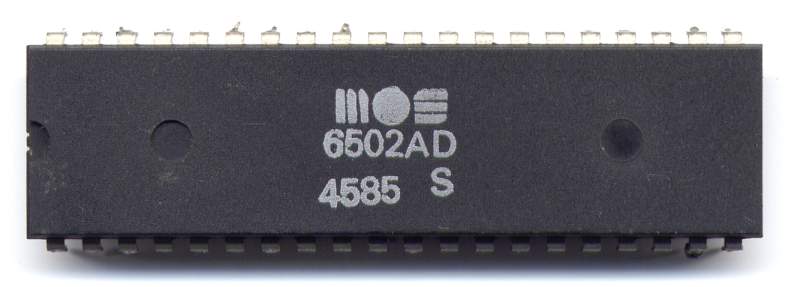 🇺🇸 United StatesMOS Technology 6502
Low-cost 8-bit microprocessor that powered the home computer revolutionCPU · Other · 1975
 🇺🇸 United StatesZilog Z80
An 8-bit microprocessor that powered early personal computers and game consoles.CPU · Other · 1976
 🇺🇸 United StatesTrueNorth
IBM neuromorphic chip mimicking brain structureAI accelerator · Other · 2014
 🇺🇸 United StatesSuperCPU
Processor upgrade cartridge for Commodore 64 and 128 systemsCPU · Other · 1997
🇺🇸 United StatesExtreme Graphics
High-end graphics architecture for SGI workstationsGPU · Other · 1993
🇺🇸 United StatesIMPACT
High-end graphics architecture for SGI workstationsGPU · Other · 1995
 🇺🇸 United StatesRealityEngine
High-end 3D graphics hardware by Silicon GraphicsGPU · Other · 1992
🇺🇸 United StatesVPro
SGI workstation graphics architecture and chipset familyGPU · Other · 1997
🇺🇸 United StatesIntegrated Facility for Linux
IBM processor dedicated to running Linux workloadsCPU · Other · 2000
 🇺🇸 United StatesTRIPS
Experimental EDGE processor from University of Texas at AustinCPU · Other
Photo credits on this page
The small pictures above come from Wikimedia Commons under free licences. Some are cropped to fit.
- MOS Technology 6502: Dirk Oppelt, CC BY-SA 3.0, source
- HP FOCUS: Thomas Schanz, CC BY-SA 3.0, source
- ATtiny: Torsten Landschoff, Public domain, source
- RealityEngine: Retro-Computing Society of Rhode Island, CC BY-SA 3.0, source
- Zilog Z80: Zilog Inc., Public domain, source
- Alpha 21064: Dirk Oppelt, CC BY-SA 3.0, source
- Alpha 21164: Appaloosa, CC BY-SA 3.0, source
- Intel 4004: the Science Museum, CC BY 4.0, source
- MC10800: Konstantin Lanzet, CC BY-SA 3.0, source
- TrueNorth: DARPA SyNAPSE, Public domain, source
- SuperCPU: Thomas Conté, CC BY-SA 2.0, source
- TRIPS: Toren Smith, CC BY-SA 3.0, source
- Zilog Z80: User Baz1521 on ja.wikipedia, CC BY-SA 3.0, source