Consumer electronics
Calculators, TVs, cameras, set-top boxes and wearables. 352 chips on EveryChip so far.
Consumer electronics were the first mass market for chips. Pocket calculators drove early chip design: the Intel 4004 was built for a Busicom calculator, and Texas Instruments' TMS1000 went into calculators, toys and microwave ovens. Since then chips have filled TVs, cameras, music players, set-top boxes, projectors, smart speakers and watches, usually as SoCs designed for one kind of product.
Calculators to cameras
In 1969 the Japanese company Busicom asked Intel for a set of chips for a printing calculator; Intel's answer was the 4004, released in 1971. Calculator prices fell sharply in the 1970s as single-chip designs arrived. Digital cameras were made possible by image sensors and image processors, and Texas Instruments' DLP chips, with millions of tiny mirrors, went into projectors and cinema screens.
Smart devices
Today's TVs, streaming sticks and smart speakers run SoCs from MediaTek, Realtek, Amlogic, Broadcom and others, combining Arm cores with video decoders for formats such as HEVC and AV1. Wearables such as Apple's watch use tiny SoCs in system-in-package modules, in which many chips are sealed together into one small block.
Famous consumer electronics chips
 Intel 4004Built for the Busicom 141-PF calculator, 1971
 TMS1000Microcontroller of calculators and toys
 Texas Instruments LPC Speech ChipsSpeech chips of TI's Speak and Spell toy
 Digital micromirror deviceTI's DLP mirror chip for projectors
 Apple S1The first Apple Watch's system in package, 2015
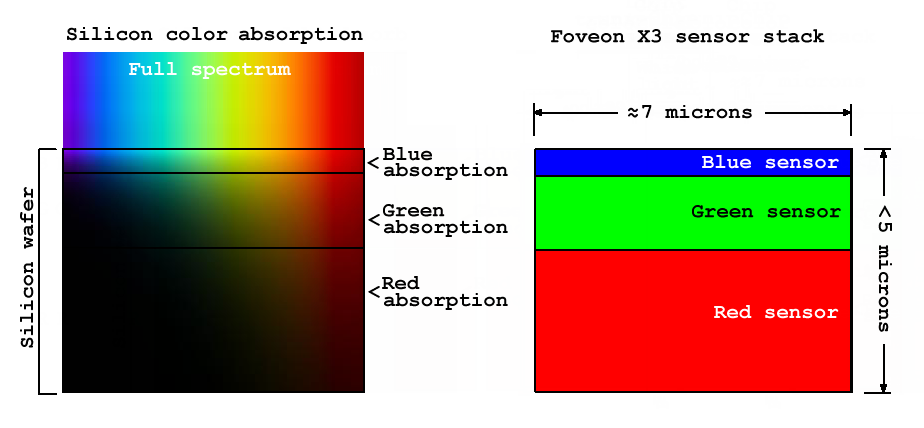 Foveon X3 sensorImage sensor of Sigma cameras
Further reading
 🇺🇸 United StatesBobcat
Low-power x86 microarchitecture for AMD APUsCPU · x86 · 2011
 🇺🇸 United StatesIntel 80486
32-bit x86 CPU with pipelined execution and on-chip cache, launched 1989CPU · x86 · 1989
 WorldVIA Eden
Low-power x86 processor for embedded systemsCPU · x86
 WorldRise mP6
Low-cost x86 microprocessor for Super Socket 7 systemsCPU · x86 · 1998
 🇺🇸 United StatesPentium
Intel's long-running x86 processor brand, from the 1993 P5 to 2023 budget partsCPU · x86 · 1993
 🇺🇸 United StatesIntel 80386
Intel's 32-bit x86 CPU from 1985, the base of the IA-32 instruction setCPU · x86 · 1985
 🇺🇸 United StatesCeleron
Intel's budget x86 desktop and mobile CPU line, sold from 1998 to 2023CPU · x86 · 1998
 🇺🇸 United StatesAthlon
AMD's x86 desktop processor brand, from the first 1 GHz chip to entry-level Zen APUsCPU · x86 · 1999
 🇺🇸 United StatesEfficeon
Low-power x86 processor using software translationCPU · x86 · 2004
🇺🇸 United StatesAtom
Low-power x86 system on a chip for mobile and embedded devices.SoC · x86 · 2012
 🇯🇵 JapanNEC μCOM series
NEC microprocessor and microcontroller family from the 1970s and 1980sCPU · x86 · 1973
 🇺🇸 United StatesGeode
Low-power x86 system-on-chip for embedded devicesSoC · x86 · 1999
 🇷🇺 RussiaKR580VM80A
Soviet clone of the Intel 8080 microprocessorCPU · x86 · 1979
 🇺🇸 United StatesIntel 80186
16-bit microprocessor with integrated peripherals for embedded systemsCPU · x86 · 1982
 🇹🇼 TaiwanVIA CoreFusion
Low-power x86 system-on-chip line by VIA TechnologiesSoC · x86 · 2003
Photo credits on this page
The small pictures above come from Wikimedia Commons under free licences. Some are cropped to fit.
- Bobcat: Brit robin, CC BY-SA 4.0, source
- Intel 80486: Thomas Nguyen, CC BY-SA 4.0, source
- VIA Eden: Konstantin Lanzet, CC BY 3.0, source
- Rise mP6: Konstantin Lanzet (with permission), CC BY-SA 3.0, source
- Intel 4004: the Science Museum, CC BY 4.0, source
- Foveon X3 sensor: Anoneditor at English Wikipedia, CC BY-SA 3.0, source
- Pentium: Konstantin Lanzet, GFDL, source
- Intel 80386: Mister rf, CC BY-SA 4.0, source
- Celeron: Qurren, CC BY-SA 3.0, source
- Athlon: Unknown author, CC BY-SA 2.5, source
- Efficeon: Photographed by Qurren ( talk ), with IXY Digital 10 compact digital c, CC BY-SA 3.0, source
- Apple S1: Henriok, CC0, source
- NEC μCOM series: Konstantin Lanzet, CC BY-SA 3.0, source
- Texas Instruments LPC Speech Chips: Orginal photo © Bill Bertram 2006, editing by user:Tomhannen, CC BY-SA 2.5, source
- Geode: Appaloosa, CC BY-SA 3.0, source
- KR580VM80A: Konstantin Lanzet, CC BY-SA 3.0, source
- Intel 80186: Armin Kübelbeck, CC BY-SA 3.0, source
- VIA CoreFusion: Konstantin Lanzet, CC BY-SA 3.0, source
- Digital micromirror device: mitopencourseware, CC BY-SA 4.0, source
- TMS1000: Pauli Rautakorpi, CC BY 3.0, source