CPUs and microprocessors
The 4004, 8086, 68000, Pentium, Athlon, Core, Ryzen, Xeon and EPYC: general-purpose processors. 505 chips on EveryChip so far.
A central processing unit (CPU) is the general-purpose processor of a computer: it fetches instructions from memory, decodes them and carries them out, one after another, very fast. A microprocessor is a CPU built on a single chip. The first commercial one, the Intel 4004, arrived in 1971 with 2,300 transistors. Today's server CPUs have tens of billions of transistors and up to a few hundred cores.
What is inside
A CPU core has a control unit that decodes instructions, arithmetic units that add, multiply and compare, registers that hold the numbers being worked on, and caches, small fast memories that keep recently used data close. Modern cores run a pipeline, in which several instructions are in different stages at once, and guess which way branches will go so that the pipeline stays full.
From one core to many
For about thirty years CPUs got faster mainly by raising the clock speed. Around 2004 power and heat stopped that climb near 4 GHz, and designers turned to putting several cores on one chip instead. AMD and Intel shipped dual-core PC processors in 2005. Today a phone CPU may mix large fast cores with small efficient ones, and server chips are often built from several chiplets in one package.
Famous CPU chips
 Intel 4004The first commercial microprocessor, 1971
 Intel 80861978; began the x86 line still used in PCs
 Motorola 6800032-bit design inside the first Macintosh
 PentiumIntel's 1993 superscalar x86 chip
 Athlon 64First 64-bit x86 desktop processor, 2003ZenAMD's 2017 core design behind Ryzen and Epyc
 EpycAMD's chiplet server processors
Further reading
 🇬🇧 United KingdomARM Cortex-R
Real-time ARM processor cores for safety-critical systemsCPU · Arm · 2020
 🇬🇧 United KingdomARM Cortex-A72
64-bit ARM CPU core for mobile and embedded systemsCPU · Arm · 2015
WorldARM Cortex-A75
High-performance ARM CPU core for mobile and infrastructureCPU · Arm · 2017
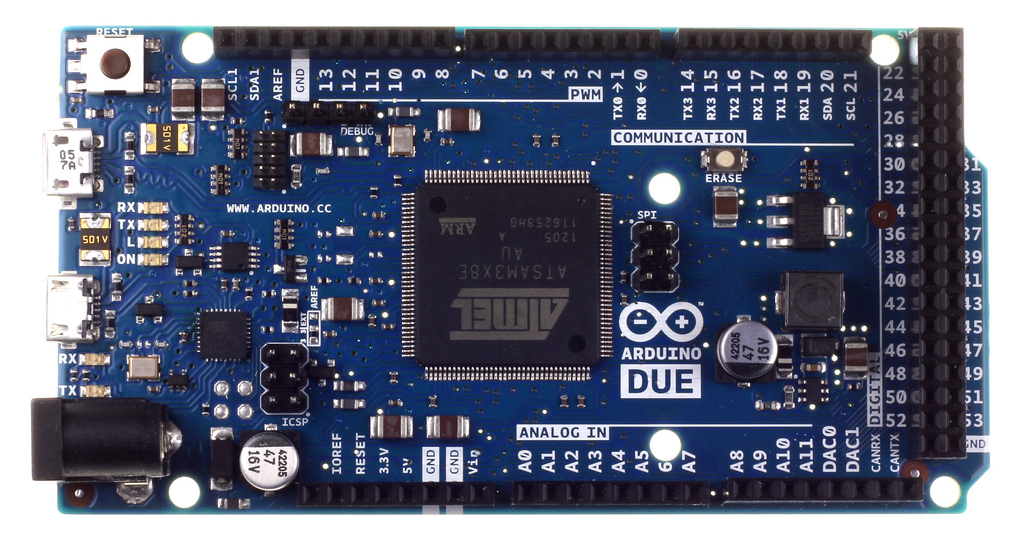 🇺🇸 United StatesAtmel ARM-based processors
32-bit ARM microcontrollers and microprocessors by MicrochipMicrocontroller · Arm · 1998
WorldCortex-A34
Low-power 64-bit CPU core for embedded systemsCPU · Arm · 2019
Photo credits on this page
The small pictures above come from Wikimedia Commons under free licences. Some are cropped to fit.
- Epyc: Smial ( talk ), FAL, source
- Intel 8086: Thomas Nguyen, CC BY-SA 4.0, source
- Intel 4004: the Science Museum, CC BY 4.0, source
- ARM Cortex-R: Raimond Spekking, CC BY-SA 4.0, source
- ARM Cortex-A72: Laserlicht, CC BY-SA 4.0, source
- Atmel ARM-based processors: Arduino SA, CC BY-SA 3.0, source
- Motorola 68000: en:User:ArnoldReinhold, CC BY-SA 3.0, source
- Pentium: Pdesousa359, CC BY-SA 3.0, source
- Athlon 64: Astraera, CC BY-SA 4.0, source