
ARM Cortex-A72
64-bit ARM CPU core for mobile and embedded systems
The ARM Cortex-A72 is a 64-bit processor core designed by ARM Holdings in Austin. Announced in 2015, it succeeds the Cortex-A57 with improved efficiency. It serves as intellectual property for system-on-chip integration in devices like the Raspberry Pi 4.
- Announced in 2015 as successor to Cortex-A57
- Delivers 90% more performance or 20% less power
- Used in Raspberry Pi 4 Broadcom BCM2711 chip
- Supports ARMv8-A 64-bit instruction set
- Features 3-way decode out-of-order pipeline
What it is
The ARM Cortex-A72 is a central processing unit core that implements the ARMv8-A 64-bit instruction set. ARM Holdings designed this component at its facility in Austin, Texas. It functions as semiconductor intellectual property, meaning other companies license the design rather than buying a physical chip. Manufacturers integrate this core into larger system-on-chip packages alongside graphics units and other controllers. The design targets high performance while maintaining energy efficiency for mobile and embedded applications.
How it came about
ARM announced the Cortex-A72 in 2015 as the direct successor to the Cortex-A57. The engineering team focused on improving both speed and power consumption compared to the previous generation. Their goal was to deliver ninety percent greater performance or reduce power usage by twenty percent. This release marked a significant step in the evolution of ARMv8-A cores, providing a more efficient option for licensees building advanced system-on-chip solutions for various electronic devices.
Inside the chip
This processor uses a three-way decode out-of-order superscalar pipeline. It supports speculative issue execution to maximize throughput. Each core includes mandatory DSP and NEON SIMD extensions for parallel data processing. A VFPv4 floating point unit handles complex mathematical operations. Security features include TrustZone extensions and hardware virtualization support. The cache system comprises 32 KiB of data cache and 48 KiB of instruction cache per core. A configurable level-two cache ranges from 512 KiB to 4 MiB per cluster. Advanced branch prediction algorithms help reduce energy waste from mispredictions.
How it was made
The design supports manufacturing processes down to 16 nanometres. As an intellectual property core, ARM does not manufacture the physical silicon itself. Licensees such as Broadcom and Qualcomm produce the actual chips using their chosen foundries. The core integrates into a single die with other components to form a complete system-on-chip. This modular approach allows different manufacturers to optimize the physical implementation for their specific performance and cost targets while using the same underlying architecture.
Where it went
Many prominent system-on-chip products feature the Cortex-A72. The Broadcom BCM2711, which powers the Raspberry Pi 4, contains four of these cores. Qualcomm included them in the Snapdragon 650, 652, and 653 mobile platforms. NXP utilizes the core in its i.MX8 and Layerscape series for networking and industrial tasks. Texas Instruments incorporates it into the Jacinto 7 family for automotive applications. Rockchip also adopted the design for its RK3399 and RK3576 processors. Amazon Web Services used it in early Graviton cloud instances.
Versions and family
The Cortex-A72 sits between the Cortex-A57 and the Cortex-A73 in the product lineage. It replaces the A57 as the high-performance option in big.LITTLE configurations. The subsequent Cortex-A73 succeeded it with further efficiency gains. Implementations vary by licensee, with some chips using single cores and others employing clusters of up to four. The cache size and clock speeds differ across these implementations, allowing manufacturers to tailor the performance profile for specific devices ranging from smartphones to servers.
Why it matters
This core helped establish ARMv8-A as a viable architecture for high-performance computing beyond mobile phones. Its adoption in single-board computers like the Raspberry Pi 4 brought powerful 64-bit processing to hobbyists and educators. The use in automotive and industrial chips by NXP and Texas Instruments demonstrated its reliability in critical systems. By offering a balance of speed and power efficiency, it enabled longer battery life in mobile devices while supporting more demanding applications in embedded environments.
Questions people ask about ARM Cortex-A72
What is the ARM Cortex-A72?
It is a 64-bit central processing unit core designed by ARM Holdings. It implements the ARMv8-A instruction set and is licensed to other companies for use in system-on-chip designs.
Which devices use the Cortex-A72?
It appears in the Raspberry Pi 4, Qualcomm Snapdragon 650 series, NXP i.MX8, and Rockchip RK3399. It is also found in automotive chips from Texas Instruments and cloud processors from AWS.
How does it compare to the Cortex-A57?
The Cortex-A72 was designed to offer ninety percent greater performance or consume twenty percent less power than its predecessor, the Cortex-A57, while maintaining compatibility with the same instruction set.
Good reading and sources
- Official websiteOfficial site
- ARM Support RedirectorArm, Article
- Checking your browserAnandTech, Article
The facts on this page come from the Wikipedia article "ARM Cortex-A72", written by its contributors and used under the CC BY-SA 4.0 licence, and from its Wikidata record (CC0). EveryChip rewrote the text in its own words, with AI assistance, and compares every page with the article to make sure no passage is copied. It may be reused under the same CC BY-SA 4.0 licence with a link back.
It may contain mistakes, and figures change over time. Nothing here is investment or buying advice. If something is wrong, tell us. Last refreshed 2026-11-14.
Like ARM Cortex-A72
All CPUs and microprocessors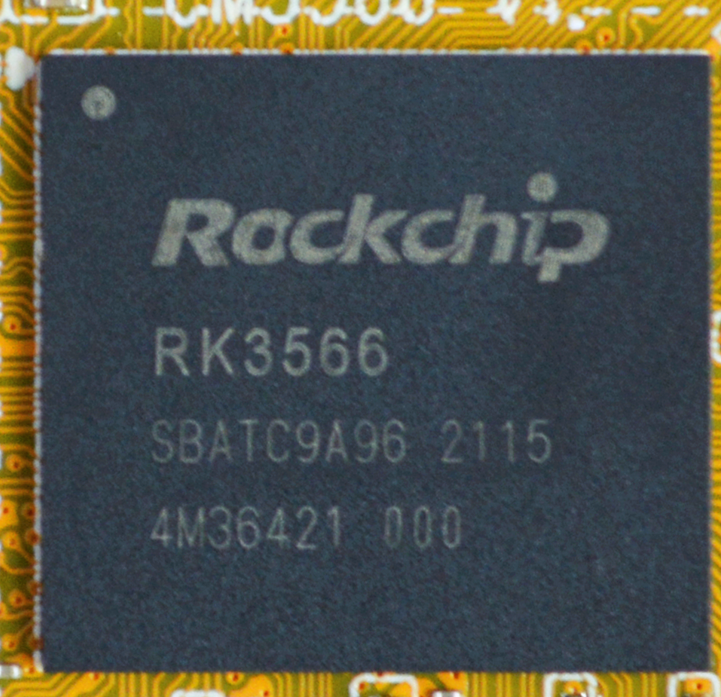 🇬🇧 United KingdomARM Cortex-A55
Efficient 64-bit CPU core for mobile and embedded systemsCPU · Arm · 2017
🇬🇧 United KingdomARM Cortex-A76
High-performance CPU core for mobile and laptop chipsCPU · Arm · 2018
More from ARM Holdings
All of them WorldARM Cortex-A53
A widely used 64-bit in-order CPU core designed by Arm for mobile and embedded devices.CPU · Arm · 2012
🇩🇪 GermanyXMC4000
Industrial 32-bit ARM Cortex-M4 microcontroller family by InfineonMicrocontroller · Arm · 2012
🇬🇧 United KingdomARM Cortex-A57
64-bit ARM CPU core for high-performance SoCsCPU · Arm · 2012