ARM Cortex-A76
High-performance CPU core for mobile and laptop chips
Arm Holdings designed this central processing unit core in Austin, Texas. It launched in 2018 to boost speed in phones and laptops. The design supports 64-bit computing and pairs with efficient cores for better battery life.
- Launched in 2018 for mobile and laptop use
- 25% faster integer performance than Cortex-A75
- Used in Raspberry Pi 5 and Snapdragon 855
- Supports 64-bit ARMv8.2-A architecture
- Designed by Arm Holdings in Austin, Texas
What it is
The ARM Cortex-A76 is a central processing unit core built for high performance. Arm Holdings created it at their centre in Austin, Texas. Production began in 2018 using a 7 nanometre process. This chip implements the 64-bit ARMv8.2-A instruction set. It brought significant speed gains over earlier models. Integer operations improved by up to 25 per cent. Floating-point tasks saw a 35 per cent boost. The core targets both smartphones and Windows laptops. It competes directly with Intel desktop processors. Manufacturers license it to build custom system on a chip designs.
How it came about
Arm developed this core to replace the Cortex-A75 and older designs. Although it succeeds the A73 and A75, the internal structure is entirely new. The team focused on widening the pipeline to handle more instructions at once. They aimed to challenge Intel Kaby Lake in the laptop market. The first commercial use appeared in the HiSilicon Kirin 980. This launch marked a shift toward powerful mobile computing. Later collaborations with Qualcomm produced semi-custom versions. These changes helped adapt the core for various Android devices and always-connected PCs.
Inside the chip
This processor uses a four-wide decode pipeline. It fetches and decodes four instructions every cycle. The out-of-order execution window holds 128 entries. Eight execution ports manage the backend work. The pipeline has 13 stages deep. Memory bandwidth increased by 90 per cent compared to the previous generation. It supports unprivileged 32-bit apps but requires 64-bit for operating systems. Features include LDAPR and dot product instructions. Security controls like SSBS protect against speculative attacks. The core often pairs with Cortex-A55 units via DynamIQ technology.
How it was made
The design targets a 7 nanometre manufacturing node. Arm licenses the intellectual property to other companies. These partners integrate the core into their own silicon. The address width is 40 bits. Cache sizes vary by implementation. Each core has 128 KiB of level one cache. Level two cache ranges from 128 to 512 KiB. An optional level three cache can reach 4 MiB. This flexibility allows chipmakers to balance cost and performance for different markets.
Where it went
Many major chipmakers adopted this core. HiSilicon used it in the Kirin 980, 985, and 990 series. Qualcomm integrated modified versions into Snapdragon 855 and 8cx processors. MediaTek included it in Dimensity and Helio chips. Samsung placed it in the Exynos 990. Google used it in Tensor silicon. Microsoft selected it for Surface Pro X SQ1 and SQ2 chips. Broadcom put four cores in the BCM2712 for Raspberry Pi 5. Allwinner, Marvell, Rockchip, and UNISOC also built products with this architecture.
Versions and family
Qualcomm created semi-custom variants called Kryo. The Kryo 485, 495, 470, and 460 are based on this design. They expanded the reorder buffer for better performance. Arm also released the Neoverse N1, which shares this foundation. The Cortex-A77 succeeded this model as the next high-performance option. Predecessors include the Cortex-A75, A73, and A72. The core supports configurations with one to four units per cluster.
Why it matters
This core helped bridge the gap between mobile and laptop performance. It enabled Windows 10 devices to run on ARM silicon. The efficiency gains allowed longer battery life without sacrificing speed. Its adoption by leading manufacturers standardized high-end mobile computing. The support for advanced instruction sets improved machine learning tasks on device. It remains a common choice for mid-range and flagship smartphones.
Questions people ask about ARM Cortex-A76
What devices use the Cortex-A76?
It appears in many smartphones and laptops. Examples include the Raspberry Pi 5, Samsung Galaxy S10, and Microsoft Surface Pro X. Chipmakers like Qualcomm, MediaTek, and HiSilicon integrate it into their system on a chip products.
Is the Cortex-A76 a 32-bit or 64-bit core?
It implements the 64-bit ARMv8-A architecture. While it can run unprivileged 32-bit applications, the operating system and kernel must use the 64-bit instruction set to function correctly on this hardware.
How does it compare to the previous Cortex-A75?
Arm claimed up to 25 per cent better integer performance and 35 per cent better floating-point performance. Memory bandwidth also improved by 90 per cent. The microarchitecture is entirely new despite being a successor.
Good reading and sources
- Official websiteOfficial site
- Checking your browserAnandTech, Article
- ARM promises laptop-level performance in 2019Ars Technica, Article
The facts on this page come from the Wikipedia article "ARM Cortex-A76", written by its contributors and used under the CC BY-SA 4.0 licence, and from its Wikidata record (CC0). EveryChip rewrote the text in its own words, with AI assistance, and compares every page with the article to make sure no passage is copied. It may be reused under the same CC BY-SA 4.0 licence with a link back.
It may contain mistakes, and figures change over time. Nothing here is investment or buying advice. If something is wrong, tell us. Last refreshed 2026-11-14.
Like ARM Cortex-A76
All CPUs and microprocessors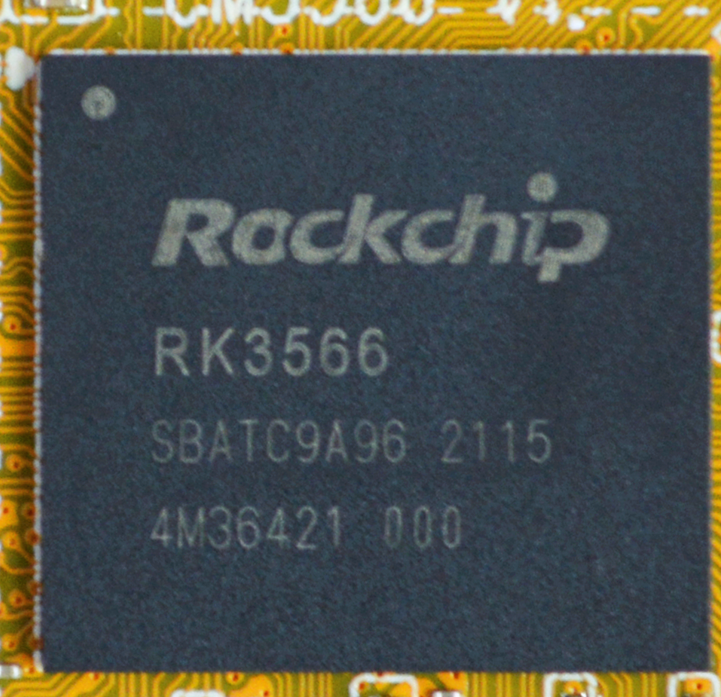 🇬🇧 United KingdomARM Cortex-A55
Efficient 64-bit CPU core for mobile and embedded systemsCPU · Arm · 2017
WorldARM Cortex-A75
High-performance ARM CPU core for mobile and infrastructureCPU · Arm · 2017
🇺🇸 United StatesARM Cortex-A78
64-bit ARMv8.2-A CPU core designed by ARM for mobile and embedded devices.CPU · Arm · 2020