Intel 8283
8-bit latch for Intel 8086 processor systems
The Intel 8283 is an 8-bit latch designed to support early Intel microprocessors such as the 8086 and 8088. It captures address data from a multiplexed bus using a strobe signal and inverts the input, distinguishing it from similar components like the 8282.
- Functions as an 8-bit latch for Intel 8086 systems
- Inverts incoming data unlike the similar 8282 chip
- Housed in a standard 20-pin dual in-line package
- Licensed for production by NEC and Siemens
What it is
The Intel 8283 is an integrated circuit that functions as an 8-bit latch. It was created to assist Intel microprocessors, including the 8086, 8087, 8088, and 8089 models. In computer systems, these processors often share pins for both address and data information. The 8283 helps separate these signals by holding the address stable while the bus carries data. This component is housed in a 20-pin dual in-line package, a common format for older chips. It serves a specific role in managing communication between the central processor and other system parts.
How it came about
Intel developed this latch to address the needs of its 16-bit microprocessor family. The design allowed second-source manufacturers, such as NEC and Siemens, to produce compatible versions under license. This approach ensured wider availability for engineers building systems around the 8086 architecture. The chip was offered in standard and industrial grades, with the latter designated as I8283. Pricing varied based on volume, reflecting its role as a commodity component in early personal computer and embedded designs.
Inside the chip
The device operates by capturing data when a strobe signal activates. This strobe connects to the Address Latch Enable pin on the processor. When active, it takes the current state of the multiplexed address and data bus. A key feature is that the incoming data is inverted before being stored or output. This inversion sets it apart from the similar Intel 8282, which does not invert the signal. An Output Enable pin controls whether the stored data appears on the output lines. Connecting this pin to ground selects the chip for operation.
How it was made
Intel manufactured the original components, though licensed production occurred at other firms. The chip uses a 20-pin dual in-line package, which facilitates insertion into sockets on printed circuit boards. Specific manufacturing process details, such as the node size in nanometres, are not provided in the available records. The physical design prioritises compatibility with the pinouts required by the Intel 8086 family of processors.
Where it went
Engineers used this latch in systems built around the Intel 8086, 8088, 8087, and 8089 processors. It plays a critical role in demultiplexing the bus, allowing the processor to send addresses and then use the same lines for data transfer. This function is essential for memory access and input/output operations in these architectures. The industrial grade version supported environments requiring higher reliability than consumer electronics typically demand.
Versions and family
The primary variant is the I8283, which is rated for industrial use. Other companies produced compatible versions, including NEC and Siemens, under license from Intel. The Intel 8282 is a closely related component that performs a similar latching function but does not invert the data signals. These two chips often appear in documentation together due to their functional similarities and shared application areas.
Why it matters
This component supported the expansion of systems using the Intel 8086 architecture. By providing a reliable method to handle multiplexed buses, it simplified motherboard design for early personal computers and industrial controllers. Licensing the design to multiple manufacturers helped stabilise supply chains during the growth of the microcomputer industry in the late 1970s and early 1980s.
Questions people ask about Intel 8283
What is the main difference between the 8283 and 8282?
The Intel 8283 inverts the incoming data signals, whereas the 8282 does not. Both are 8-bit latches used with similar processors, but this inversion requires different circuit design considerations when swapping them.
Which processors use the Intel 8283?
It was developed primarily for the Intel 8086, 8087, 8088, and 8089 processors. These chips use a multiplexed address and data bus, requiring external latches to separate the signals for memory and peripheral access.
How is the chip enabled in a circuit?
The Output Enable pin must be connected to ground to select the chip. The Strobe pin connects to the Address Latch Enable signal from the processor to capture data from the bus at the correct moment.
Good reading and sources
The facts on this page come from the Wikipedia article "Intel 8283", written by its contributors and used under the CC BY-SA 4.0 licence, and from its Wikidata record (CC0). EveryChip rewrote the text in its own words, with AI assistance, and compares every page with the article to make sure no passage is copied. It may be reused under the same CC BY-SA 4.0 licence with a link back.
It may contain mistakes, and figures change over time. Nothing here is investment or buying advice. If something is wrong, tell us. Last refreshed 2026-11-14.
Like Intel 8283
All analog, power and mixed-signal 🇺🇸 United StatesIntel 8282
8-bit latch for Intel 8086 and 8080 systemsAnalog · Other
 WorldIntel 8279
Programmable keyboard and display controller for Intel microprocessorsAnalog
 🇺🇸 United StatesIntel 8255
Programmable parallel input/output interface chip for early microprocessorsAnalog · 1970
More from Intel
All of them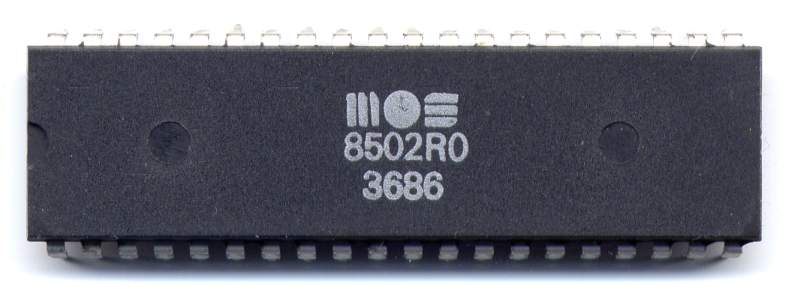 WorldMOS Technology 8502
An 8-bit CPU from MOS Technology that powered the Commodore 128CPU · 8-bit
 🇺🇸 United StatesRapidCAD
A 486DX in a 386 socket, with a dummy FPU chip to match.CPU · x86
 🇺🇸 United States and 1 moreMCS-96
A 16-bit microcontroller family for embedded control systems.Microcontroller · Other