Intel 8289
Bus arbiter for Intel 8086 and 8088 systems
The Intel 8289 is a bus arbiter chip designed to manage control signals for multiprocessor systems using the Intel 8086, 8087, 8088, or 8089 processors. It enables maximum mode operation by handling bus access requests in complex configurations.
- Designed for Intel 8086, 8087, 8088, and 8089 processors
- Generates control signals for maximum mode operation
- Supplied in a 20-pin DIP package
- Enables multiprocessor and coprocessor configurations
What it is
The Intel 8289 is a dedicated integrated circuit that acts as a bus arbiter. It was created by Intel to support systems built around the 8086, 8087, 8088, and 8089 processors. When these central processing units run in maximum mode, they require external help to manage data traffic on the system bus. The 8289 provides the necessary control signals to coordinate access, allowing multiple processors or coprocessors to share resources without conflict. This chip is essential for building multiprocessor setups or systems that rely on heavy coprocessor usage.
Inside the chip
This chip focuses on managing bus access rather than performing calculations. In maximum mode configuration, the main processor offloads bus control tasks to external components. The 8289 steps in to generate the specific control signals needed for orderly operation. It ensures that when multiple devices request use of the data bus, the system grants access in a controlled manner. This design allows the 8086 and 8088 families to operate efficiently in complex environments where more than one processing unit is present.
How it was made
Intel manufactured the 8289 in a 20-pin dual in-line package, commonly known as DIP. This packaging style was standard for many integrated circuits of its era, featuring two parallel rows of pins for easy insertion into sockets or printed circuit boards. The physical form factor allowed it to be readily integrated into motherboard designs alongside the main processors it supported.
Where it went
Engineers used this component when designing systems that required multiprocessor capabilities. It was particularly useful for configurations involving the 8086 or 8088 CPUs working with coprocessors like the 8087. By handling the arbitration logic, it enabled these older processor families to function in maximum mode, which is necessary for advanced system architectures that go beyond simple single-chip operations.
Questions people ask about Intel 8289
What is the main function of the Intel 8289?
It acts as a bus arbiter, generating necessary control signals for systems using Intel 8086, 8087, 8088, or 8089 processors in maximum mode.
Which processors does the 8289 support?
It is designed to work with the Intel 8086, 8087, 8088, and 8089 family of processors, particularly in multiprocessor or coprocessor setups.
What type of package does the chip use?
The Intel 8289 is supplied in a 20-pin dual in-line package, which was a common format for integrated circuits of that generation.
Good reading and sources
The facts on this page come from the Wikipedia article "Intel 8289", written by its contributors and used under the CC BY-SA 4.0 licence, and from its Wikidata record (CC0). EveryChip rewrote the text in its own words, with AI assistance, and compares every page with the article to make sure no passage is copied. It may be reused under the same CC BY-SA 4.0 licence with a link back.
It may contain mistakes, and figures change over time. Nothing here is investment or buying advice. If something is wrong, tell us. Last refreshed 2026-11-14.
Like Intel 8289
All analog, power and mixed-signal 🇺🇸 United StatesIntel 8282
8-bit latch for Intel 8086 and 8080 systemsAnalog · Other
 🇺🇸 United StatesIntel 8259
Programmable interrupt controller for early Intel microprocessorsAnalog · Other · 1976
 🇺🇸 United StatesIntel 8231/8232
Early single-chip floating-point coprocessors for microcomputers.Analog · Other · 1977
🇺🇸 United StatesIntel 8237
Four-channel DMA controller for early IBM PCsAnalog · Other · 1980
More from Intel
All of them WorldIntel 8279
Programmable keyboard and display controller for Intel microprocessorsAnalog
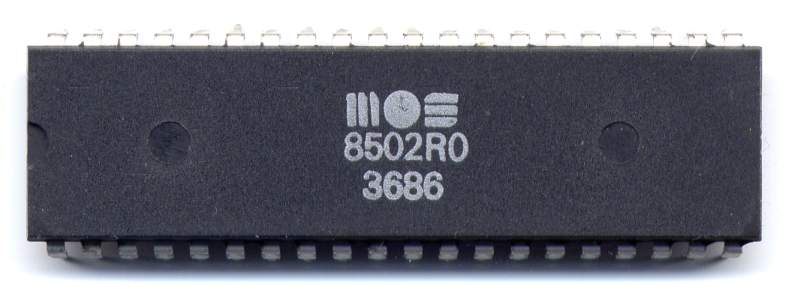 WorldMOS Technology 8502
An 8-bit CPU from MOS Technology that powered the Commodore 128CPU · 8-bit
 🇺🇸 United StatesRapidCAD
A 486DX in a 386 socket, with a dummy FPU chip to match.CPU · x86
🇺🇸 United StatesTolapai
Intel embedded SoC with Pentium M core and security accelerationSoC · x86